THE PRINT
Machine translation by Google. Wording and nuance may be imperfect — the English original is the source of truth.
THE PRINT
IDEAS AT THE EDGE OF MONEY · ISSUE 00 · PUBLISHED 31 AUGUST 2026 · WEB EDITION
01Money without a country02The liquidity that isn't there03Volatility is not risk04The dollar ate its rival05The relic that refused to die06The half-life of an edge07Who checks the checkers08The price of time09The index ate the market10Marked to make-believe11The casino at the heart of the market12The sanctions laboratory13Legal, but not at home
THE TICKER
NINE SHORT POSITIONS ON THE STATE OF THE GAME
Language
“Institutional adoption”

Every rally brings the phrase out of storage. Notice what it concedes: the asset sold as an exit from the old system now measures its success by whether the old system will buy it. The adoption is real, frequently bullish, and always the end of a story rather than the start of one. By the time the institution arrives, the discount for its absence has already left the price. Read it as a maturity announcement, and price maturity accordingly.

Corporate
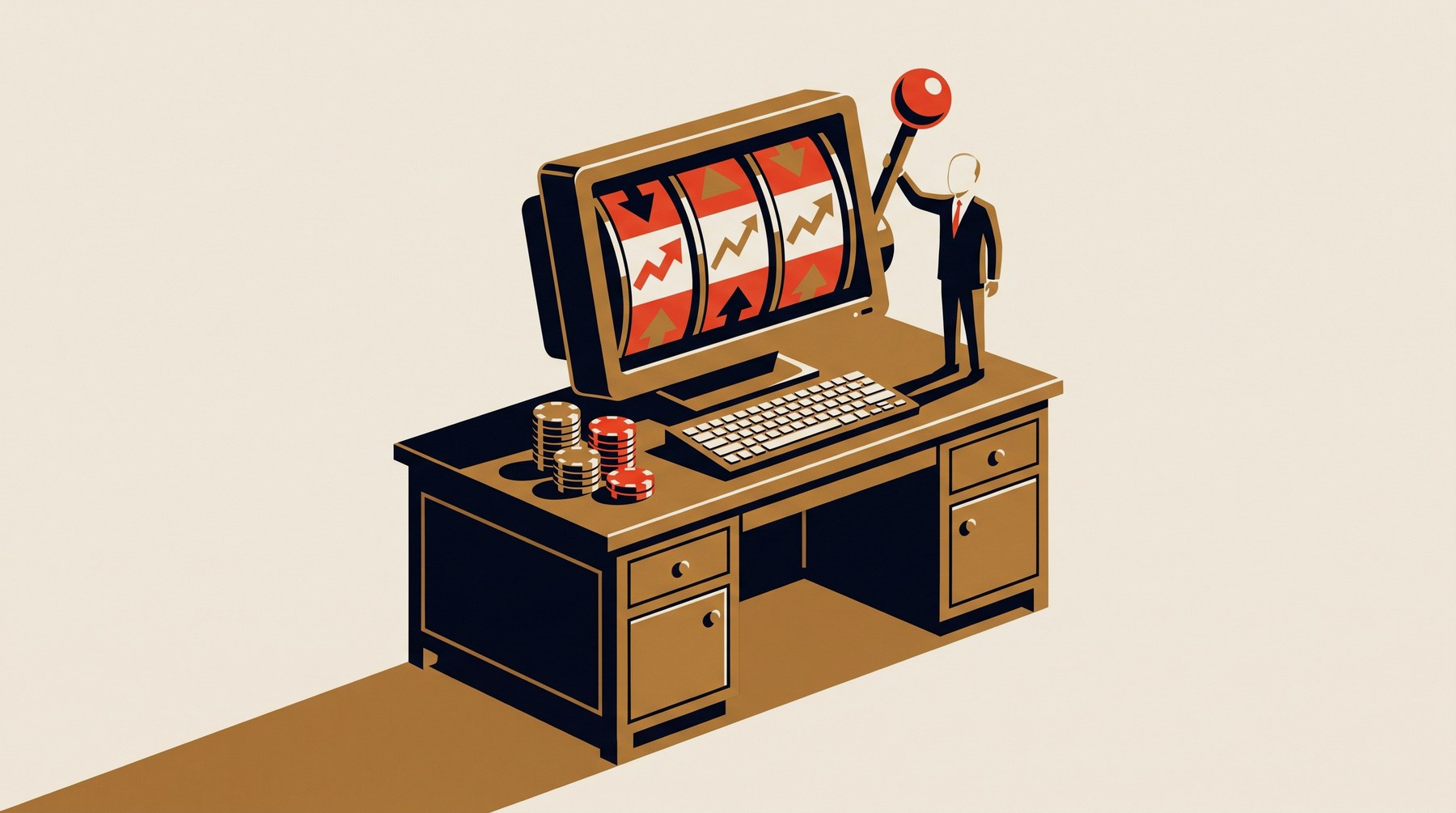
The treasury company

A listed company whose principal product is holding coins is a fund with extra steps and better marketing. It trades above the value of its holdings while the story runs, and below them for a long time afterwards. A premium on a wrapper is a loan from enthusiasm, and enthusiasm calls its loans on the worst day of the calendar. Buy the contents or buy the story, but know which one is on the receipt.

Airdrops
Renting a crowd

Protocols pay strangers in future tokens to behave like users, the dashboards duly glow, and on listing day the mercenaries collect payroll and move to the next job. Usage you paid for measures your budget, and nothing else. The only chart worth pulling up is the one dated after the payments stop.

Charts
The lines that hold

Support and resistance work through coordination: a crowd watching the same line acts at the same line, which makes the pattern real and the geometry beside the point. Trade it, by all means, knowing what you are actually trading, which is the crowd's attention. Attention has a shorter half-life than conviction, and yours is not the one that decides.

Calendar
Halving numerology

Three completed cycles now carry the interpretive weight of a scripture. The defensible claim is small: scheduled supply cuts reduce miner selling, which everyone with a calendar priced in years ago. The rest is a pattern bred from three observations, and such patterns have a reliable habit of dying on the fourth.

Yield
The unnamed tenant

Any stable yield above the T-bill has a tenant inside it paying rent. Sometimes the tenant is honest: a named borrower, posted collateral, an eviction procedure. When nobody can tell you who the tenant is, you have not found free income. You have sold insurance, collected the premium in advance, and left the policy unread. Claims arrive later, in bulk.

Governance
The empty parliament

Token voting was to be democracy at the speed of software. Attendance is a rounding error, five wallets settle most questions, and the forum debate performs deliberation for an audience that has already left. Corporate governance has been rediscovered, minus the fiduciary duties and the courts. Decentralized in the brochure; a quorum of acquaintances in the vote.

Research
The backtest

A backtest is the strategy's application letter, composed by the strategy, about itself. It has chosen its decade, forgotten its dead competitors, and rounded its costs toward zero. File it. The interview is a live record, net of fees, through at least one season the strategy would rather forget.

Vocabulary
“Utility”

In a token pitch, the word utility marks the precise location where a cash flow was supposed to be. Where the use is real, the pitch names it: fees paid, supply burned, collateral posted. Where it says utility, unaccompanied, the reader has permission to stop reading. The sentence was finished before it began.

The cover story · geopolitics

Money without a country
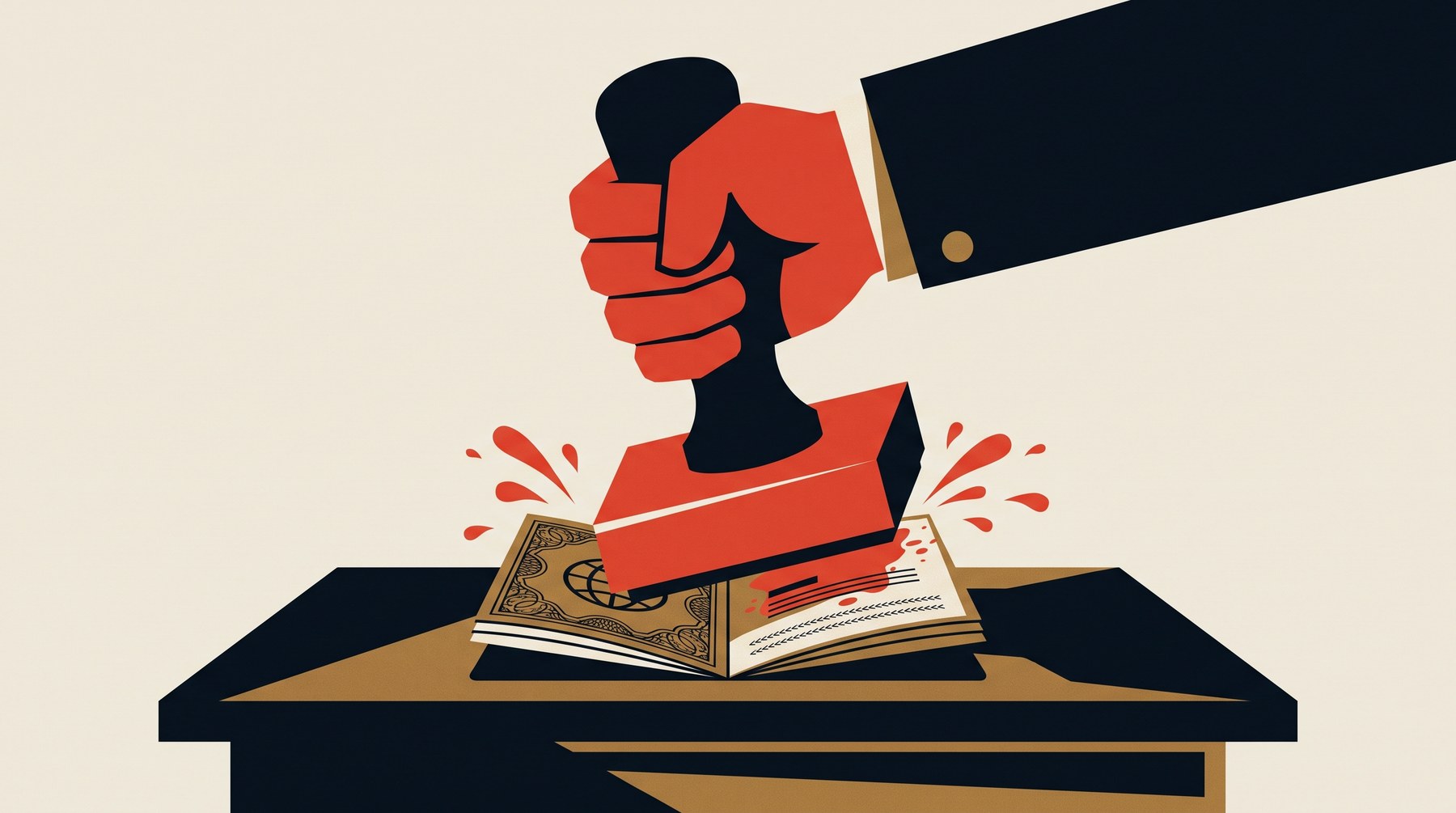
Crypto's protocols answer to no government. Its owners are another matter. The cover story follows the gap between those two facts.

For about a decade the promise held, mostly because nobody important was paying attention. That is how these things usually go. A new kind of money shows up, a few thousand enthusiasts pass it around, and the state ignores it the way it ignores a card game in the back room of a pub. Crypto spent its youth in that obscurity, and plenty of its early believers mistook being ignored for being free.

The two are not the same, and 2022 was the year the gap turned up in person. That summer the US Treasury put a piece of software on its sanctions list. Not a company. Software. Tornado Cash was a set of contracts on Ethereum that shuffled coins together to hide where they came from, and it answered to no one. There was no office to raid, no chief executive to charge. Treasury sanctioned the code anyway, and American programmers who had worked on it woke up to find their own project illegal to touch.

The message was not subtle. You do not have to control a network if you can reach the people standing next to it: the exchanges, the coders, the wallets with real names attached. Decentralisation stops a government from switching the thing off. It does very little to stop a government from making it radioactive.

The sequel is the interesting part, and it cuts both ways. In November 2024 a federal appeals court, the Fifth Circuit, ruled that Treasury had overstepped: immutable smart contracts are not anyone's property and could not lawfully be sanctioned. By March 2025 the addresses were off the list. Code, it turns out, can win in court. And yet the radioactivity outlived the ruling. Exchanges kept their distance, wallets kept their warnings, and one of the project's developers had already been convicted of money laundering by a Dutch court for the code he wrote. The state lost the case and largely kept the behavior, which is a cleaner demonstration of where the power sits than the sanction itself ever was.

Being ignored and being free are not the same thing. Crypto spent a decade confusing the two.

From there the rest came quickly, and most of it ran the opposite way to the founding myth. The dollar, supposedly the villain of the story, did not lose ground to crypto. It moved in. The busiest thing on most crypto rails today is not Bitcoin or some sovereign-free currency of the future. It is a dollar. Tether and its rivals took the plumbing built to route around American money and turned it into the cheapest delivery system American money has ever had, especially in the places Washington cannot easily bank.

Mining went the same way. Turning electricity into Bitcoin sounds stateless right up until you notice it goes wherever power is cheap and the law looks away, and that both of those are things politicians decide. A country can court the miners one year and ban them the next, and the global hashrate reshuffles around the ruling within weeks.

Then the suits arrived. When the spot ETFs opened, the asset that was meant to have nothing to do with the old system got wired straight into it: same custodians, same regulators, the same interest-rate weather that moves everything else on the screen. The correlation that had been so conveniently missing while crypto was small showed up in the same years the institutions did. Causation is harder to prove than the timing is to notice, and an honest account stops at the timing: the asset now lives on the same shelf as everything else, and the shelf moves together.

The state's countermove, meanwhile, goes well beyond punishment. Having watched a generation of engineers prove that money is software, governments drew the obvious conclusion and started writing their own. More than a hundred central banks have digital currency projects in some stage of study or pilot, with China's operating at street level for years. Programmable money cuts in every direction at once: the rails that could deliver aid to a flooded village in minutes could also expire a protester's savings by Friday. The tool kit crypto built to escape policy is being studied, line by line, by the designers of the most precise instruments of policy yet proposed. How far any state actually deploys that precision is an open question, and one this magazine expects to revisit; the direction of study is not in doubt.

Which returns the question to the only person in this story without a ministry: the holder. What you own now depends, more than most owners realize, on how you hold it. A coin inside an ETF is a claim processed by the same custodians and courts as everything else you own, convenient and taxed and freezable in the ordinary way. The same coin held on your own keys is a bearer instrument, with a bearer instrument's freedoms and its funerals; lose the keys, or the password, or the argument with a border guard, and no institution exists to appeal to. Between those poles runs a spectrum of custody that is really a spectrum of allegiance, and every holder sits somewhere on it, whether they chose the seat or not.

None of this is a morality tale. It is what happens to anything valuable enough to matter. It stops being a curiosity and becomes a lever, and levers get picked up by whoever can reach them. The real question was never whether crypto is good or bad. It is what you are actually holding once the thing has been dragged inside the fence.

WHERE THE TAIL RISK LIVES
The four regimes

What, then, does an investor do differently? Stop reading geopolitics as a trading signal, for a start; the headline is in the price before a reader can act on it. Sort everything you hold into its regime instead, because the regimes, not the charts, now carry the tail risk. No hedge crosses these walls. The loss does not arrive as a price; it arrives as a freeze, a refusal, or a forced sale at the worst hour, and it lands at the transition between regimes, which is where this decade's real transfers of wealth have happened.

01 · THE WRAPPER

A coin inside an ETF lives in the courts: convenient, taxed, freezable by order. The unhedgeable risk is the custodian's regulator.

02 · THE EXCHANGE

A coin on an exchange lives at the pleasure of a balance sheet you cannot see. The unhedgeable risk is the morning withdrawals close.

03 · THE TOKEN DOLLAR

A stablecoin lives one keystroke from its issuer's compliance desk. The unhedgeable risk is the list your address ends up on.

04 · THE KEYS

Keys held yourself answer to no one, the freedom and the liability in a single object. The unhedgeable risk is you.
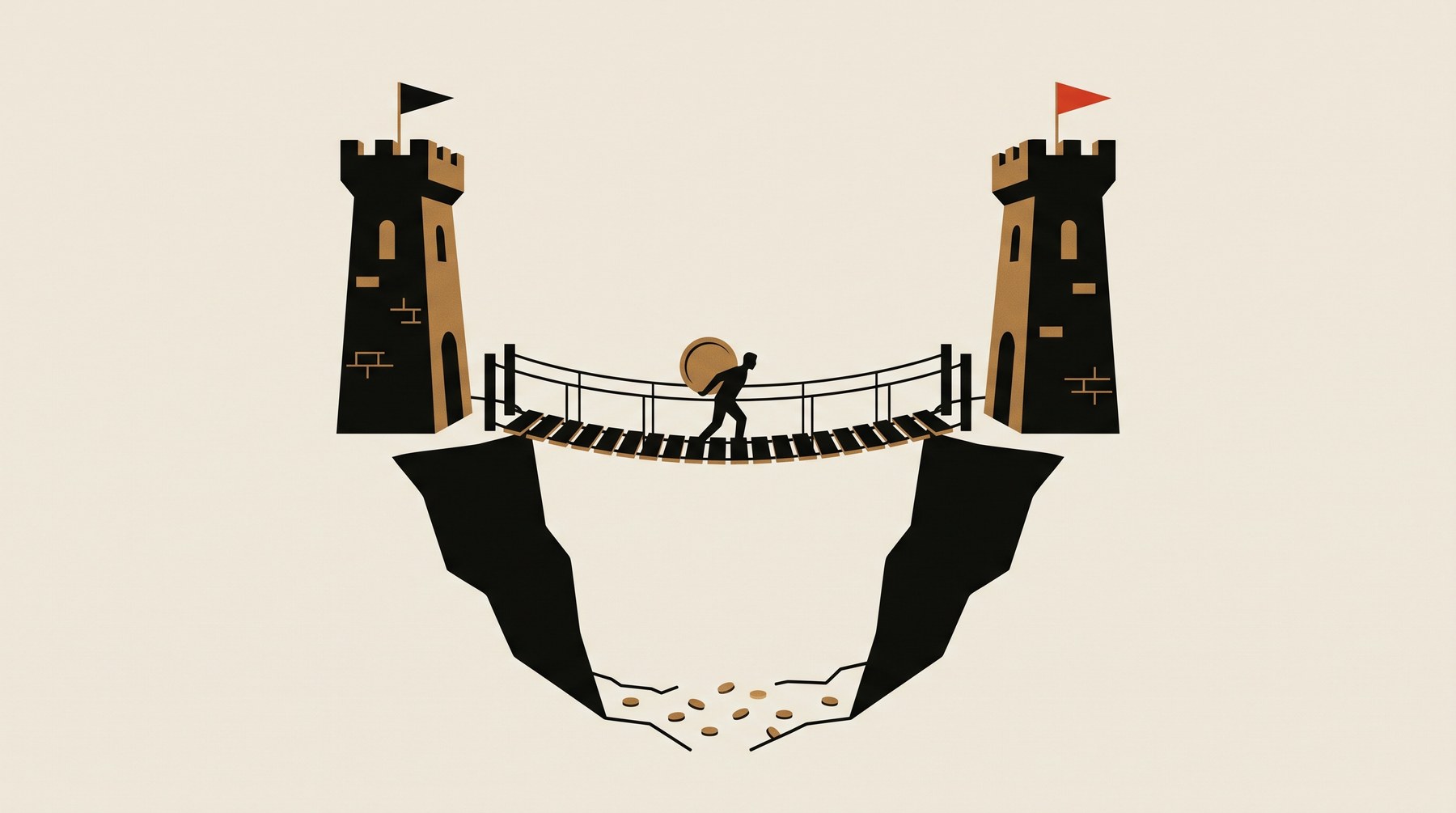
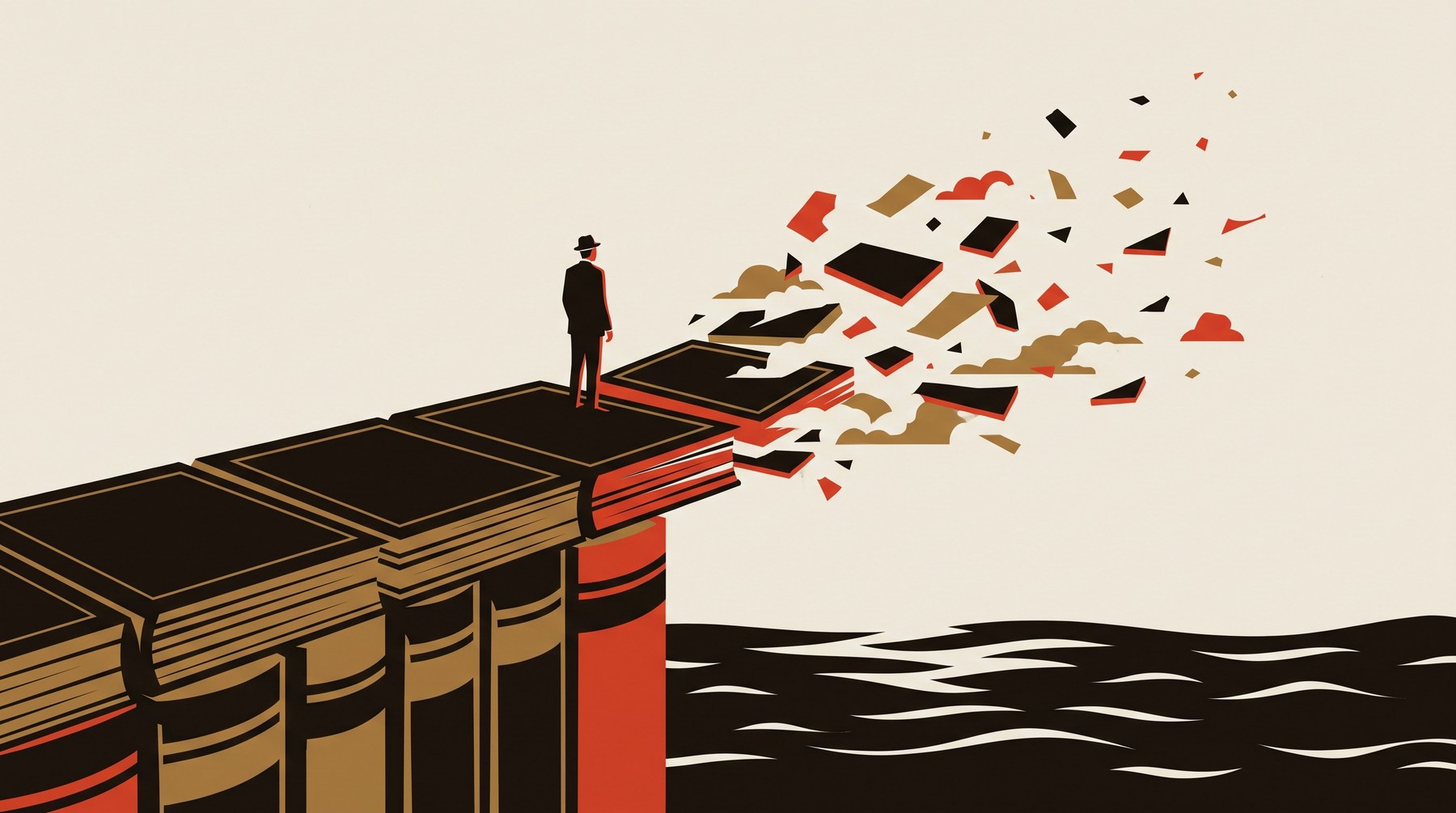
Price risk is the risk everyone watches. Regime risk is the one that empties estates.
Markets

The liquidity that isn't there

The order book is a promise, and promises get broken exactly when you try to collect.

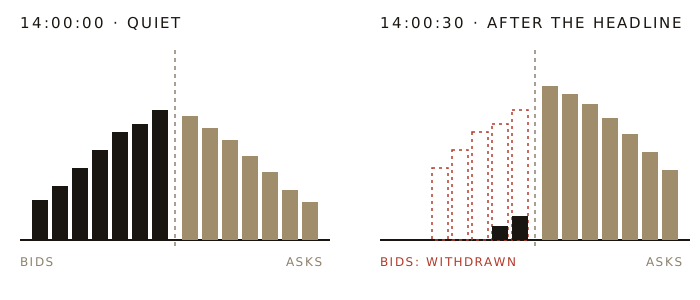
On the morning of 15 January 2015 the Swiss National Bank announced, without warning, that it would stop holding the franc at 1.20 to the euro. The floor had stood for three years, defended in speeches as recently as that week. Within twenty minutes the euro lost roughly a third of its value against the franc. The detail everyone remembers from that day is the price. The detail traders remember is the screen: for several minutes, in one of the most traded instruments on earth, there were no bids at all. Not thin ones. None. A market that turns over trillions had, briefly, no price.

An order book photographs well. Rows of bids stacked like brickwork, totals growing as you scroll down, the whole thing shaped like infrastructure. It invites you to lean on it. Every row, though, is a quote from a professional whose entire craft is knowing when to step away. A market maker earns a sliver on each trade for standing in the flow and loses a fortune by standing in front of the wrong trade, so the firm's software watches for the wrong trade with more attention than most people aim at anything in their lives. When the headline lands, the quotes are gone before you finish reading it.

Crypto runs the same physics with the safety covers removed. On 12 March 2020, as the pandemic hit every market at once, bitcoin roughly halved in a day. Leveraged longs were liquidated into a thinning book, each forced sale knocking the price into the next tier of forced sales, and at the worst of it the largest derivatives venue, BitMEX, went offline, citing a hardware failure, and the cascade paused, which tells you what was driving it. People who held spot with no leverage woke up poorer but fine. People who trusted the book to absorb their exit discovered what the book is: a queue that disbands when the queue is needed.

The order book is a photograph of promises. The market is what happens when you try to collect them.

There are two further tricks of the light worth knowing. The first is double counting. The same market-making firms quote on a dozen venues from one pool of inventory, so adding up the depth you can see across exchanges overstates what could actually be sold into it; touch one book hard and the others reprice instantly. The second is theatre. Some displayed size exists to be seen rather than filled, placed to suggest support and cancelled as price approaches. Regulators prosecute this in futures markets under the name spoofing. In less supervised corners it does not need a name.

Even the instruments engineered to never move can teach the lesson. In March 2023 the second-largest dollar stablecoin, USDC, disclosed that part of its reserves sat in Silicon Valley Bank just as that bank failed. Redemptions at one dollar were paused for the weekend; the only exit was the open market, and the open market did what it does when everyone faces the same door. The coin traded below ninety cents on Saturday, from holders paying a twelve percent fee to whoever would take the other side of their fear. By Monday the promise was restored, the peg snapped back, and the sellers had converted a weekend of worry into a permanent loss. The reserves were nearly fine all along. The liquidity was the crisis.

What would an honest measure look like? Something closer to this: how much can be sold, within what window, at what cost, on the day the reason for selling is on every front page. Calm-day slippage answers a different and mostly useless question. For scale, the desk measured a calm day from live order-book streams as this issue closed: filling a million dollars of bitcoin against the displayed book cost between one and two basis points, five million under four; the same clips in SOL cost roughly nine and thirty-six. Book-implied numbers, on a quiet Sunday, printed mainly so that a future issue can print the same table from a loud one. Liquidity is correlated with everything else going wrong, because the moment your position is falling is the moment the identical positions of strangers are falling, and the exit everyone priced in is one door wide.

The same book, thirty seconds apart. Illustrative, not measured.

The discipline that follows is unglamorous. Size positions against stressed depth, and treat displayed depth as a courtesy. Prefer instruments whose worst half hour you have seen, or can at least imagine priced. Ask of any position the only liquidity question that matters, which the screen has never answered: what will it cost to trade a lot, in the minute when everyone else must trade too. The screen tells you what it costs to trade a little, right now. The gap between those two numbers is where drowned portfolios are buried.

Ideas

Volatility is not risk

You can survive a wild ride and be ruined by a calm one.

For thirty years the most dangerous line in finance was also the smoothest. Bernard Madoff reported a gain of about one percent a month, month after month, through the dot-com crash and the 2008 panic alike, and on a chart the result looked like a savings account drawn with a ruler. Sophisticated allocators saw that line and read it as safety. The smoothness was the fraud. A genuine strategy earning those returns would have wobbled, and the total absence of wobble was the loudest warning on display. Nearly everyone read it as its opposite.

The confusion begins with vocabulary. Volatility measures how much the ride bounces. Risk wears many uniforms, and volatility is genuinely one of them; the uniform this essay cares about is the chance you never finish the ride. The two overlap often enough for the industry to treat them as synonyms, and the industry has a practical reason to do so: volatility can be computed fresh every morning from prices, while the probability of ruin hides in tails and structures and shows itself rarely, then completely.

Consider the ride that bounced least. Through 2016 and 2017 a popular exchange-traded product called XIV let investors bet on market calm, and calm is what they got: the product climbed steadily with shallow drawdowns while volatility itself sat at record lows. On 5 February 2018 volatility spiked, and XIV lost the bulk of its value in about an hour of after-hours trading. It was terminated within days. By the metric its holders watched, they had owned one of the calmest performers of the decade. The danger had simply been stored where the metric could not see it, waiting in a tail that arrived all at once.

Volatility is not sufficient evidence of risk, and smoothness is not sufficient evidence of safety.

Crypto staged the same play with a bigger cast. A stablecoin is engineered to show no volatility at all, and TerraUSD obliged, holding within a whisker of one dollar for months while paying its holders nearly twenty percent to park in its ecosystem. In May 2022 it went to approximately zero in a week. An asset whose chart was a flat line at $1.00 delivered a near-total loss, wiping out tens of billions, while bitcoin, mocked forever for its swings, has done its worst to the people who borrowed against it, sold it in a panic, or bought the top and needed the money back too soon. The wild chart told you the truth about itself every single day. The flat one saved it all up.

Why does the confusion survive its casualties? Because smooth pays. A manager judged monthly will, given any latitude, move risk out of the visible wobble and into the invisible tail, selling insurance against rare events and booking the premium as skill. The strategy works until the event, the fees are collected annually, and the event, with luck, lands on someone else's watch. Nobody plans this in so many words. The incentive does the planning.

The retail version of the trap is gentler and more common. The cautious saver, frightened by wobble, is the natural customer for whatever product advertises its absence: the structured note with capital protection in the brochure and a bank's credit risk in the footnotes, the stable yield that turns out to be someone else's loan, the fund that never has a down month until the month it never recovers from. Caution, misdirected at volatility, walks straight toward the risks that do the actual killing. The turbulent index fund the saver rejected would have frightened them a hundred times and ruined almost none of them.

The defense takes two questions. First: what has to happen for this to go to zero? If the honest answer is a plausible Tuesday, the daily calm is decoration. Second: who is paying me, and for bearing what? Every smooth above-market return is a payment for something. If you cannot name the something, you are the something.

None of this argues for seeking out wild rides; it argues for reading charts as testimony rather than verdict. You can hold a volatile thing safely and a quiet thing fatally. The chart tells you which one is loud. It has never once told you which one is safe.

THE RIPOSTE
Actually, volatility is risk

The essay above is the house view, and the house should not get the last word. For most holders of money, volatility is risk, and treating the two as separate is a luxury of the unleveraged.

Start with anyone who owes something. Collateral is marked daily, and a lender does not wait for a thesis to play out; the margin call converts a wobble into a forced sale at the low, and the loss it locks in is arithmetic, never psychology. Funds face redemptions, so the path decides what survives to enjoy the destination. A retiree draws a fixed sum each month, which makes the sequence of returns, volatility by another name, the difference between a portfolio that outlives them and one that does not. Banks and insurers must hold capital against the swing itself, by regulation, so turbulence consumes their balance sheets whether ruin ever arrives or not. And the claim that a long-term investor can simply sit through the ride describes a creature with no debts, no deadlines and no feelings. Most money is run by people carrying all three.

The house will reply that these are facts about liabilities rather than about the asset. True, and beside the point. Money does not exist in a vacuum; it exists attached to obligations, and an asset's risk lives in the relationship between its chart and its holder's promises. For the leveraged, the regulated, the redeemable and the mortal, the bouncing line forces action, and forced action is where ruin actually comes from. Smoothness can lie. So can the comforting idea that turbulence is only noise. The reader deserved both warnings on the same page.

A DISSENT, FILED FROM THE SAME DESK
Money

The dollar ate its rival

The technology built to route around the dollar became its cheapest delivery system.

In 2014 a small project called Realcoin launched on a bitcoin sidechain with an idea nobody found romantic: a token worth exactly one dollar, always. It soon renamed itself Tether. For a movement that dreamed of stateless money this was almost an embarrassment, a training-wheels product for traders who wanted somewhere to stand between bets. A decade on, that token and its imitators settle more value than most national payment systems, and of everything crypto has built, the stablecoin has the strongest claim to a product that ordinary people outside the casino actually use. The revolution's killer app turned out to be the currency it was rebelling against.

Look at where the usage lives and the picture sharpens. In Buenos Aires, Istanbul and Lagos, people who watch their savings lose a tenth of their value in a bad month do not want a volatile new money; they want the old strong one, and their banks ration it. A phone wallet holding digital dollars asks no permission from the central bank and keeps no banker's hours. The appetite itself is ancient. Most physical hundred-dollar bills have lived outside the United States for decades, stuffed in mattresses from Bogotá to Kyiv. The stablecoin did not create the world's dollar hunger. It built the dollar a better container.

The irony is in the plumbing. These rails were laid by people who wanted out: censorship-resistant, borderless, no correspondent banks, no Washington chokepoints. Dollars turned out to be the perfect passenger. A stablecoin dollar moves on a Saturday night, crosses borders that physical cash cannot, and reaches towns the correspondent banking system quietly abandoned years ago as too small to be worth the compliance cost. The network built to escape American money became the cheapest delivery system American money has ever had.

Every new holder of a dollar stablecoin, wherever on earth they live, becomes, at one remove, a small unpaid lender to the United States.

Washington took a while to see it, then moved with unusual speed, and in the opposite direction from a ban. Stablecoin issuers back their tokens mostly with short-term US government debt, which makes the largest of them a Treasury buyer on the scale of a mid-sized country. The GENIUS Act, the federal stablecoin law passed in 2025, wrote that arrangement into statute: issue all the digital dollars you like, so long as the reserves sit in T-bills and the sanctions lists are honored. The issuers already freeze blacklisted addresses on request. Follow the loop around, three balance sheets long: a saver in Lagos swaps naira for a token, the token is a claim on its issuer, and the issuer parks the proceeds in Treasuries. At the end of the chain, a purchase made to escape a weak state helps finance the strongest one. Seigniorage used to require an empire. Now it ships as an app.

Where does that leave the rivals? The euro and the yuan have yet to field a serious competitor at scale, each held back by its own regulation and capital controls, and the window in which one might have mattered is narrowing. Crypto's own currencies met an older law of money instead: given a stable unit and a swinging one, people save the swinging one and spend the stable one. Bitcoin settled into a role closer to gold with a ticker. For actually buying things, the dollar won the blockchain the way it won the eurodollar market and the mattress: by being the thing everyone already agreed on.

Could anything unseat the arrangement? The candidates each carry their own handicap. A euro stablecoin at scale would require Europe to want one, and its regulators have preferred to perfect the paperwork while the market emigrates. State digital currencies exist in pilots on three continents and have so far found few volunteers; whatever their design virtues, the public has not yet asked for one. Gold-backed tokens revive a nineteenth-century idea with a twenty-first-century custody problem: somebody still guards the vault, and somebody can still visit them. The honest threat is slower and duller: that the same overreach that makes the dollar useful as a weapon makes holders look for exits faster than the network effect can replace them. Weapons depreciate with use. So do currencies used as weapons.

There is a lesson in the loop, and it reaches past crypto, provided it is stated with its dates attached: so far, under the network effects that actually obtain, the open network has not overthrown the reigning standard. It has amplified it. The pipes were laid by people who wanted out of the dollar. The thing flowing through them, from Lagos to Buenos Aires, is the dollar itself, now open on weekends.

Money

The relic that refused to die

Gold pays nothing, does nothing, and is being bought by the institutions whose product competes with it. That is information.

Keynes called the gold standard a barbarous relic in 1923, and the phrase stuck to the metal itself, which was unfair but convenient. Nixon cut the dollar's last tie to gold in 1971 with a televised shrug. Economists spent the following half century explaining, correctly, that gold pays no interest, earns nothing, does nothing, and costs money to guard. The case was airtight. The metal quadrupled anyway, and then, in the mid-2020s, made new all-time highs with the enthusiasm of a startup. The most interesting detail was the buyer. This was not a retail mania; the bid, year after year, came from central banks, the institutions whose entire product competes with gold.

The timing is not mysterious. In February 2022, in response to the invasion of Ukraine, western governments froze the reserves of the Russian central bank: roughly three hundred billion dollars of another sovereign's savings, switched off over a weekend by legal notice. Whatever one thinks of the cause, every finance ministry on earth received the same memo that morning. A reserve held in someone else's currency, in someone else's banking system, is a promise that the someone can revoke. Central bank gold purchases, already firm, roughly doubled in the years that followed, led by exactly the countries that could imagine reading such a notice themselves. Gold in a vault at home answers to no memo. It is the one reserve asset that has no issuer, which for four thousand years has been either its defect or its entire point, depending on the decade.

When the printers of money accumulate the thing that cannot be printed, a careful reader sits up.

Crypto discovered in 2022 that its rails could be sanctioned; Moscow discovered the same about the dollar system; both discoveries sent buyers toward assets that exist outside anyone's promise. Bitcoin was marketed for fifteen years as digital gold, and the marketing was better than its authors knew, though the resemblance is not the one on the brochure. The two assets share no technology and no constituency. What they share is a negative property: neither is anyone's liability. Everything else in a portfolio, every bond, deposit, stablecoin and share, is a claim on some counterparty's future behavior. Gold and its digital imitator are claims on nothing, which means there is nobody to disappoint you.

An asset with no cash flows cannot be valued, only priced, and its price is a referendum. On what, exactly? Nothing about gold is monocausal: real yields pull at it, the dollar pulls at it, fashion pulls at it, and any honest model leaves a remainder unexplained. But across the long arcs one variable keeps its grip. Gold's real price has tended to sag when the world believes its institutions, its treaties and its ledgers, and to rise when that belief thins. Inflation, despite the brochures, fits the record far worse; the metal slept through inflationary years and sprinted through quiet ones. The referendum of the mid-2020s, in which the yes votes were cast by central banks themselves, is worth reading slowly. The managers of the promise system are quietly buying the exit.

None of this makes the metal a sensible core holding for a person saving for retirement, and this magazine is not about to recommend one. Over any long stretch, productive assets, businesses that compound earnings, have buried it, and will likely go on burying it. Gold's owner earns no yield, pays for storage, and holds an asset whose entire return depends on someone later feeling worse about the world than the owner does today. As an investment it is mediocre. As an instrument panel it is superb. It is the needle that moves when the passengers with access to the cockpit start strapping on parachutes.

So the useful habit has less to do with owning gold than watching its owners. When the marginal buyer is a frightened saver in a collapsing currency, the metal is doing its oldest job, and the story is local. When the marginal buyer is the official sector of the world's rising powers, patiently, at any price, for years, the story is about the architecture: a slow vote against the assumption that the ledgers of the last century's winners are permanently safe places to keep the wealth of this one's. That vote can be wrong; the buyers of the relic have been early before, sometimes by decades. But their bid is information, and it costs nothing to read. Four thousand years into its career, the barbarous relic still performs its one service. It keeps a rough, running score of how far the world's institutions are trusted by the people who run them, and the score, unlike the commentary, is settled in metal.

Strategy

The half-life of an edge

Every way of making money in markets decays. The only question worth asking is how fast.

In January 2018 a bitcoin in Seoul cost up to half again as much as the same bitcoin in New York. The gap was famous enough to have a name, the kimchi premium, and it existed because Korean demand was ferocious while Korean capital controls made it slow and legally delicate to move money in size. For the few who could route around the friction, this was as close to free money as markets ever offer. Then, over months, it stopped being free. Word spread, capital found channels, arbitrage desks industrialized the route, and the premium collapsed to a flicker. The desk measured the flicker while closing this issue: single-digit basis points. Nobody broke the trade. It was loved to death.

That is the standard biography of every edge. An edge is a disagreement with the market price that happens to be right and happens to pay, and the act of collecting the payment advertises the disagreement. Fills leave footprints. Returns attract capital, capital hires researchers, researchers converge on the same idea, and the mispricing everyone is being paid to correct gets corrected. A market is, among other things, a machine for eating edges, and it is never full.

The pattern is measurable. Academics who track published trading anomalies find that once a strategy appears in a journal its excess returns shrink sharply, with the informed money front-running the readership. The trading floor version is faster and less polite. Early bitcoin arbitrage paid double-digit spreads between exchanges to anyone with accounts on both and a tolerance for wire delays; within a few years the same trade needed colocated servers to be worth doing. In equities the arms race ran all the way to physics: firms strung microwave towers between Chicago and New Jersey because glass fiber bends light around the earth's curve a few milliseconds too slowly. Each generation of the trade pays less and costs more, which is what decay looks like from the inside.

An edge is a loan from the crowd's inattention, and the loan is callable without notice.

So the professional question about any way of making money is never whether it works. It is the question a physicist asks about an isotope: what is the half-life, and how far along are we? Some edges decay in milliseconds and belong to whoever spent the most on radios. Some decay over years because they are protected by a moat: secrecy that survives employee turnover, access competitors cannot buy, or a size so small that serious capital cannot be bothered to compete for it. A few persist for decades because copying them hurts, in the way that buying assets during a panic hurts, and pain is the one barrier to entry that never gets arbitraged away.

Crypto has run the full life cycle often enough to supply a textbook. The most instructive chapter concerns the Grayscale trade. For years the largest bitcoin trust traded above the value of the coins it held, and funds discovered they could create shares at par, wait out a lockup, and sell at the premium: a conveyor belt of apparently free money. Capital converged, the belt ran faster, and in early 2021 the premium did what crowded premiums do, inverting into a discount. The trade's most enthusiastic practitioners had borrowed to run it at size. One of them, Three Arrows Capital, failed the following year owing money across half the industry's lenders; the dying trade was not its only wound, but it was among the first, and the leverage did the rest. The edge did not merely decay. It reversed polarity, and the players who had mistaken a queue for a machine were still holding their place in line.

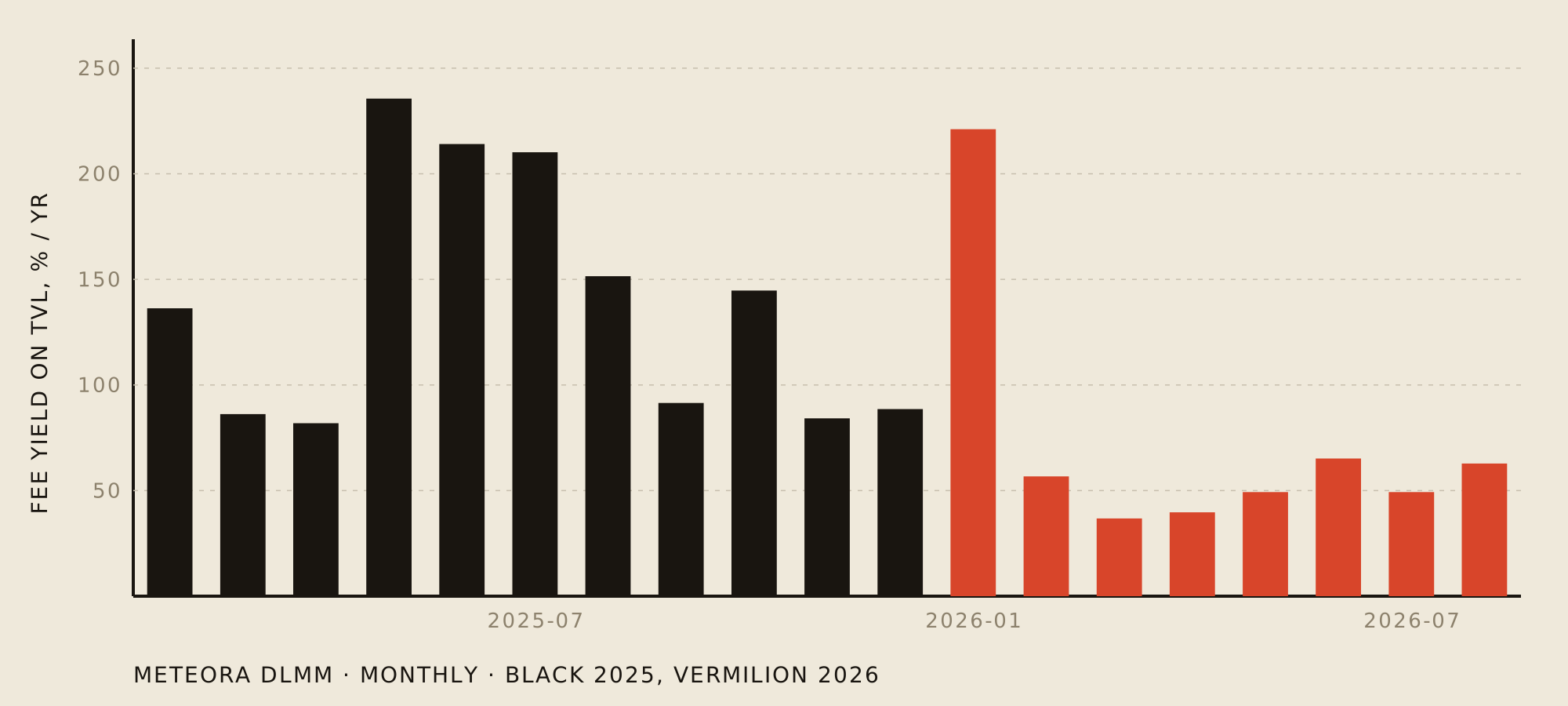
The decay is also measurable close to home, and this magazine now measures it. The desk's own corner of the market is liquidity provision in Solana's DLMM pools, where the edge is fee capture, and the aggregate record of that edge is public. Computed from protocol fee and TVL histories: through 2025 the annualized fee yield on capital parked in those pools swung between the mid eighties and above two hundred percent, paid out by successive memecoin waves; through 2026 to date it has compressed to between the high thirties and the mid sixties, while the capital base roughly halved. The chart below is not an illustration. It is the first measured curve this magazine has printed, and it shows the machine behaving exactly as described: returns that fat recruited their own competition, the competition arrived, and the yield is drifting toward the cost of the work.

Measured: monthly protocol fees over average TVL, annualized. Computed by the desk from DefiLlama fee and TVL records, 31 Aug 2026.

Beware, too, of the edge that refuses to decay on schedule. Returns that stay eerily steady while the crowd piles in are often no edge at all but a risk premium in costume, insurance sold against a rare event, collecting small premiums until the event arrives and returns them with interest. Real edges fade politely. Costumed ones detonate.

The discipline this suggests is closer to farming than to conquest. Treat every working strategy as borrowed rather than owned, with the loan callable at the market's convenience. Watch the vital signs of decay honestly: fills getting worse, spreads compressing, imitators visible in the flow, return per unit of risk drifting down quarter after quarter. Retire trades a little before the market retires them for you, and put the research budget into the next disagreement while the current one still pays for it. The saddest figure in markets is the owner of a once-great edge, averaging down on the past. The market does not send a letter when the loan is called. The fills just get a little worse, and then a little worse than that.

Trust

Who checks the checkers

Proof of reserves, attestations, and the awkward question of who audits the auditors.
A photograph of the vault, taken at a moment the owner chose, says nothing about the IOUs in the drawer.

In the weeks after FTX collapsed in November 2022, one detail kept snagging attention. The exchange had auditors. Real ones, with letterheads; one of them, Prager Metis, advertised itself as the first accounting firm to open a headquarters in the metaverse. The statements were signed, and eight billion dollars of customer money was missing anyway. Out of the wreckage the industry produced a promise with a satisfying ring to it: proof of reserves. No more trust, went the pitch. Cryptographic receipts, on-chain, for anyone to verify. Then came a quieter detail. That December the accounting firm Mazars, which had just produced Binance's proof-of-reserves report, stopped all work for crypto clients and pulled its reports from the web. The report it withdrew had checked only one side of the ledger.

That one-sidedness is the heart of the problem. Proving assets is the easy half: a wallet can sign a message, and the whole world can watch the balance. Solvency is assets minus liabilities, and liabilities do not live on a blockchain. Who is owed what, which deposits were pledged twice, what was borrowed the night before the snapshot and returned the morning after: all of it sits in databases and side letters, exactly where the trouble has always lived.

It helps to know the vocabulary the profession itself uses carefully and marketing departments do not. An audit is an opinion on a company's financial statements as a whole, formed under standards that require independence and professional skepticism: reasonable assurance, obtained by testing rather than accepting. An attestation confirms that particular numbers were as stated, at a particular moment, under procedures the client agreed to. The strongest claims in crypto tend to be attestations wearing the word audit in the press release. Tether, the largest stablecoin, has published quarterly attestations from a serious firm for years, along with a promise of a full audit that has now been pending for most of a decade. The numbers may well be fine. The point is that the checkmark and the check are different objects.

None of this is a crypto invention. Enron's books were blessed by Arthur Andersen, then one of the five great audit firms on earth, which shredded documents as the client burned and was destroyed alongside it. The lesson the profession drew was structural rather than personal: the checker was paid by the checked, the conflicts that arrangement breeds are documented at book length, and the firm discovered the cost of them only when it ceased to exist. Every assurance scheme since has been an attempt to manage that same conflict, never to abolish it, because the checked always pays somewhere in the chain.

Follow the chain up and it does not terminate. Auditors are inspected by oversight boards, which answer to regulators, who answer to politicians, who answer, in theory, to the people who had their savings on the exchange. Each link adds slack, and asking who checks the checkers eventually returns to where it started. Expecting the chain to end in certainty is the category error. Chains of assurance do not end. They are anchored, and the anchor is exposure: what the checker stands to lose by being wrong. Andersen's partners lost the firm. A boutique with a metaverse office and one big client has nothing at stake but the client, which is to say the fee, which is to say nothing.

Better designs exist, and honesty requires describing both their promise and their ceiling. The strongest proof-of-reserves schemes now publish the liability side as a Merkle tree, letting every customer verify that their own balance was included in the total the assets were checked against; an exchange that omits depositors to look solvent risks being caught by any one of them. On-chain funds go further, running the entire ledger in public. These are real improvements, and they still stop at the chain's edge: no cryptography can see the loan taken quietly against the reserves, the court order pending, or the second set of books. Mathematics verifies what was written down. The historic problem has always been what wasn't.

So the practical questions about any attestation, proof, or seal of approval are three. Who performed it, and would their name survive its failure? What exactly did it cover, and what did it decline to look at? And what happens to the checker if it turns out to be wrong? Continuous verification beats quarterly, and liabilities on-chain beat liabilities in a spreadsheet. As for the old signature against the new ceremony, keep the categories straight: reputation is collateral rather than truth, cryptography is verification rather than completeness, and neither substitutes for scope, meaning what was checked and what was carefully not. The deepest tell is exposure. The links in the chain that cost nothing to give are the ones that snap.

Macro

The price of time

Interest is the oldest price on earth. We spent a decade pretending it could be zero, and the bill is still arriving.

The oldest price in the world is the one attached to time. Clay tablets from Sumer record loans of grain and silver, with the interest set out as carefully as any modern term sheet, four thousand years before anyone drew a yield curve. Civilisations have argued about that price ever since. Priests capped it, philosophers condemned it, three major religions banned it outright at one point or another, and every commercial society ended up charging it anyway, because a bushel of grain today has never been worth the same as a promise of one next year.

Which is why the strangest decade in the history of finance may turn out to be the one just behind us. From roughly 2012 to 2021 the rich world experimented with pricing time at zero, and in places below it. At the peak, in late 2020, close to eighteen trillion dollars of bonds traded at negative yields. Savers in Europe paid governments for the privilege of lending to them. Austria sold a bond maturing in a hundred years and buyers queued for it, then queued again when it reissued. Pension funds, obliged to earn returns the safe assets no longer offered, wandered out the risk curve like polite people edging toward a buffet that keeps moving away.

Free time bought some strange things. It kept companies alive whose business models were, on honest arithmetic, already dead; the walking portfolio of zombie firms grew all decade, rolling debt at rates that asked no questions. It financed a venture economy in which losing money for a decade was a strategy rather than a symptom, because the discount rate that would have punished distant profits had been switched off. And it minted crypto's greatest bull market. When cash yields nothing, a coin that yields nothing is no longer at a disadvantage, and an internet full of stimulus cheques and closed stadiums did the rest. The 2021 mania has many parents, but the zero rate signed most of the cheques.

The rate of interest is the exchange rate between the present and the future, and it gets into every other price on earth.

Then time got expensive again, fast. The inflation of 2021 forced the swiftest rate-hiking cycle in four decades, and 2022 became the worst year for bonds in the modern record books. The Austrian century bond, that monument to the era, lost roughly three quarters of its value from the top. This was not exotic risk punished. It was the safest instrument on earth, government paper, doing exactly what the mathematics of duration promises when the price of time quadruples: the longer the promise, the harder the fall.

The most instructive casualty was a bank. Silicon Valley Bank did not lend to gamblers or buy anything the regulators frowned at. It took in a flood of deposits and parked them in long-dated Treasuries and agency bonds at the top of the market, reaching for a little extra yield in the safest paper available. When rates rose, the bonds sank; when depositors noticed, they left at the speed of a group chat; in March 2023 the bank was gone in about two days. Nobody involved thought they were speculating on interest rates. Everyone holding a long promise is, always.

That is the general lesson hiding under the specific wreckage. A rate of interest is a gravity setting, and every asset is a stream of future money being pulled toward the present at whatever strength the setting dictates. Houses, growth stocks, farmland, venture stakes, hundred-year bonds and internet coins all float higher when gravity weakens, and their owners, being human, attribute the levitation to their own judgment. The decade of free time ran that experiment at planetary scale and got the usual result. Skill is what you call leverage on the way up.

What should a reader do with this, other than nod? Two things. First, when valuing anything, ask what it assumes about the price of time, because that assumption is doing more work than any story about technology or scarcity. An asset priced for zero rates in a five percent world is not cheap because it has fallen; it may simply be finishing the trip back. Second, distrust any era's certainty that its own rate regime is permanent. In 2020 the consensus held that rates could never rise again; within three years that consensus had cost bondholders trillions and sunk banks that ran on it. The price of time has been fluctuating since Sumer. The safest assumption about it is that it will go on fluctuating after us, and the most expensive words in finance remain the four that every cycle teaches again: this time it lasts.

Markets

The index ate the market

Passive investing is the best deal ever offered to savers. Somewhere past halfway, it starts to unprice the market it rides.

When John Bogle launched the first index mutual fund in 1976, the industry called it Bogle's folly and un-American, on the theory that no red-blooded investor would settle for average on purpose. The fund raised a fraction of its target and spent years as a curiosity. Half a century later, settling for average on purpose has conquered the world. Passive funds hold more of the American stock market than active managers do, index providers rank among the most powerful unelected institutions in finance, and the folly compounds quietly in half the retirement accounts on earth. It stands among the best deals ever offered to the ordinary saver, and this essay comes to praise it before burying a warning in it.

The praise first, because it is deserved. The average active fund lags the index after fees, in most years and over most horizons, a finding replicated so often it has stopped being interesting. The reasons are structural rather than moral: active managers as a group hold the market, so their average return is the market's, minus the costs of the effort. Indexing simply declines to pay the costs. For a schoolteacher saving for retirement, the humble index fund has been worth more than a century of stock-picking advice. None of what follows contradicts this.

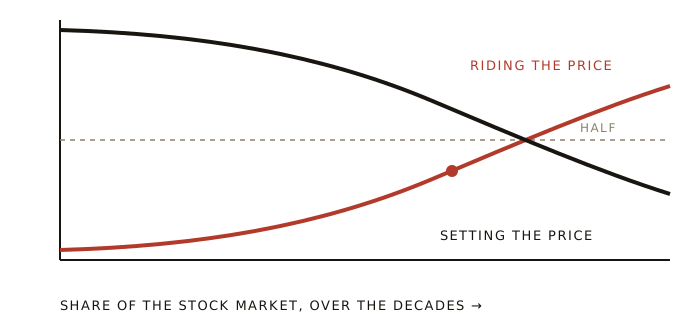
The warning is about what happens when the exception becomes the rule. Markets do the useful thing they do, setting prices that steer capital, because somebody somewhere is doing homework: reading filings, questioning managements, selling nonsense short. Indexing is a free ride on that homework. Free rides are fine while riders are few, but every dollar that migrates from active to passive stops voting on what anything is worth. It buys whatever the index holds, in the index's proportions, on the day the paycheck lands. Price discovery does not disappear; it just gets outsourced to a shrinking minority, and their errors meet less resistance on the way into everyone's portfolio.

Each dollar that moves from active to passive is a dollar that no longer votes on what anything is worth.

The share that stops asking questions. Illustrative.

You can watch the consequences in the index itself. Flows chase the market's weightiest names by construction, so strength adds weight and weight attracts strength, and by the mid-2020s a handful of technology giants weighed more in global benchmarks than the entire stock markets of major nations. Anyone buying the world through an index fund was, whether they knew it or not, making a concentrated bet on a few campuses in California and Washington. Diversification was the product on the label. The contents had quietly become something else.

There is also a governance puzzle nobody has solved. The three largest index managers together hold decisive stakes in nearly every public company in America, with voting power exercised by small stewardship teams on behalf of tens of millions of savers who have never heard of them. The old market had greedy owners with opinions. The new one has diligent administrators with checklists. Companies have noticed which is easier to face at an annual meeting.

Crypto, as usual, ran the experiment at speed. The asset class spent fifteen years telling a story about individual conviction, then got its ETFs, and within a couple of years the marginal buyer of bitcoin was an allocation model rebalancing a sleeve between gold and commodities. The coin designed for exit from the financial system now moves with the system's plumbing: model portfolios in, price up; risk committees out, price down. Being indexed is a form of adulthood, and adulthood has a schedule.

What breaks the loop, if anything does? Fee wars have taken indexing's price to zero, so the free ride cannot get cheaper, only more crowded. The textbook answer says that as passive grows, mispricings widen until active management pays again, and the system self-corrects around some equilibrium. Perhaps. The uncomfortable observation is that the correction requires losses first: the crowd discovers what it owns only when the weightiest names stumble and the index, that engine of effortless compounding, reveals itself as a momentum machine running in reverse. The riders will look around for the horses, and find mostly riders.

The practical conclusions are modest and worth stating plainly. Own index funds; they remain the best bargain in finance. Know what the index actually holds this year, rather than what it held when you formed your opinion of it, because the label drifts. Keep some respect, and perhaps some capital, for the unfashionable people still doing homework, since your free ride runs on their effort. And when someone tells you the index always comes back, remember that the sentence is true of the index in the way it was never true of its members. Averages are immortal. The things averaged are not.

Trust

Marked to make-believe

Private assets fell as hard as public ones in the crash. Their prices just declined to mention it.

In 2022 the public technology market fell off a cliff. The Nasdaq lost a third of its value, the speculative end lost far more, and anyone whose pension statement arrived that January learned the number over breakfast. Venture portfolios, stuffed with smaller and more fragile versions of the same companies, reported a gentler year. Buyout funds, which own businesses levered to the same economy, gentler still. Either private assets possess a magic that repeals economics, or somebody's numbers were late. The reader is invited to guess.

The polite term for the phenomenon is smoothing. One prominent quant investor prefers volatility laundering, which has the advantage of naming the customer. A private fund's net asset value comes from models and judgment: comparable companies, recent funding rounds, discount rates chosen by the people whose bonuses depend on the answer, reviewed by auditors who see what the fund shows them. None of this requires anyone to lie, and some of it is defensible on its own terms: a business with no traded price genuinely is hard to value, and declining to mark it against a panicked comparable can be prudence as easily as vanity. Still, marks lag because updating them is optional in the short run, and every incentive at the table points toward optional. The general partner reports steadier performance, the pension trustee's board meeting goes smoothly, the consultant's asset-allocation chart shows a miracle: equity returns with bond-like calm. The only party missing from the table is the future, which will eventually insist.

The market that prices things every second had a catastrophe; the market that prices things by committee had a wobble.

The tell is what happens when private stakes meet real buyers. Secondary markets, where investors sell fund positions for cash before the fund winds up, spent 2022 and 2023 clearing at meaningful discounts to reported value. When the exit price and the official price disagree, the exit price is the one you can spend. Meanwhile allocators kept shovelling money toward private markets, and more than one endowment officer has admitted the quiet part: the smoothness itself is the product. An asset that refuses to tell you its bad news in real time is easier to hold, easier to defend in committee, and easier to be wrong about for years.

It should be said in fairness that illiquidity has an honest premium. Companies genuinely benefit from patient capital that cannot flee on a bad Tuesday, and some of private equity's edge is real: operational control, concentration, time. The trouble begins where the premium is earned by the asset and the calm is manufactured by the accounting. An investor who accepts ten years of lockup deserves payment for the lockup. An investor who accepts it because the chart looked placid is paying for the privilege of not being told.

Crypto rebuilt this cathedral in eighteen months, as is its custom. Token projects raised at valuations set by their most enthusiastic investor and reported that number as worth. Treasuries were marked at the last trade of thinly traded coins the treasury itself dominated, an arrangement where the owner of the asset also operates the printing press for its price. Locked tokens, unsaleable for years, were counted at the spot price of the unlocked ones. The collapse of 2022 revealed venture books full of round-trip valuations and balance sheets whose largest line items evaporated on contact with a bid. The mechanism was the private-markets mechanism, sped up for a younger audience.

What arms a reader against all this? A short list of questions, none requiring a spreadsheet. Who sets this price, and what happens to them if it is wrong? When did the mark last move by more than the market's mood, and in which direction? What did the most recent actual transaction, a real buyer paying real cash, say, and how far from the official number did it land? If the answers are, respectively, the seller, nothing, never, and far below: the calm on the statement is a costume, and the reader already knows what wears costumes.

The deeper point survives even where every mark is honest. A price is an opinion until you need cash; then it becomes a verdict. Public markets deliver the verdict continuously, which is painful and vulgar and clarifying. Private ones let the opinion stand unchallenged for years, which feels like stability and is actually suspense. Neither arrangement changes what the underlying businesses earn, which decides everything in the end. But investors do not live in the end. They live quarter to quarter, statement to statement, and the industry has learned that what compounds fastest of all is not capital but comfort. Comfort, unlike capital, is always fully valued.

Culture

The casino at the heart of the market

Same-day options, memecoins, prediction markets. The customers know they are gambling. The house still pretends otherwise.

On a January afternoon in 2021 a loss-making video game retailer became, for a few hours, the most traded security on earth. GameStop's rise had the structure of a heist movie: a forum of small traders, a cornered short seller, brokers pulling the buy button at the climax, congressional hearings as the credits rolled. It was covered as a freak event. It was actually a product launch. The market had discovered its future as mass entertainment, and the entertainment industry has been iterating on the format ever since.

Consider what the customer can now buy. Options that expire the same day, so a position is a lottery ticket with a lunchtime drawing; contracts on whether a rapper will win an award or a president will finish a term; coins launched by celebrities that trade like autographs with a price feed; and, through the same phone, parlays on the evening's basketball. The distinction between a brokerage, a sportsbook, and a casino is now largely a question of which regulator processes the paperwork. Zero-day options have grown from a curiosity into a dominant share of index option volume, and the average holding period across every one of these products is measured in hours. The customers are not confused about this. They are at the casino, they know they are at the casino, and they resent the pretense less than their critics do.

The scandal of the casino is not that people gamble. It is that the house keeps insisting it runs a church.

The house, meanwhile, collects the way houses always have. Payment for order flow routes the retail stampede through market makers who pay for the privilege of standing on the other side. Exchanges harvest fees on every expiry-day lottery ticket. Memecoin platforms take their cut at launch, insiders take theirs at the top, and the coin itself, having no cash flows, no claim, and no purpose beyond the trade, redistributes the entry fees from late arrivals to early ones minus friction. This is not an accusation; it is the arithmetic on the label, for anyone who reads labels at a party.

It would be easy, and half the financial press has found it easy, to treat all this as decline. The fuller truth is less flattering to the old regime. The solemn end of the industry spent decades selling products with casino odds in fiduciary costume: structured notes whose complexity existed to hide the margin, funds charging active fees for index performance, IPOs priced to enrich the placing banks' clients before lunch. The gambler buying a same-day option at least knows the game and the odds are printed on it.

Something real is nonetheless being spent, and it is worth naming. Markets can absorb any amount of noise trading, but attention is a society's scarcest capital, and the format wars are over exactly that. The same design tricks that keep a phone game sticky, streaks, confetti, leaderboards, near-misses, now operate on the savings of people whose margin for error is thin. A casino on the strip takes an evening and a defined bankroll. The one in the pocket takes every idle moment and offers leverage. The old vice was bounded by geography. The new one is bounded by battery life.

And yet the gambling instinct, honestly priced, has its defense, and even its economics. Gambling demand is a durable willingness to pay, and modern product design has learned to monetize the entertainment value directly, where older products monetized expected return; that shift, rather than any decline in morals, explains most of what the last five years put on the shelf. Every market that ever discovered a price did so partly on the backs of people who showed up to play rather than to allocate. The liquidity that serious capital enjoys at noon was donated by someone's boredom at midnight. Prediction markets, dismissed as degenerate a decade ago, called recent elections more calmly than most pollsters, because a wallet concentrates the mind in a way a survey never will. Speculation is the market's metabolism. The question was never how to remove it, only who pays for it, at what disclosure, and whether the young trader burning a paycheck on expiry day has anywhere in the building to graduate to.

That is the standard worth defending: not solemnity, honesty. Let the casino be a casino, with the odds on the door and the house edge in figures a teenager can read. Let the church stop selling lottery tickets from behind the altar. And let the customer learn the one statistic both buildings work hard to keep off the signage, which is that the house's returns come from somewhere, the somewhere is the patrons, and the exceptions who beat the house all discovered the same trick. They stopped being patrons. Some of them are reading the order flow of the rest, and they are very grateful for the entertainment.

Geopolitics

The sanctions laboratory

Washington has spent four decades testing what happens when you price a country out of the dollar. The findings are in, and both sides are misreading them.

For more than four decades the United States has been running an experiment on Iran that no economics department could get past an ethics committee: cut a mid-sized industrial country out of the world's payment system and observe. The results are in, and they are taught in no textbook, because the textbook assumed the patient would either capitulate or collapse. Iran did neither. It mutated. The rial rotted, the middle class learned to hold its savings in gold, dollars and, lately, stablecoins, and around the blockade grew an entire parallel economy of exchange houses, hawala brokers whose networks predate SWIFT by several centuries, discounted oil moving through middlemen to Asia, and a shadow fleet of elderly tankers with ambiguous paperwork. When the state licensed bitcoin mining, it was monetizing stranded gas: turning energy the sanctions would not let it sell into money the sanctions could not stop. The lesson of the laboratory was plain to anyone reading honestly. An embargo of this kind does not function as a wall. It functions as a price, and prices get paid.

Then, in 2022, the experiment was rerun on Russia, at ten times the scale and a hundred times the speed. The first months obeyed the theory: a crashing currency, a scramble for imports, an exodus of firms. The months after obeyed Iran: the workaround economy assembled itself in quarters rather than decades, hiring in documented cases the very brokers and hulls Tehran had trained. The mechanics of that replay, down to the statutes it produced, are the subject of the essay that follows. What matters here is that the pattern held on a body ten times the size.

A sanction is best understood as a price. The question is never whether it will be paid, only by whom, and in what currency.

The standard argument about all this runs in two camps. One says sanctions work, pointing to the lost growth, the technology gaps, the budget strain, all of it real. The other says they fail, pointing to the un-collapsed economies and the busy workarounds, also real. Both camps are grading a wall, and the instrument was never a wall. A sanction taxes every transaction of the targeted economy with friction, discounts and middlemen, and the revenue of that tax is collected by the intermediaries: the brokers, the flag-of-convenience registries, the settlement agents, the exchanges in permissive jurisdictions. Grade it as a price and the picture snaps into focus. Prices do not stop determined buyers. They reroute them, and they fund whoever builds the detour.

The detour, once built, does not get torn down. Every escalation since 2018 has worked like a research grant for the parallel system: the yuan settlement rails, the gold in ascending central-bank vaults, the stablecoin corridors through the Gulf and Central Asia, the non-western reinsurance and shipping registries. Each piece is small, expensive and ugly next to the dollar system it shadows. So was the early internet next to the phone network. Infrastructure born under pressure has a habit of surviving the pressure, because the people who paid for it do not forget what it cost to be without it. Détente, if it ever comes, will not repeal the plumbing.

Meanwhile the issuer of the sanctions pays its own bill, on a longer invoice. The dollar's network effect is the most valuable franchise in economic history, and it rests on an assumption so deep it is rarely stated: that the system is neutral plumbing, safe for anyone's money. Every seizure demonstrates sovereignty and erodes the assumption in the same motion. Nothing here predicts the dollar's decline; this issue's essay on stablecoins argues nearly the opposite, and both essays are true at once, which is what makes the moment interesting. The dollar is simultaneously extending its retail reach through crypto rails and teaching official holders to diversify away from its custody. Weapons depreciate with use. Franchises depreciate with fear.

The sanctions decade, then, is best read neither as victory nor failure but as a forced technology transfer, in which the United States is teaching its adversaries, at their expense, how to operate without it, and they are learning at the pace of necessity, which is the fastest pace there is. Iran was the pilot study. Russia is the scaled trial. The control group of non-aligned treasuries is voting quietly in the data: official gold buying has run at roughly double its pre-2022 pace, and a slowly growing share of trade with China settles in yuan; small numbers, moving one way. Some of those hedges may prove sticky even if relations improve, because the infrastructure cost has already been paid. The experiment will end the way experiments do. The laboratory gets dismantled, the funding moves on, and the findings stay published forever.

THE RIPOSTE
The price is working

The essay above concedes the costs of sanctions in a sentence and spends the rest admiring the workarounds. The emphasis deserves reversing. A price does not need to stop behavior to succeed; it needs to change decisions at the margin, and the margin is where wars are financed. Projects unfunded, imports delayed by months, technology running two generations behind, a tanker fleet aging without insurance, talent leaving through every open airport: none of it photographs as well as a clever detour, and all of it compounds annually, like interest.

The parallel system deserves a colder audit than its architects give it. Its totals remain rounding errors beside dollar clearing. Its costs are not one-time infrastructure but a standing tax: every hop through an agent, every discount on a barrel, every spread on a settlement token is paid again on the next transaction, forever. Calling that a technology transfer flatters it. A toll road is not a gift to the people paying the tolls.

And deterrence is priced off the visible bill. The next state weighing an adventure does not read arguments about network effects; it reads what the last adventure costs, per year, with no end date attached. A wall does not have to be airtight to do a wall's job. It has to make the climb expensive, visibly, for a long time. By that standard the laboratory's dullest finding is also its firmest: the price is high, it is being paid, and prices that high change behavior even when nobody says so at a podium.

A DISSENT, FILED FROM THE SAME DESK
Law

Legal, but not at home

Russia legalized crypto for crossing the border and kept it banned in the kitchen. The strangest crypto statute on earth is also the most honest.

In August 2024 Russia passed two laws in a single month that, read together, form the most candid piece of crypto regulation on earth. The first legalized bitcoin mining: registered miners, reported volumes, taxes due. The second created an experimental regime, supervised by the central bank, allowing crypto to settle cross-border trade. And through all of it, one prohibition stood untouched: using cryptocurrency to buy anything inside the country remains banned, as it has been since 2021, along with advertising the stuff to the public. Most jurisdictions regulate crypto while being coy about what it is for. Moscow wrote the use case into statute. Outward, it is a payment rail. Inward, it is contraband. The border between those two sentences is the border of the state.

It took a war to settle an argument the Russian state had been having with itself for years. The 2020 digital-assets law recognized tokens as property while banning them as payment, a compromise that satisfied nobody. In January 2022 the central bank published a report proposing a near-total ban, Chinese style; the finance ministry pushed back within days, preferring taxation to prohibition. Then February came, the reserves froze, the banks lost their correspondent accounts, and the theological dispute ended the way such disputes end: necessity voted last. By 2024 the same central bank that had wanted crypto abolished was designing the legal regime for settling imports with it.

Russia did not legalize crypto so much as nationalize a smuggling route, and the paperwork says so.

The mechanics, as far as they are public, run through intermediaries. An importer owes a foreign supplier; direct bank transfer is blocked or perilous; a settlement agent accepts rubles on one side and delivers stablecoins, overwhelmingly dollar ones, on the other, taking a spread that would have been scandalous in 2021 and counts as cheap now. Mining feeds the same machine from the supply side, which explains the otherwise odd enthusiasm of a petrostate for server farms: a miner in Siberia converts surplus energy into freshly issued, sanctions-agnostic settlement money that never touches a western bank. The state's main enforcement problem is not ideology but winter: mining follows cheap power into regions whose grids cannot carry it, and from early 2025 seasonal regional bans began switching the industry off wherever the lights flickered.

Enforcement of the other kind has been a lesson in hydra husbandry. Garantex, the exchange at the center of ruble-to-crypto settlement, was sanctioned by Washington back in 2022 and finally taken down in an international action in early 2025, with its stablecoin balances frozen by the issuer itself, a nice illustration of this issue's cover story. Successor venues were reported within weeks, under new names, with familiar order books. A route the real economy depends on does not stay closed; it gets a new sign over the door and a slightly worse spread. The tax code, meanwhile, has quietly done what tax codes do: since late 2024 crypto is property for tax purposes, mining income is declared to the revenue service, and the state collects its percentage of the flows it officially disapproves of.

To feel why the scheme became official policy, look at what it replaced. By 2024 the ordinary plumbing of Russian foreign trade had decayed into farce: banks in nominally friendly jurisdictions, terrified of secondary sanctions, were sitting on Russian payments for months or quietly returning them, with Chinese banks the most skittish of all. What grew in the gap was a food chain of payment agents in Dubai, Hong Kong and Bishkek, each hop adding weeks, paperwork and a commission, until a routine invoice for machine parts could cost double digits in friction and still fail. Against that baseline, a stablecoin transfer that settles in minutes at a low single-digit spread stopped looking like crime and started looking like logistics. States rarely legalize what they approve of. They legalize what they have run out of alternatives to.

The interior half of the design has its own flagship. While crypto was being channeled outward, the central bank has been piloting the digital ruble since 2023, a currency that is programmable, traceable and visible to the issuer by construction, with a mass rollout that keeps slipping the way such projects do. Put the two halves side by side and the architecture states itself with unusual candor: stateless money for the border, surveillance money for the kitchen. No white paper anywhere has said more plainly what money is turning into this decade. It is becoming an instrument of borders, with one variety issued for crossing them and another for staying home.

Notice what the design is trying to hold together. The state needs its border porous to crypto, because that is where the sanctions bite, and its interior sterile, because a population saving and spending in dollar stablecoins is a standing referendum on the ruble that no central bank wants published hourly. The trouble is that money does not respect the distinction. The same channels that settle machine-tool imports leak inward as savings; by the central bank's own periodic estimates, citizens hold crypto in the tens of billions of dollars, held despite the domestic ban rather than because of any right. Proposals now circulate to let the wealthiest investors trade legally inside the experimental regime, which is the sound of a state negotiating with a fact.

Now for the desk's own opinion, which neither Moscow nor Washington would print. The scheme's deepest weakness has nothing to do with enforcement. It is composition: the workaround runs on the adversary's money. The stablecoins settling Russia's sanctioned trade are dollar tokens, issued by companies that answer to American law and freeze addresses on request. Garantex's balances did not vanish through some feat of cryptography; the issuer switched them off, from an office, with a keystroke. A sanctions-evasion machine whose fuel supply is controlled by the country imposing the sanctions has not escaped anything. It has traded a blocked account for a longer leash. The theoretical exits all disappoint on inspection: a yuan token is constrained by China's own capital controls, gold tokens reintroduce the vault and its visitors, and bitcoin, the one rail with no issuer at all, carries a volatility that many importers are unwilling to warehouse through a settlement cycle. So the flows stay in dollar wrappers, and the leash stays attached.

Offered money without a country at last, the sanctioned chose the enemy's currency in a jurisdiction-proof wrapper.

That choice is, to this desk, the most honest verdict on crypto's founding promise that the decade has produced. A state locked out of the dollar system, with every incentive on earth to adopt stateless money, looked at the menu and picked dollar tokens. The reason is unsentimental: money is a network before it is a flag, and the network premium of the dollar survives even inside the machinery built to escape it. Fifteen years of ideology, settled by procurement.

The honest way to read Russia is as a preview of a genre. Any state that finds itself locked out of the dollar system will reach for the same design: crypto as a foreign-trade tool, forbidden as domestic money, taxed wherever visible. Iran sketched it, Russia formalized it, and the next candidate will copy the statutes wholesale. The design's weakness is not legal but monetary, and it compounds. A state that teaches its exporters, its brokers and its miners to live on stablecoins is training, at industrial scale, the exact habits it prohibits at home, and habits of money do not stay at the office. The experiment assumes the two circuits can be kept separate indefinitely. Money has never yet agreed to an arrangement like that, and it has been offered many.

SOURCES
THE PUBLIC RECORD BEHIND ISSUE 00
01 OFAC designation of Tornado Cash, August 2022 · Van Loon v. Department of the Treasury, US Court of Appeals for the Fifth Circuit, November 2024 · OFAC delisting, March 2025 · conviction of Alexey Pertsev, s-Hertogenbosch court, Netherlands, May 2024 · SEC spot-bitcoin ETF approvals, January 2024 · BIS central-bank digital-currency surveys.
02 Swiss National Bank statement of 15 January 2015 and same-day EUR/CHF price record · 12 March 2020 market records and BitMEX outage statement · CFTC and DOJ spoofing enforcement actions in US futures markets · Circle disclosures on Silicon Valley Bank exposure and USDC secondary-market prices, 10–13 March 2023 · The Print measurement desk: book-implied execution cost from live Binance spot order-book streams, 31 August 2026 (method: The Small Print).
03 SEC v. Madoff, complaint and sentencing record, 2008–09 · Credit Suisse notice of acceleration of XIV, 5–6 February 2018 · TerraUSD and Luna market records, May 2022.
04 Realcoin/Tether launch record, 2014 · Federal Reserve research on overseas holdings of US currency · the GENIUS Act of 2025 · stablecoin issuer attestations detailing Treasury-bill reserves.
05 Keynes, A Tract on Monetary Reform, 1923 · Nixon address of 15 August 1971 · sanctions on the Bank of Russia, February 2022 · World Gold Council, Gold Demand Trends: central-bank net purchases 2022–24 ran at roughly twice the prior decade's annual average.
06 Korean exchange premium ("kimchi premium") price records, 2017–18 · McLean & Pontiff, Does Academic Research Destroy Stock Return Predictability?, Journal of Finance, 2016 · Grayscale Bitcoin Trust premium and discount history · Three Arrows Capital liquidation filings, BVI and US, 2022 · The Print measurement desk: Meteora protocol fee and TVL histories via DefiLlama, monthly fee yield computed by the desk, August 2026 · Upbit/Binance premium, measured 31 August 2026.
07 FTX Chapter 11 filings, November 2022 · Prager Metis publicity and subsequent SEC/PCAOB actions · Mazars suspension of crypto proof-of-reserves work, December 2022 · BDO attestations for Tether · the Enron and Arthur Andersen record, 2001–02.
08 Homer & Sylla, A History of Interest Rates · Bloomberg negative-yielding debt aggregate, December 2020 peak · Republic of Austria 2117 and 2120 bond price histories · Federal Reserve and FDIC post-mortems on Silicon Valley Bank, 2023.
09 First Index Investment Trust launch record, 1976 · Morningstar US fund-flow and passive-share data · S&P Dow Jones index-concentration and SPIVA scorecards.
10 Public-market index records for 2022 · secondary-market pricing reports for private-fund stakes, 2022–23 · Cliff Asness on "volatility laundering", 2022–23 commentary · FTX estate filings on its venture book.
11 US House Financial Services Committee hearings on GameStop, February 2021 · Cboe data on zero-days-to-expiry index-option volume · SEC Rule 606 payment-for-order-flow disclosures · prediction-market and polling records, 2024 US election cycle.
12 OFAC Iran sanctions programs · Iran's 2019 recognition of licensed crypto mining · Chainalysis reporting on Iranian exchange flows · the Bank of Russia reserve freeze, February 2022 · Russian laws of August 2024 on mining and experimental cross-border crypto settlement · shadow-fleet shipping reporting, 2022–25 · World Gold Council central-bank demand data (see 05) · IMF and customs data on the yuan's share of Russia-China settlement.
13 Russian digital financial assets law (259-FZ, 2020) · Bank of Russia consultation paper proposing a ban, January 2022 · mining legalization and experimental settlement-regime laws, August 2024 · crypto tax amendments, November 2024 · regional mining restrictions from January 2025 · OFAC action on Garantex, April 2022, and the international takedown of March 2025 · Bank of Russia household crypto-holdings estimates.
· Where this issue draws an inference from these records rather than repeating them, the sentence is written to show it. Charts marked illustrative depict mechanisms and are not measurements.
THE LEDGER
SIXTEEN RULES THE MARKET KEEPS RE-TEACHING
01
The exit is priced at the door, never from your seat.
02
If you cannot name who is paying you, you are the one paying.
03
Leverage converts being early into being wrong.
04
Depth is a courtesy, withdrawn upon need.
05
An edge you can explain over dinner is already dying.
06
Smoothness is where information goes to hide.
07
Every guarantee is a counterparty in costume.
08
Nothing decays faster than a reason to buy.
09
The chart is testimony, never a verdict.
10
Beware the asset whose best argument is its price.
11
The house's favorite customer believes he is the house.
12
A number reported by its owner is an opinion with good posture.
13
What compounds is behavior on red days.
14
Patience is the one position nobody can liquidate.
15
Your counterparty read this page too.
16
Old rules survive because the tuition keeps being paid.
THE SMALL PRINT
MASTHEAD · RIGHTS · DISCLAIMERS
PUBLISHER

The Print is a magazine of ideas about money, published by SLVCE. Issue 00, published 31 August 2026. Issue 00 is free to read at print.slyce.xyz, where new issues are announced first; the publisher lives at labs.slyce.xyz.

THE DESK

Written, edited and set at the SLVCE desk. Illustrations and cover art are produced in-house with machine assistance and art-directed to the house palette. The dissents are ours too; a house that only agrees with itself learns nothing.

THE MEASUREMENT DESK

Where a chart or figure is marked measured, the desk computed it from public records or from market data it collects itself: live order-book streams from public exchange APIs, on-chain records, protocol fee and TVL histories. Book-implied cost figures model execution against a snapshot of displayed liquidity; they are not fills. The source and date sit beside each figure.

TYPE & MATERIALS

Set in Fraunces for headlines, Inter for text and Space Mono for labels; the cover headline is Source Serif. The palette is cream, ink and vermilion. Charts marked illustrative depict mechanisms, never measurements.

COPYRIGHT

© 2026 SLVCE. All rights reserved. No part of this issue may be reproduced, stored or transmitted in any form without written permission, except brief quotations with attribution to The Print.

HOUSE RULES

A number in these pages is public record or marked illustrative. A claim of fact is meant to be checkable against the sources page; where we infer or opine, the sentence is written to show it. When the house sounds too sure of itself, we print the dissent. The Print corrects itself in print: errors found in this issue will be listed, plainly, in the next one.

NOT ADVICE

Nothing in this issue is investment advice, an investment recommendation, or an offer or solicitation to buy or sell any security, token, fund interest or other instrument, in any jurisdiction. The desk runs market-neutral liquidity strategies in crypto markets and may hold assets and instruments of the kinds discussed; positions are not disclosed per essay. Read for the ideas; decide with your own counsel.

ISSUE 01 · AUTUMN 2026 · MORE REPORTING, FEWER APHORISMS