What Is a Price?
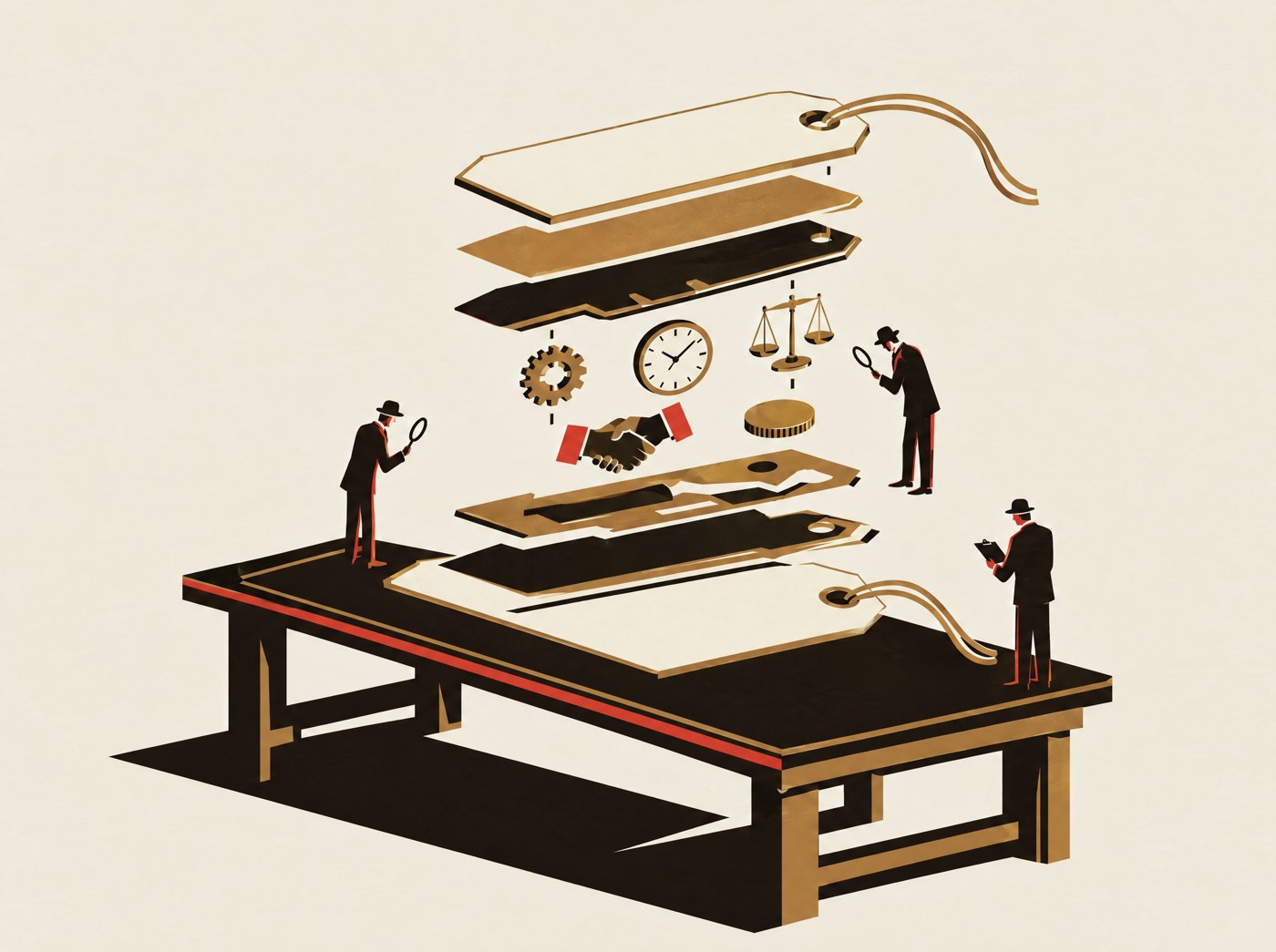
You look at a screen. Gold is one number, oil is another, bitcoin is a third. They sit in a neat column with small arrows beside them, and they look like facts of the same kind as the temperature. Says who?
A barrel of oil weighs about 136 kilograms. Gold has an atomic number of 79. At 07:24:04 on the morning of 16 September, a bitcoin on Binance cost $75,807.20. English grammar makes those three sentences sound alike. The barrel would weigh the same on an island with nobody on it. Gold had 79 protons before anybody counted them. The price of a bitcoin was true only because, at that instant, somebody was prepared to sell one at that figure and nobody had yet taken them up on it.
A price needs a surprising amount of company. It needs a buyer and a seller. It needs a place where they can find each other, and rules for what happens when they do. It needs a unit to be written in, a clock to be stamped with, and enough people standing behind it for the number to hold at more than a trivial size. It needs a promise that what was agreed will be delivered. In most markets today it also needs a piece of software deciding which of many candidate numbers is the one the rest of the world gets to see.
Take away any one of those and the number does not become wrong. It stops existing.
Start with the screen
Most of the prices you see were not made where you are seeing them. A phone showing the price of bitcoin, a news ticker showing Brent crude, a bank app showing the value of a fund: each is a display. Behind the display is a feed, and the feed is usually repeating somebody else's number, chosen by rules the display does not mention.
Some of those numbers are the last price at which something traded. Some are the midpoint between the best offer to buy and the best offer to sell. Some are an index: several venues averaged, with the outliers trimmed away. Some are a mark, a figure an exchange computes to settle who owes whom on a futures position, and which is designed on purpose not to follow the last trade. All of them are called the price, and at any given moment they are routinely different numbers.
Go one floor down
Underneath an index are venues, each running its own market. Underneath each venue is an order book: two queues of standing offers. On one side are people who want to buy, each with a price and a quantity. On the other are people who want to sell. The highest bid and the lowest ask face each other across a small gap called the spread. While the gap is open, nothing trades. A trade happens when somebody decides to cross it.
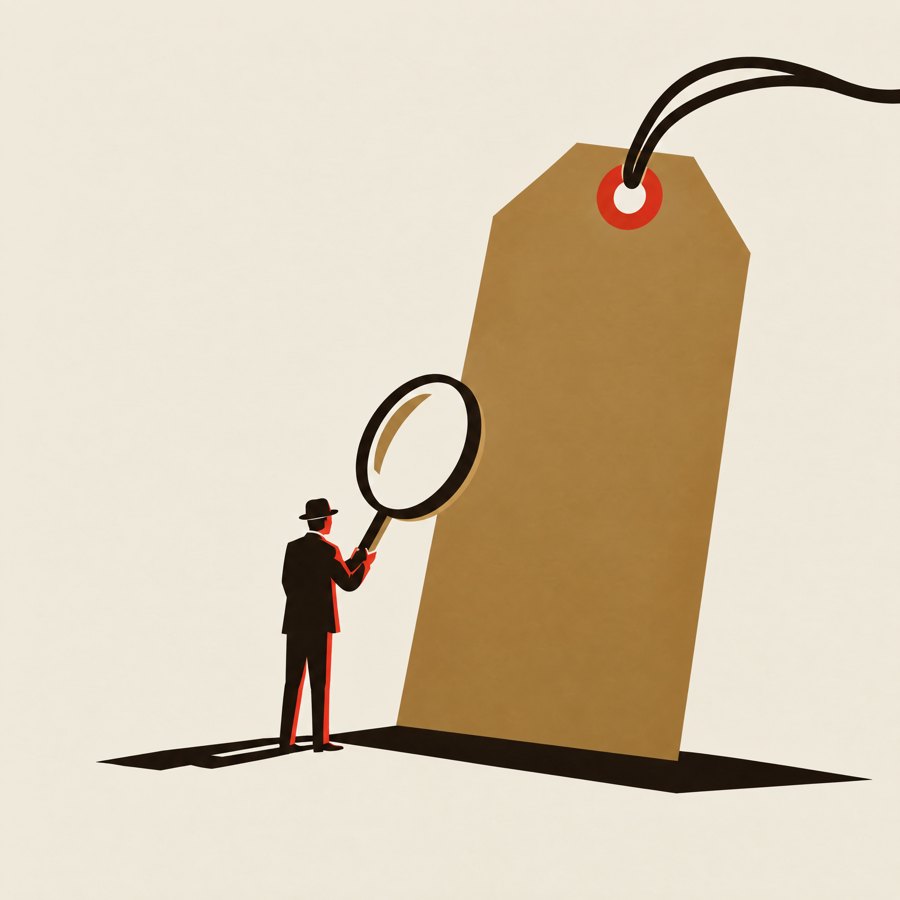
Underneath the book are orders, and underneath the orders are decisions: a person, a fund, a company buying raw materials, or more often now a program told what to want. A price on a screen is the most recent visible residue of those decisions, passed through several layers of rules and delivered to you some milliseconds or some minutes after they were made.
This issue takes one second of one market and pulls that stack apart. One second, captured on our own hardware, frozen to a file and published with the issue. Between 07:24:04.000 and 07:24:04.999 UTC on 16 September 2026, five venues we connect to directly were all quoting bitcoin. Between them they printed 741 trades and moved $3,203,956. No two of them agreed on the price, and the two that disagreed most were not really disagreeing about bitcoin.
The disagreement is in the unit
When the second opens, the five best bids span $69.04: 9.1 basis points, on an asset most people think simply has a price. Tempting to call that fragmentation and move on.
Mostly it isn't. Four of those five venues do not quote bitcoin in dollars. Binance, Bybit, Gate and OKX price it against tether, a token issued by a company and intended to be worth one dollar. Coinbase, alone in our set, prices it against bank dollars. Line up the four tether venues and their best bids span $4.80, or 0.63 basis points. Put Coinbase back and the span jumps to $69.04, because Coinbase is quoting a different pair.
So $69.04 comes apart into two numbers. $64.24 of it is the price of a dollar, measured in tether. $4.80 is the price of a bitcoin being worked out in four places at once.
Tether is a claim on a company. Verified customers above a minimum size can hand tokens back and receive dollars; nearly everybody else cannot, so they trade the token instead. Its price against the dollar is therefore a price like any other, made by people willing to act, and it sits inside every quote on four of our five venues whether or not a screen mentions it. On this morning it came to about eight and a half basis points.
That part is stable, and firms arbitrage it all day for a living. The $4.80 is the live part. Get used to the shape: this issue keeps finding one number on the screen and two underneath, and the smaller one is usually the story.
And the rest is in the clock
There is a second problem with reading five quotes as five simultaneous opinions. They were not simultaneous.
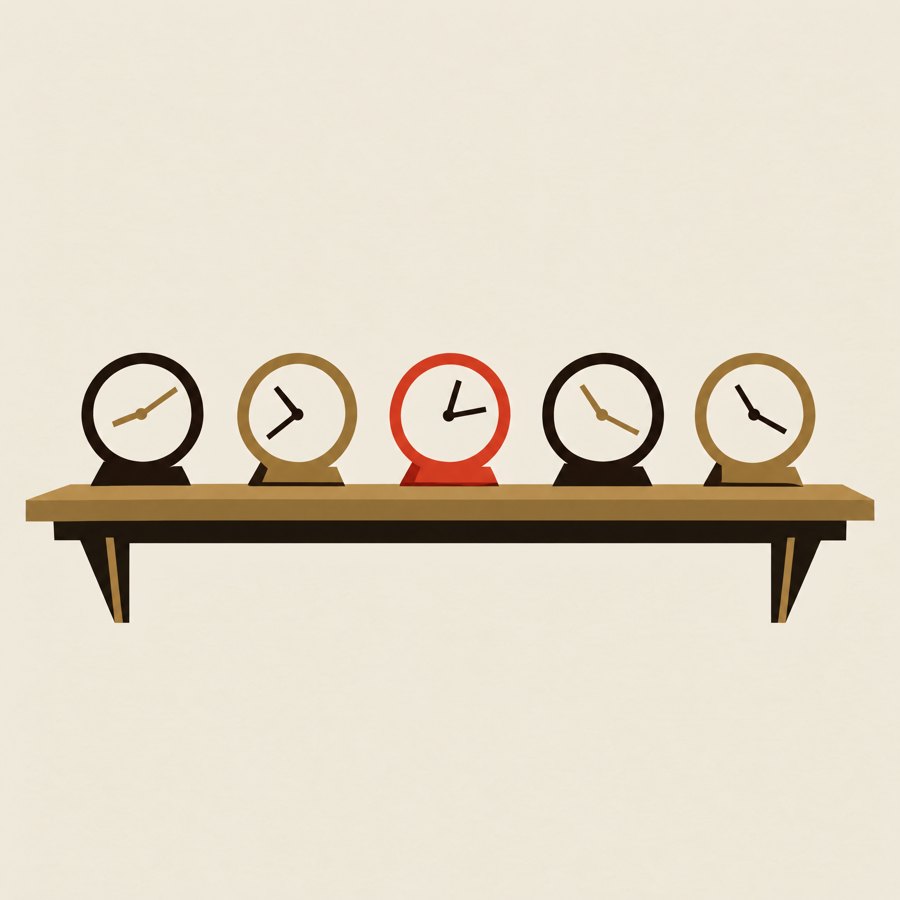
A quote is the last message a venue sent, held on our side until the next one arrives. At the instant our second begins, the best bid on Binance was 19 milliseconds old. On Bybit it was 467 milliseconds old, close to half a second, which in this market is a long time. Coinbase was at 260, Gate at 238, OKX at 181.
So the row on page 11 holds five answers to five slightly different questions, asked at different moments and set on one line by us, because people read lines. Every market-data screen does this. Very few show the ages.
Nothing went wrong in our capture. A venue sends a message when its book changes; between messages there is nothing to send, and the last number stands. On the wire, a quiet venue and a broken venue look identical. That is why this issue withholds one venue entirely, and why page 99 shows what its broken quotes looked like.
Ask it how much
Ask what $75,807.20 buys and the number dissolves in another direction. It is the price of the top of one book: the best offer, for whatever quantity happens to be resting there, and not one unit more.
In our second the median print was 0.0077 bitcoin, about $583. At that size the price on the screen and the price paid are the same number. The largest print was 6.51994 bitcoin on Binance, 67 milliseconds in, worth $494,258. In the last snapshot of Binance's book before the second, 6.83704 bitcoin were offered at exactly $75,807.20, so that trade fitted inside the best offer and paid the screen price. A buyer a few bitcoin larger would have paid more for the last of them.
741 prints crossed in that second. The smaller half, 370 trades, carried 1.46% of the money. The largest seven, one per cent of the count, carried 29.9%. The tape is mostly transactions that move almost no value, punctuated by a few that move nearly all of it, and every one of them prints in the same size of type.
The smallest trade we captured was 0.00000003 bitcoin on Coinbase, 896 milliseconds in: about a quarter of a cent, real, settled. On a chart it counts exactly as much as the half-million-dollar one, because a chart of prices has no column for size. Act II is about that missing column.
What the screen leaves out
So one quote carries a lot it never says. It has a unit, which may not be the one you assume. It has an age, which is never displayed. It has a size, which is almost never displayed. It comes from one venue, or from a rule that combines several. And it sits on a stack of decisions made by people and programs who are not visible at all.
Nobody is hiding anything. A screen with every footnote would be unreadable, and whether bitcoin was $75,807 or $75,844 at breakfast changes nothing for most people. The trouble lives at the edges, and so does the rest of this issue: large sizes, thin books, contracts, and the rare hours when a market stops and a number that was a price a minute ago stays on the screen as decoration.
The discipline this issue asks for is small. Whenever a price matters, ask five questions of it. In what unit? From where? How old? Good for how much? Made by what rule? Most of the time the answers are boring. When they are not, the number was never telling you what you thought.
So what was the price?
By the end of the second all five venues had moved up, none by the same amount. The Binance offer that opened at $75,807.20 closed at $75,844.01. Ask at the start of the second what a bitcoin cost and there were five true answers. Ask at the end and there were five different true answers. Nothing about bitcoin had changed. Plenty about the market had.
Weight belongs to the object. A price is a result: of who was willing to act, where, in what unit, at what size and when, and of who reported it, after how long. The rest of Act I stays with the number itself. It asks what happens when a price is calculated instead of traded, when it goes below zero, and when somebody has to decide, officially, which number counts.
Price is not something an object has. Price is something a market does.
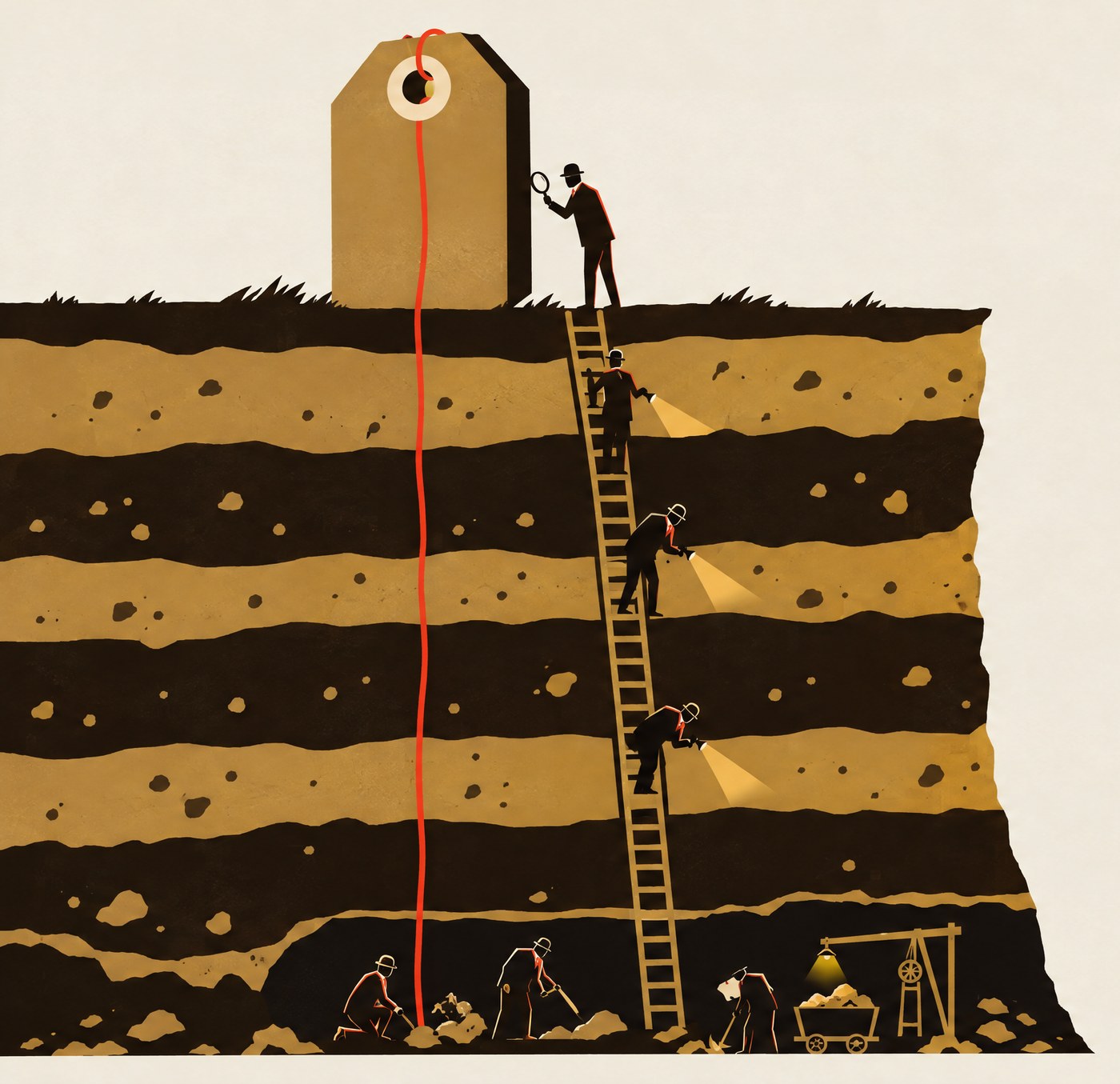
| 01 | Displayed price | What a screen shows: one number, no unit, no size, no age. | $75,807.20 | binance ask |
| 02 | Mark / index | What a system would compute from many screens. Our own recorded it 1.227 s late, from a half-cent midpoint nobody could trade. | $75,807.195 | page 21 |
| 03 | Unit | Four venues price in tether, one in bank dollars. The gap between them at T+0. | $64.24 | not bitcoin |
| 04 | Venues | Five venues live, one withheld. Spread across the four that share a unit. | $4.80 | 0.63 bp |
| 05 | Order book | Offered at the top of Binance's book in the last snapshot before the second. | 6.83704 BTC | one level |
| 06 | Orders | Prints in the second. The largest seven carried 29.9% of the money. | 741 | prints |
| 07 | People and machines | Who sent them. Our capture cannot see a single one. | unknown | we don't know |