Below Zero
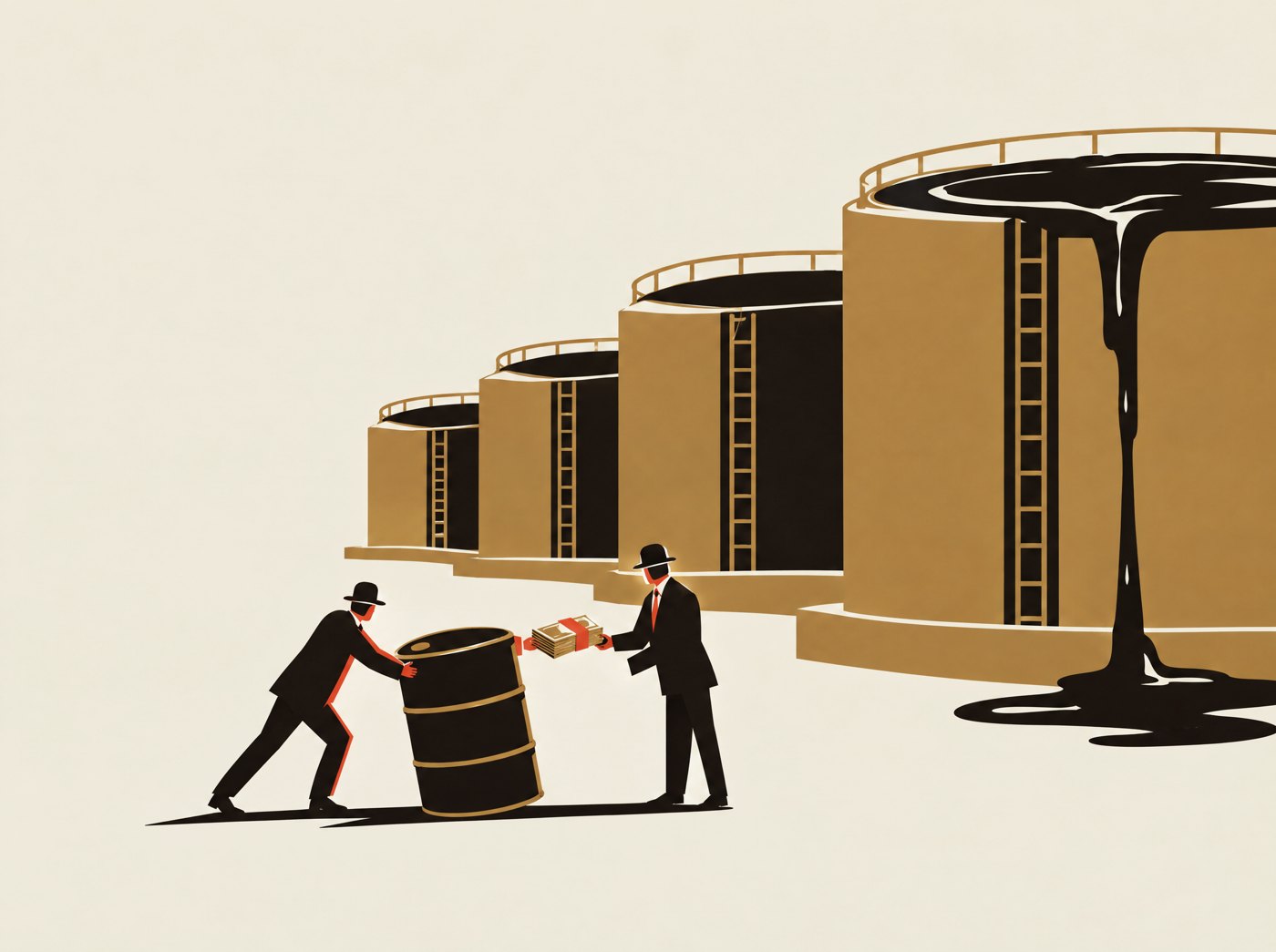
On 20 April 2020, oil did not merely become worthless. For some contracts, getting rid of it became valuable.
It is 2:30 in the afternoon in New York. The May contract for West Texas Intermediate crude on the New York Mercantile Exchange settles at minus $37.63 a barrel. On Friday it settled at $18.27. Today it has traded as low as minus $40.32. Tomorrow, its last day of trading, it will expire at $10.01. Right now, anyone holding a contract to receive a thousand barrels of oil in May can get out of it only by paying somebody else nearly $38,000 to take it.
The headlines said the price of oil had gone negative. That is almost right, and the part that is wrong is the whole story.
What the contract actually was
Forget oil in general. A WTI futures contract is an agreement to take or make delivery of a thousand barrels of a specific grade, during a specific month, at a specific place: Cushing, Oklahoma, a town of tanks and pipelines where much of the crude in the middle of the United States passes through. Most people who trade the contract never intend to see the oil. They sell or roll their position before it expires. The ones still holding at expiry either have somewhere to put a thousand barrels, or find somebody who does.
In April 2020 the world had stopped driving and flying. Demand collapsed faster than production could be shut in, and the oil had to go somewhere. Storage everywhere was filling, and the market's fear was that the tanks at Cushing would be full by May. The US Commodity Futures Trading Commission's staff later described an oversupplied market, an unprecedented fall in demand, and concern about the availability of storage, all arriving at once on the day before expiry.
For a holder of the May contract with nowhere to store the oil, the calculation on the afternoon of 20 April had stopped being what oil was worth. It had become what it would cost to avoid receiving it. Past a certain point, paying a stranger to take the obligation was the cheapest option available. The CFTC staff found the fastest part of the fall happened between 1:00 pm and the 2:30 pm settlement.
It was never the price of oil
On the same afternoon, the June contract for the same grade at the same place traded above $20. Oil a month later was worth a positive amount. Oil that had to be taken now, with no tank to put it in, was worth less than nothing. Same crude, same town. What differed was time, place and a tank: the three things the word price usually hides.
The minus sign was a truthful report of a physical problem. The barrels had not lost their energy content. What had gone negative was the right to receive them at a moment when receiving them was a liability. A futures price describes a contract, and a contract describes an obligation, and an obligation can be worth avoiding.
Other ways below zero
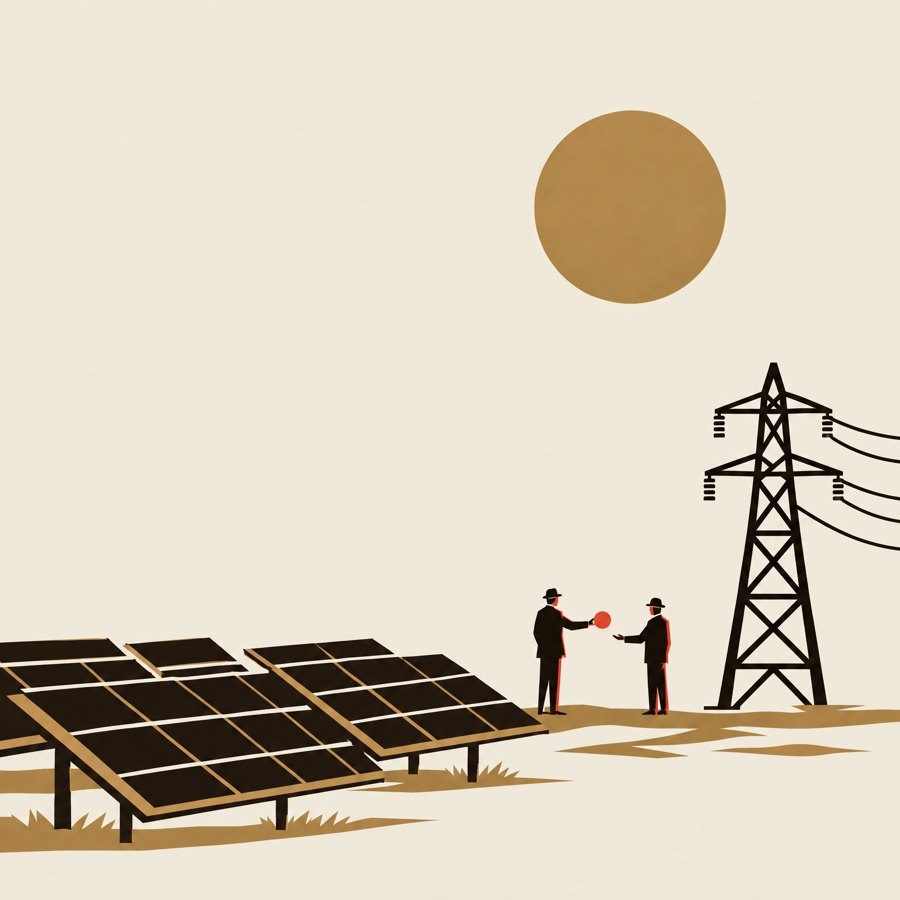
Electricity goes below zero routinely now. Germany recorded 457 hours of negative wholesale prices in 2024, up from 301 in 2023, according to its Federal Network Agency, mostly around midday in summer when solar output peaks. Power cannot be stored cheaply at scale. Some plants are expensive to switch off and on again, and some generators are paid for output under support schemes regardless of the market price. At those hours, paying somebody to consume a megawatt-hour is cheaper than the alternatives, and the price says so.
Negative interest rates look similar and work differently. The European Central Bank set its deposit rate below zero in June 2014 and kept it there until July 2022. The Bank of Japan's policy rate was negative from 2016 until March 2024. Those were administered rates, chosen by central banks as policy, and what they priced was the cost of holding money at the central bank. They are relatives of the oil episode, cousins rather than twins, and it would be sloppy to call them the same mechanism.
The systems that assumed zero
A good deal of financial software had been written on the assumption that prices cannot fall below zero. It is a natural assumption for shares, which have limited liability, and for most physical goods most of the time. Order entry systems rejected negative numbers. Risk models took logarithms of prices, which do not exist for negative values. Option pricing models used by exchanges assumed that prices are always positive.
In the days before 20 April 2020, CME Group told market participants that its systems could handle negative prices in energy futures and options, and after the event it switched the model it used to value some energy options to one that allows prices below zero. Brokers and platforms that had not prepared found their own systems unable to display, margin or close positions at the prices the exchange was printing.
Funds that held the front-month contract had a structural version of the same problem. An exchange-traded oil fund that owns near-dated futures must sell them before delivery and buy later ones. When the near contract collapses relative to the next, that roll is expensive, and after April 2020 the largest US oil fund moved its holdings spread across later months. The minus sign did not only change a price. It changed which prices people were willing to hold.
What the minus sign teaches
It is tempting to treat April 2020 as the day a market went mad. It is more useful as the day a market was unusually honest. Most of the time a price quietly blends the value of a thing with the cost of holding it, moving it and waiting for it, and those costs are small enough to ignore. That afternoon the costs were larger than the thing.
Once a price can fall below zero, the idea of intrinsic worth has to go. What is left is what somebody would give, under constraints, to be on one side of a contract.