The Dollar Inside Everything
A coffee farmer in Vietnam, a copper mine in Chile and a shipping company in Denmark may never deal with an American. Much of what they sell is still priced, invoiced, financed or hedged in US dollars. The dollar is inside a very large number of prices that have nothing to do with the United States.
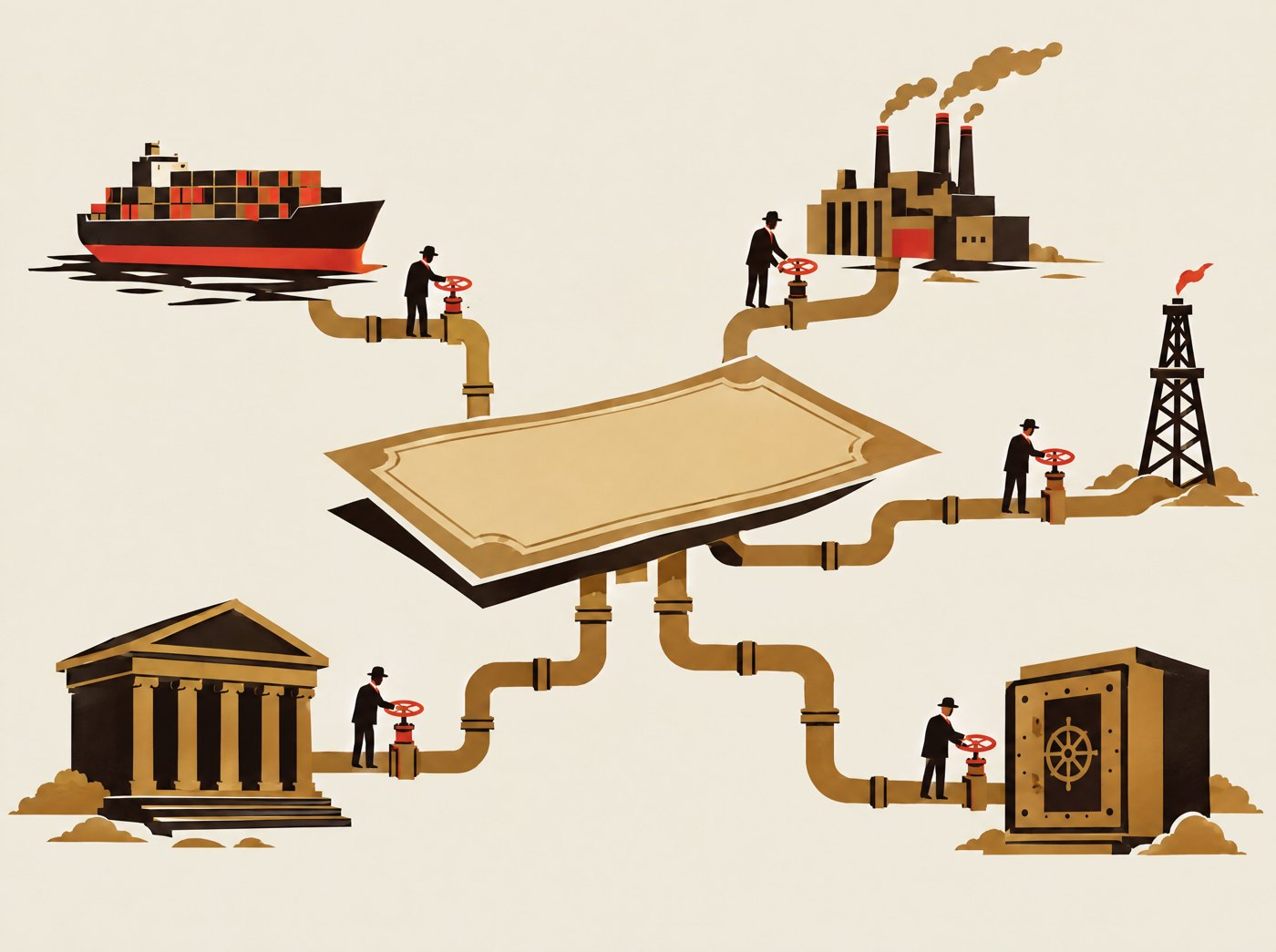
No conspiracy here, and no obituary. Just plumbing: the pipes through which money moves between countries, and why so many of them are sized in one currency.
Invoices
Start with trade. Oil benchmarks are quoted in dollars, and so are most internationally traded metals and many agricultural commodities. Beyond commodities, economists at the IMF and elsewhere have found that the dollar's share of invoicing in world trade is several times larger than the United States' own share of world trade. A Korean exporter selling to Brazil will very often write the invoice in dollars.
That choice spreads. If your sales are in dollars, it is convenient to borrow in dollars, because your revenue matches your debt. If your suppliers invoice in dollars, you hold dollars to pay them. Each of those decisions is sensible on its own, and together they make the dollar the default.
Money that settles money
The foreign exchange market is the largest market in the world by turnover. In the Bank for International Settlements' 2022 survey, the dollar was on one side of 88% of all trades, and its share was slightly higher in the 2025 survey. Most pairs of other currencies are traded through the dollar rather than directly, because the dollar markets are deeper: it is often cheaper to change pesos to dollars and dollars to rand than to find somebody who wants to swap pesos for rand.
Central banks hold reserves largely in dollars. The IMF's COFER data put the dollar at 56.9% of allocated official reserves in the third quarter of 2025, down from much higher levels at the start of the century and still far above any other currency.
Collateral and funding
Underneath trade and reserves sits funding. Banks and companies outside the United States have borrowed trillions of dollars, and banks outside the US hold dollar assets financed with short-term dollar borrowing. US Treasury securities are the collateral of choice in much of that borrowing, including the repo market on which SOFR, described in Act I, is built.
The consequence shows up in bad weeks. When investors everywhere rush for safety at once, they want dollars, and borrowers outside the US who need dollars to roll their debts find them expensive or unavailable. In March 2020 the Federal Reserve extended dollar swap lines, arrangements to lend dollars to other central banks against their own currencies, to a wider group of countries, precisely to ease that pressure.
New rails, same currency
Crypto markets reproduce the pattern. The largest stablecoins, tokens designed to hold a steady value, are almost all denominated in dollars, and as the cover story showed, four of the five venues in this issue's frozen second priced bitcoin in a dollar token rather than in dollars. A trader in Asia buying bitcoin on those venues is, one layer down, making a decision priced in the dollar.
Dollars that never lived in America
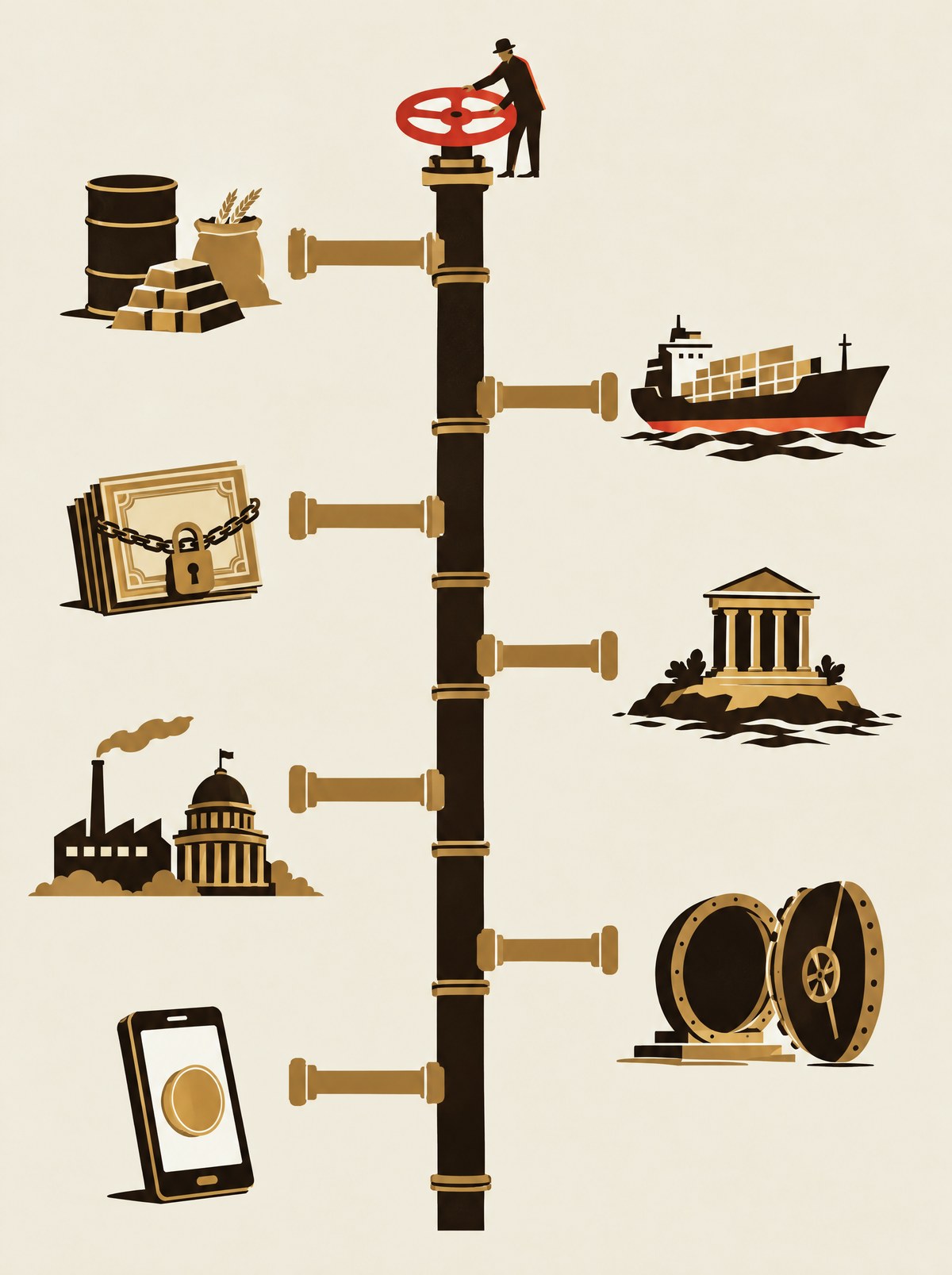
A large share of the world's dollars are held and lent outside the United States. The market has a history. In the 1950s and 1960s banks in London began taking deposits and making loans in dollars, outside the reach of American banking rules. The dollars held abroad this way came to be called eurodollars, after the European banks that first held them. They have nothing to do with the euro, which did not yet exist.
That offshore dollar system grew into the main way the rest of the world borrows the currency. LIBOR, the rate discussed in Act I, was the price of borrowing those offshore dollars between banks. Its replacement, SOFR, is a rate on borrowing inside the American Treasury market. The move from one to the other is also a move from a price made in London to a price made in New York.
Offshore dollars have no central bank of their own. A bank in Seoul or Frankfurt that has lent dollars it borrowed short-term cannot print more when the lending stops. That is why, in the worst weeks, the price of dollars outside the United States can rise faster than inside it, and why the Federal Reserve's swap lines matter far beyond America.
What the plumbing does and does not mean
A connection says nothing about its strength. The dollar's exchange rate does not move a dollar-invoiced commodity one for one; supply and demand for the commodity move it too, often far more. An emerging market with dollar debts is more exposed to a strong dollar than one without, by an amount that depends on its revenue, its reserves and its policy. The plumbing tells you where pressure can travel. It does not tell you how much will arrive.

It also does not tell you how long the arrangement lasts. Reserve shares move slowly, over decades; the dollar's share has fallen from above 70% around the turn of the century to below 60% now, while its role in trading and funding has barely moved. Plumbing is hard to replace, because every pipe is connected to every other, and because the value of a common currency comes precisely from the fact that everybody else is already using it.
The dollar sets very few prices directly. A surprising share of the world's prices still flow through it.