You Changed the Price
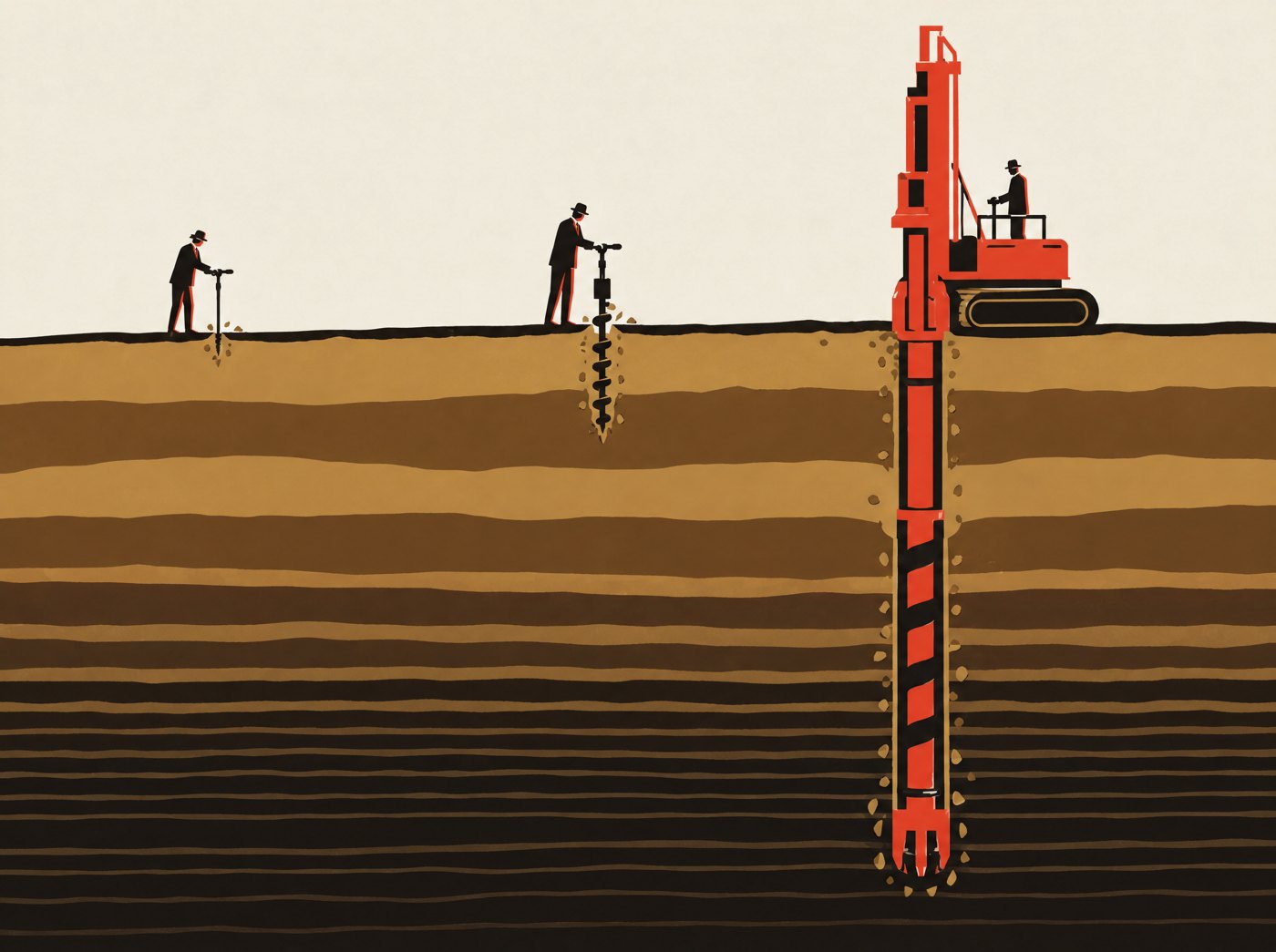
There is a price, and I decide whether to trade at it. That is how almost everyone imagines a market, including many people who trade in one. It is true for small orders. For large ones it is backwards.
The number on a screen is the price of the first unit. It tells you what the best offer is and nothing about how many units are behind it. Buy one share of a large company and you will pay the screen price. Buy a hundred thousand shares and you will pay the screen price for the first few hundred, a little more for the next few hundred, and more again after that, because your order will eat through the queue of sellers from the cheapest upward. The price you pay depends on how much you want.
Traders have words for the pieces. Depth: how much sits at each level. Slippage: the gap between the price you saw and the average you got. Impact: what your buying does to everyone after you, you included. Liquidity: enough on the other side that none of it hurts.
A real book, measured
Here is the sell side of Binance's bitcoin book 470 milliseconds before our second, from our own capture. The best offer was $75,807.20 for 6.83704 bitcoin. Behind it, twenty price levels were visible to us, running up to $75,811.26. In total those twenty levels offered $585,236 of bitcoin.
Walk orders of different sizes up that book, as if they had arrived at that instant, and the answers are on page 40. An order for a thousand dollars, ten thousand or a hundred thousand fills entirely at the best offer. The first price on the screen was the true price for all three.
A million-dollar order does not fit. The whole visible book covers $585,236. That part would have filled at an average only 0.04 basis points above the screen, about $2 in total, which is a remarkably small toll for more than half a million dollars of bitcoin. The other $414,764 we cannot price at all, because our capture only sees twenty levels. More sellers almost certainly stood above. How many, and where, we can't say.
Half a second later the same book looked very different. At 537 milliseconds into the second, after a run of buying on every venue, the twenty visible levels on the sell side held $30,094. A hundred-thousand-dollar order, which had filled at one price a moment earlier, now could not be priced from what was visible at all.

How much does a million dollars cost?
Odd question, on purpose. Not what a million buys: what it costs to spend. The honest answer has three parts, and only the first ever reaches a screen.
The first is the visible cost: fees, and the spread you cross. On Binance at our instant the spread was one cent, so crossing it cost nothing worth measuring. Fees are published, and depend on who you are.
The second is slippage against the visible book, which is what we calculated above, and which can be tiny or large depending on the moment you arrive.
The third is what happens next. Other participants see the trades. Market makers who were offering size move their prices away, because a large buyer is information. Some pull their offers entirely. The staircase moves when you step on it, so large orders are almost never sent at once. They are cut into small pieces and released over minutes or hours by algorithms with names like VWAP and TWAP, which try to buy at the average price of the period without announcing that a big buyer is present.
Slicing costs too: while you wait, the price wanders for its own reasons. Every execution desk trades moving the market against waiting for it, and the screen shows neither.
| Order | Book at | Cost over the screen | Levels used |
|---|---|---|---|
| $1,000 | −470 ms | 0.00 bp | 1 level |
| +537 ms | 0.00 bp | 1 level | |
| $10,000 | −470 ms | 0.00 bp | 1 level |
| +537 ms | 0.00 bp | 1 level | |
| $100,000 | −470 ms | 0.00 bp | 1 level |
| +537 ms | $30,094 priced | $69,906 beyond the visible book | |
| $1,000,000 | −470 ms | $585,236 priced | $414,764 beyond the visible book |
| +537 ms | $30,094 priced | $969,906 beyond the visible book | |
| $10,000,000 | −470 ms | $585,236 priced | $9,414,764 beyond the visible book |
| +537 ms | $30,094 priced | $9,969,906 beyond the visible book |
The queue
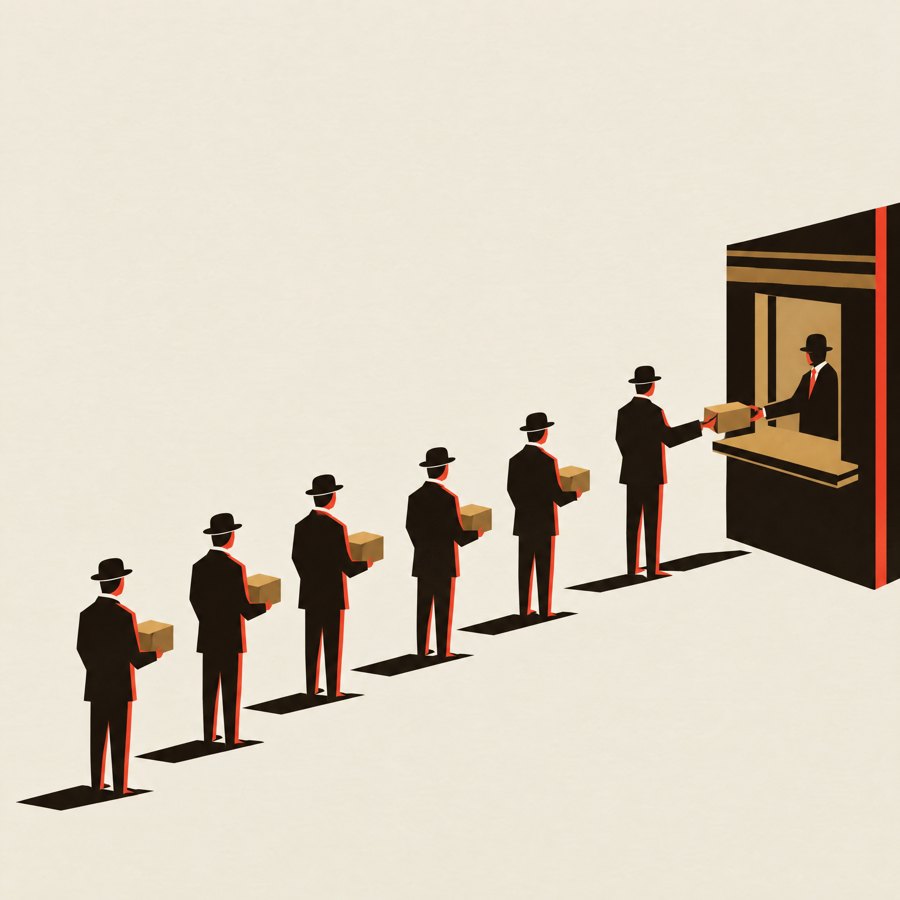
Each step of the staircase is also a queue. Most exchanges fill resting orders at the same price in the order they arrived, which traders call price-time priority. A seller who joined the best offer early is filled first; one who joined later waits, and may not be filled at all before the price moves away.
That makes the book a strange kind of object. The 6.83704 bitcoin offered at $75,807.20 in our snapshot was not one seller's offer. It was a line of them, and the position of each in the line was worth something. Firms pay heavily for the speed to reach the front. The front is filled by traders crossing the spread; the back is filled mostly just before the price turns against it.
The same arithmetic, selling
Everything above applies in reverse to a seller, with one asymmetry that matters in bad weeks. When a large holder must sell, because of a margin call or a redemption, the buyers in the book know that the selling has to happen. They have no reason to stand in its way. Bids thin out, and the seller walks further down the book than a buyer of the same size would have walked up it. Forced sellers pay for being forced, and the price they get is one they helped to make.
So the value of a portfolio on a screen, quantity times last price, is money no large holder could actually receive. It assumes selling one unit at a time into a market that never notices. Close enough for a small investor. For a fund that owns a real share of what it holds, the gap is one of its largest risks, and the screen never shows it.
The part you cannot see
Order books also contain orders that do not show. Many venues allow iceberg orders, which display a small visible size and replenish from a hidden reserve as they fill. Some trading happens away from public books entirely, in dark pools and through dealers quoting privately. A visible book is a lower bound on liquidity, and on a bad day it is an optimistic one, because the orders it shows can be cancelled faster than a human can click.
So a large buyer is really asking what the price will be after they have finished. That number does not exist yet, and their own order is one of the things that will decide it.
The next four pages show one real order that was large enough to test the book, and what the book did around it.