What Waiting Costs
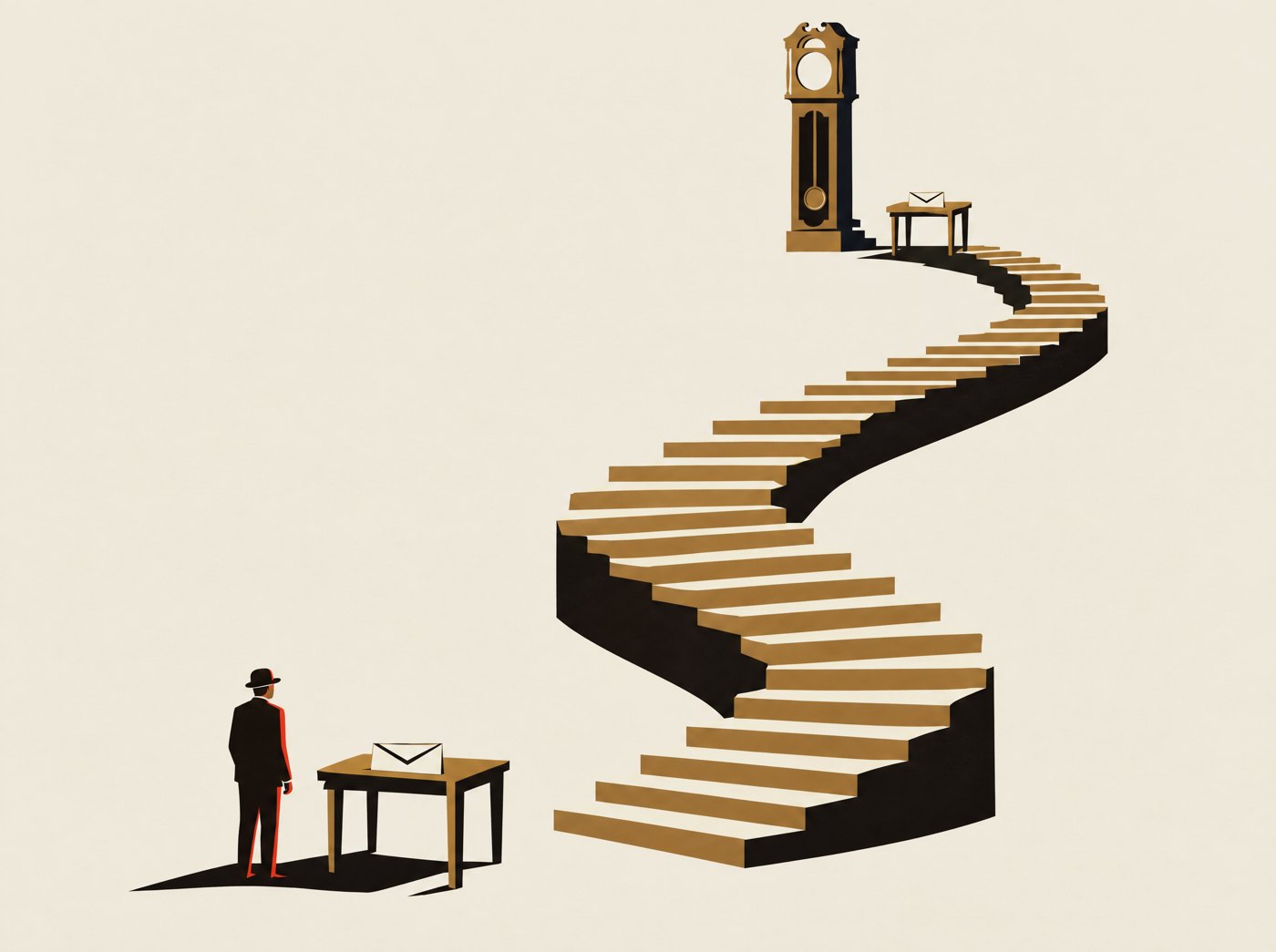
Would you rather have $100 today, or $100 in ten years? Almost nobody hesitates. The more interesting question is how much less than $100 you would accept today instead of waiting, because the answer is a price, and it sits inside nearly every other price in this issue.
There are three reasons to prefer money now. You might want to spend it now. Prices might rise in the meantime, so $100 later buys less. And a promise to pay later might not be kept. Put numbers on those three reasons and you have an interest rate: the price of time.
Discounting, without the jargon
If you could lend money safely at 4% a year, $100 in ten years is worth what you would need to lend today to end up with $100: $67.56. At 2% it is worth $82.03. At 8% it is worth $46.32. The future payment has not changed. Its value today has, because the price of time has.
That calculation is called discounting, and the value it produces is called present value. The rate used starts from something close to riskless, conventionally the yield on government debt of the right maturity, and adds a premium for whatever makes the particular payment less certain.
Why distance matters
The further away a payment is, the more its value today depends on the rate. A payment of $100 due in one year is worth $96.15 at 4% and $95.24 at 5%: a difference of less than one per cent. A payment of $100 due in thirty years is worth $30.83 at 4% and $23.14 at 5%, a fall of 25%. One percentage point, applied over thirty years, takes a quarter off the value.
Bond traders call that sensitivity duration. It explains why long-dated bonds lose more than short ones when rates rise. It also explains something that seems unrelated: why the prices of companies whose profits are mostly expected far in the future, young technology firms for instance, tend to fall harder when rates rise than companies earning steady cash today.
The same clock, in other markets
Property is valued by discounting rents. When the rates investors demand rise, the value of the same building with the same tenants falls, even though nothing about the building has changed. A pension promise is a stream of future payments, and the amount a fund must hold to meet it depends on the rate used to discount them, which is why pension deficits can swing by large sums with no change in the number of pensioners.
Assets that pay nothing are affected by the same clock from the other side. Gold pays no interest, so holding it means giving up whatever interest the money could have earned. When safe rates are high, that sacrifice is larger. The same logic applies, contested and loosely, to bitcoin.
A price of time you can watch
Crypto markets built an unusually visible price of time. A perpetual future is a contract with no expiry that is meant to track the spot price. To keep it close, the exchange makes one side pay the other every few hours: when the perpetual trades above the index, holders of long positions pay holders of short positions, and the reverse when it trades below. That payment is called the funding rate.
| Rate | $100 in 1 year | in 10 years | in 30 years |
|---|---|---|---|
| 2% | $98.04 | $82.03 | $55.21 |
| 4% | $96.15 | $67.56 | $30.83 |
| 5% | $95.24 | $61.39 | $23.14 |
| 6% | $94.34 | $55.84 | $17.41 |
| 8% | $92.59 | $46.32 | $9.94 |
In effect it is an interest rate on borrowed exposure, set by the market every few hours, and it is published openly. When many traders want leveraged long positions, funding rises and the price of borrowing bitcoin exposure goes up. When the enthusiasm fades, it falls and can turn negative. A cash-and-carry trader who buys spot and sells the perpetual collects it, which pulls it back toward the cost of money elsewhere.
It is the same mechanism as a bank deposit rate or a Treasury yield, compressed into hours and stripped of most of its institutions. Central banks do not hand down the price of time on their own. Wherever someone wants something now and someone else can wait, a rate appears.
The restraint
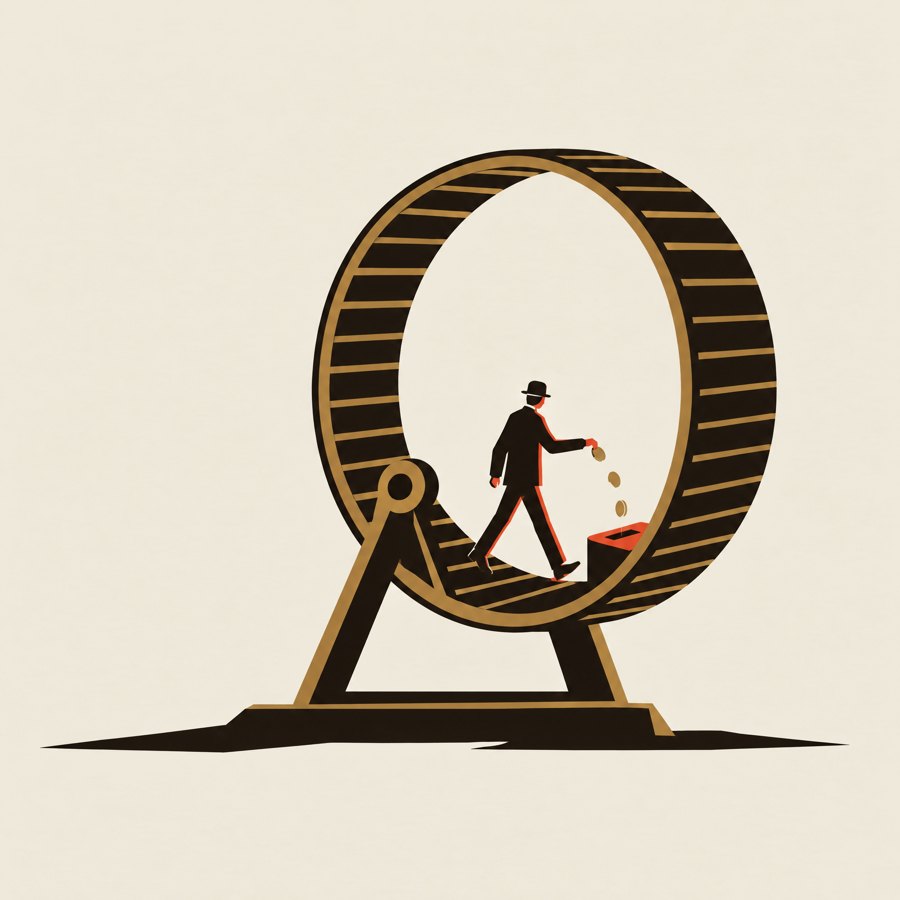
This is the point where articles about interest rates usually overreach, and it is worth being careful. Rates are an input to almost every price. They do not cause every price movement. Plenty of assets have risen while rates rose and fallen while they fell, because the other inputs, expected cash flows, risk, supply and demand for the asset itself, moved more. A central bank sets one short-term rate. Markets set the rest, and the premiums added on top of them move for reasons of their own.
What can be said without overreaching is this. Any price that describes a claim on the future contains a rate, whether the screen shows it or not. When the rate changes and nothing else does, the price must change. Most of the time plenty of other things change as well.
One practical habit follows. When a price moves, before explaining it with a story about the asset, check what happened to the price of time on the same day. If long-dated rates jumped, a good part of the move in anything whose value lies far in the future may simply be the clock being re-set. If rates were still, the story has to come from somewhere else.
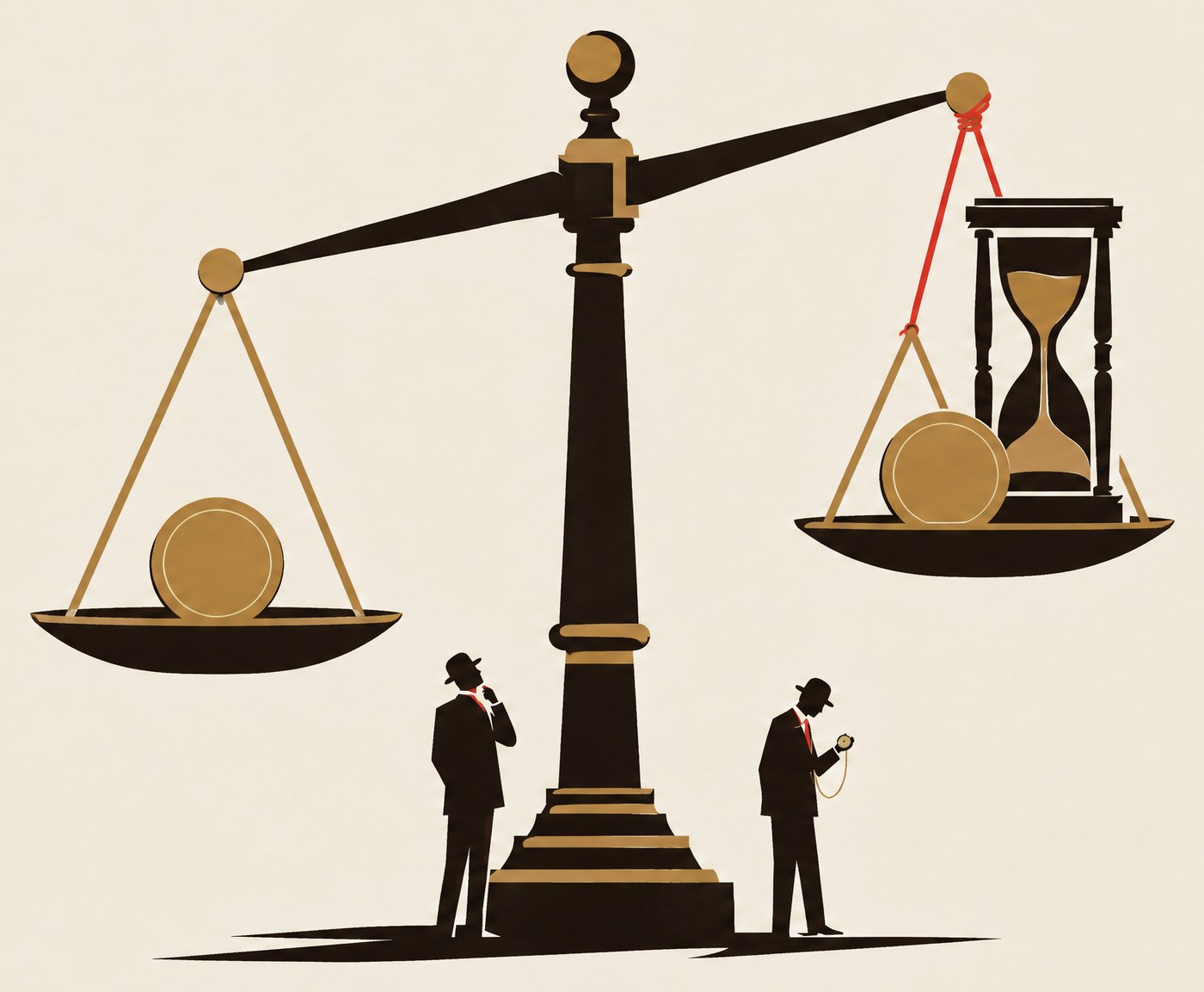
Two identical claims to $100, one due today and one due in 2036. Put them side by side, and the gap between them is the price of ten years.