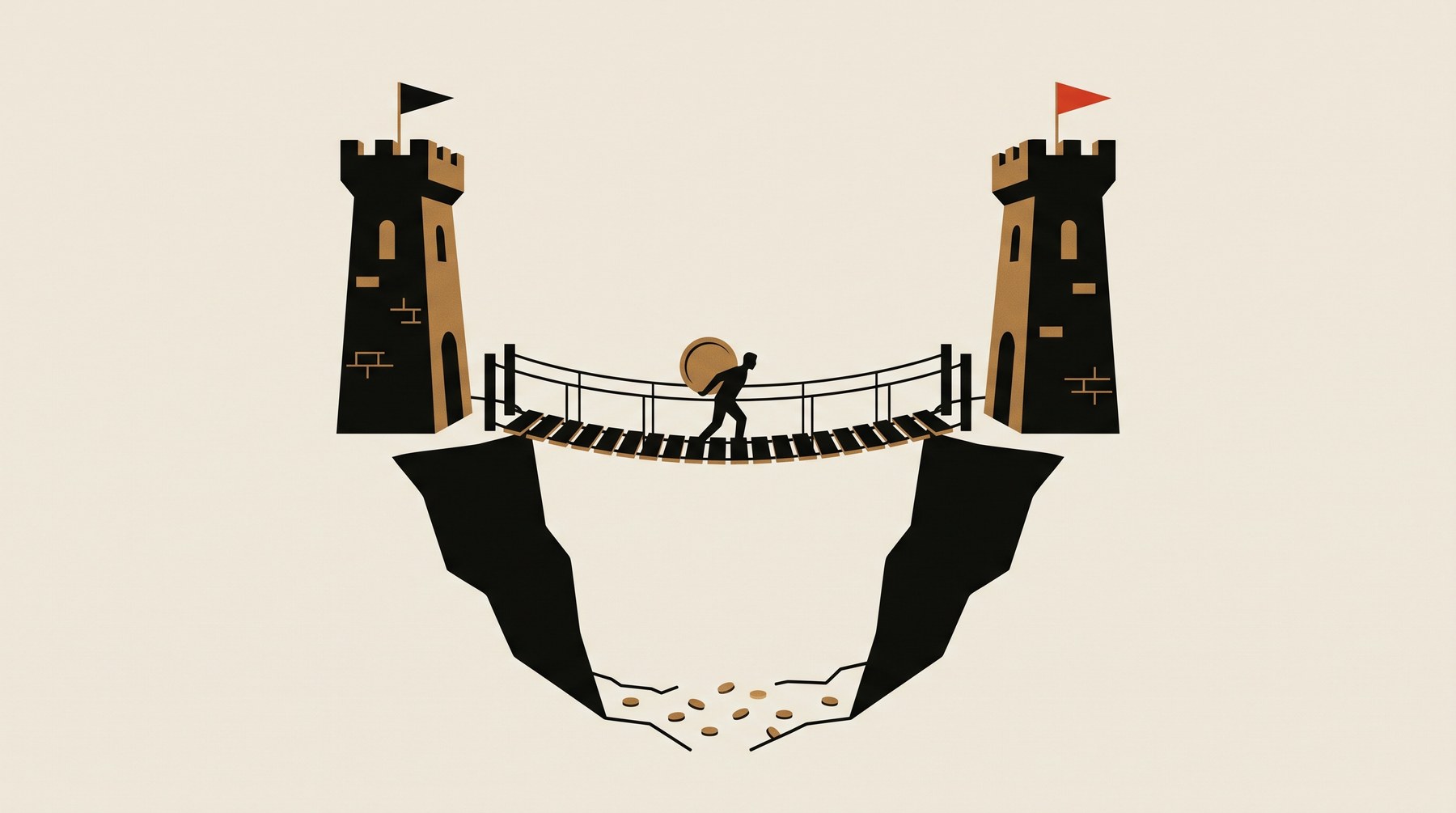
Money without a country
For about a decade the promise held, mostly because nobody important was paying attention. That is how these things usually go. A new kind of money shows up, a few thousand enthusiasts pass it around, and the state ignores it the way it ignores a card game in the back room of a pub. Crypto spent its youth in that obscurity, and plenty of its early believers mistook being ignored for being free.
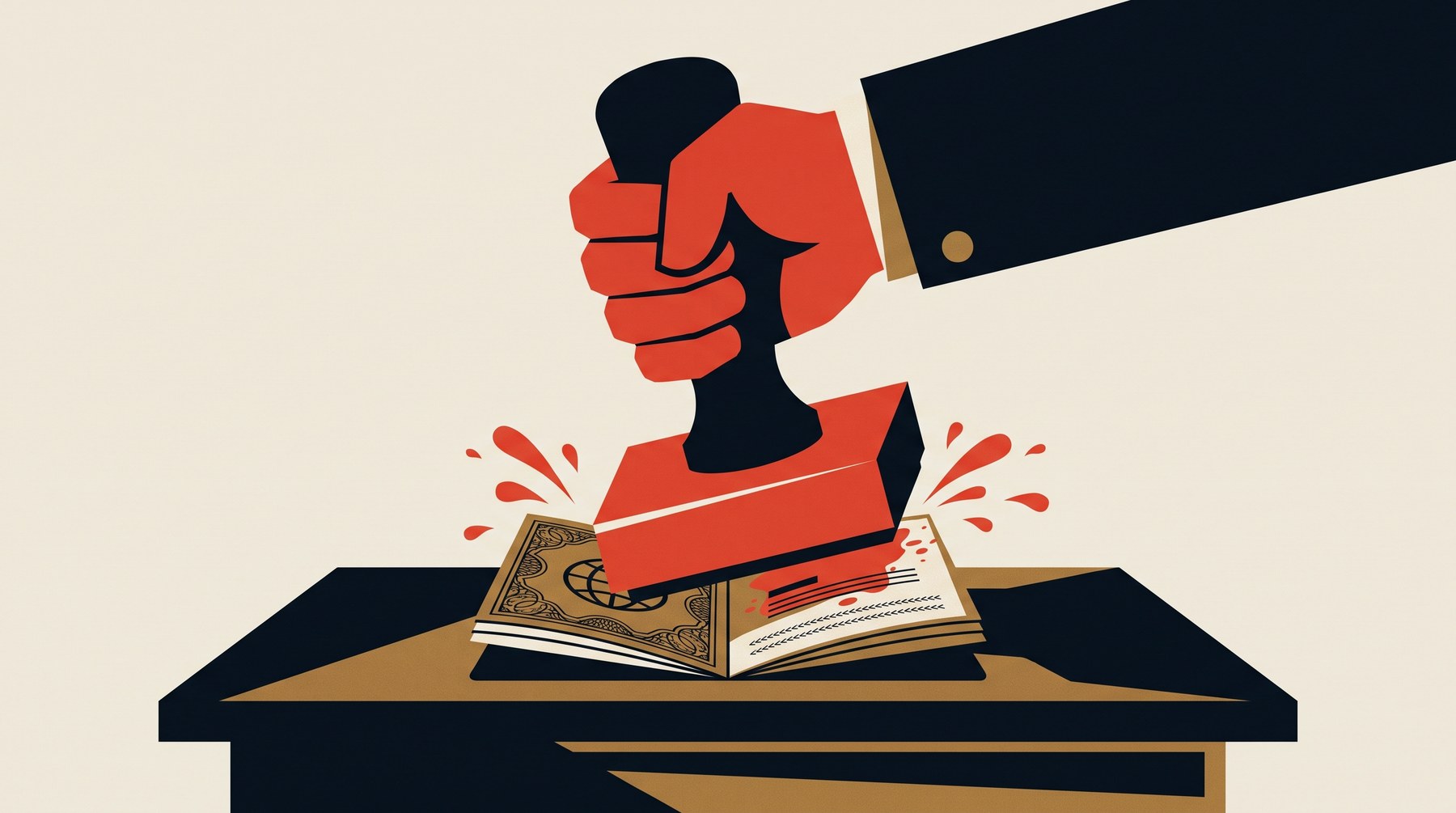
The two are not the same, and 2022 was the year the gap turned up in person. That summer the US Treasury put a piece of software on its sanctions list. Not a company. Software. Tornado Cash was a set of contracts on Ethereum that shuffled coins together to hide where they came from, and it answered to no one. There was no office to raid, no chief executive to charge. Treasury sanctioned the code anyway, and American programmers who had worked on it woke up to find their own project illegal to touch.
The message was not subtle. You do not have to control a network if you can reach the people standing next to it: the exchanges, the coders, the wallets with real names attached. Decentralisation stops a government from switching the thing off. It does very little to stop a government from making it radioactive.
The sequel is the interesting part, and it cuts both ways. In November 2024 a federal appeals court, the Fifth Circuit, ruled that Treasury had overstepped: immutable smart contracts are not anyone's property and could not lawfully be sanctioned. By March 2025 the addresses were off the list. Code, it turns out, can win in court. And yet the radioactivity outlived the ruling. Exchanges kept their distance, wallets kept their warnings, and one of the project's developers had already been convicted of money laundering by a Dutch court for the code he wrote. The state lost the case and largely kept the behavior, which is a cleaner demonstration of where the power sits than the sanction itself ever was.
Being ignored and being free are not the same thing. Crypto spent a decade confusing the two.
From there the rest came quickly, and most of it ran the opposite way to the founding myth. The dollar, supposedly the villain of the story, did not lose ground to crypto. It moved in. The busiest thing on most crypto rails today is not Bitcoin or some sovereign-free currency of the future. It is a dollar. Tether and its rivals took the plumbing built to route around American money and turned it into the cheapest delivery system American money has ever had, especially in the places Washington cannot easily bank.
Mining went the same way. Turning electricity into Bitcoin sounds stateless right up until you notice it goes wherever power is cheap and the law looks away, and that both of those are things politicians decide. A country can court the miners one year and ban them the next, and the global hashrate reshuffles around the ruling within weeks.
Then the suits arrived. When the spot ETFs opened, the asset that was meant to have nothing to do with the old system got wired straight into it: same custodians, same regulators, the same interest-rate weather that moves everything else on the screen. The correlation that had been so conveniently missing while crypto was small showed up in the same years the institutions did. Causation is harder to prove than the timing is to notice, and an honest account stops at the timing: the asset now lives on the same shelf as everything else, and the shelf moves together.
The state's countermove, meanwhile, goes well beyond punishment. Having watched a generation of engineers prove that money is software, governments drew the obvious conclusion and started writing their own. More than a hundred central banks have digital currency projects in some stage of study or pilot, with China's operating at street level for years. Programmable money cuts in every direction at once: the rails that could deliver aid to a flooded village in minutes could also expire a protester's savings by Friday. The tool kit crypto built to escape policy is being studied, line by line, by the designers of the most precise instruments of policy yet proposed. How far any state actually deploys that precision is an open question, and one this magazine expects to revisit; the direction of study is not in doubt.
Which returns the question to the only person in this story without a ministry: the holder. What you own now depends, more than most owners realize, on how you hold it. A coin inside an ETF is a claim processed by the same custodians and courts as everything else you own, convenient and taxed and freezable in the ordinary way. The same coin held on your own keys is a bearer instrument, with a bearer instrument's freedoms and its funerals; lose the keys, or the password, or the argument with a border guard, and no institution exists to appeal to. Between those poles runs a spectrum of custody that is really a spectrum of allegiance, and every holder sits somewhere on it, whether they chose the seat or not.
None of this is a morality tale. It is what happens to anything valuable enough to matter. It stops being a curiosity and becomes a lever, and levers get picked up by whoever can reach them. The real question was never whether crypto is good or bad. It is what you are actually holding once the thing has been dragged inside the fence.
What, then, does an investor do differently? Stop reading geopolitics as a trading signal, for a start; the headline is in the price before a reader can act on it. Sort everything you hold into its regime instead, because the regimes, not the charts, now carry the tail risk. No hedge crosses these walls. The loss does not arrive as a price; it arrives as a freeze, a refusal, or a forced sale at the worst hour, and it lands at the transition between regimes, which is where this decade's real transfers of wealth have happened.
A coin inside an ETF lives in the courts: convenient, taxed, freezable by order. The unhedgeable risk is the custodian's regulator.
A coin on an exchange lives at the pleasure of a balance sheet you cannot see. The unhedgeable risk is the morning withdrawals close.
A stablecoin lives one keystroke from its issuer's compliance desk. The unhedgeable risk is the list your address ends up on.
Keys held yourself answer to no one, the freedom and the liability in a single object. The unhedgeable risk is you.