The half-life of an edge
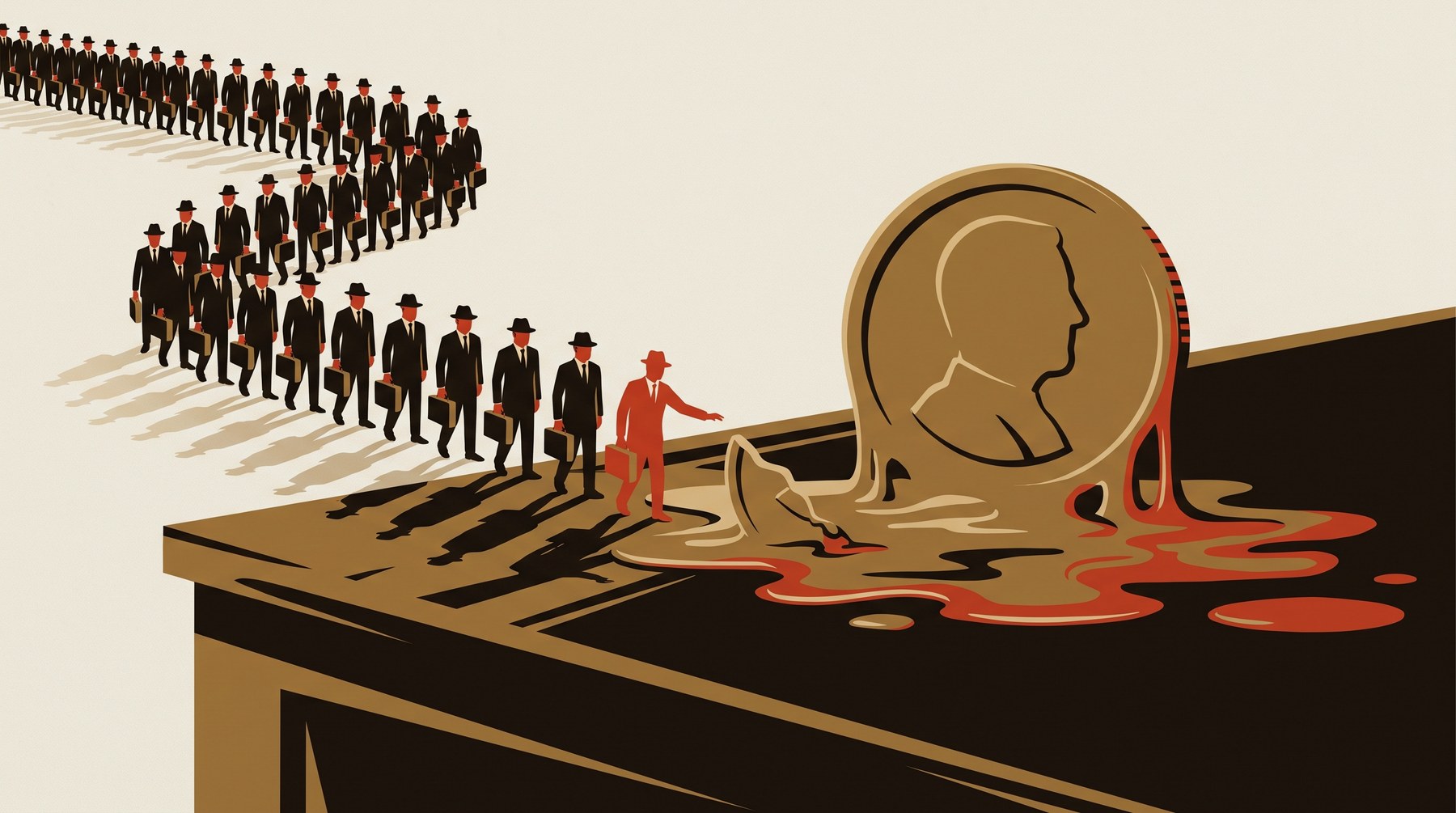
In January 2018 a bitcoin in Seoul cost up to half again as much as the same bitcoin in New York. The gap was famous enough to have a name, the kimchi premium, and it existed because Korean demand was ferocious while Korean capital controls made it slow and legally delicate to move money in size. For the few who could route around the friction, this was as close to free money as markets ever offer. Then, over months, it stopped being free. Word spread, capital found channels, arbitrage desks industrialized the route, and the premium collapsed to a flicker. The desk measured the flicker while closing this issue: single-digit basis points. Nobody broke the trade. It was loved to death.
That is the standard biography of every edge. An edge is a disagreement with the market price that happens to be right and happens to pay, and the act of collecting the payment advertises the disagreement. Fills leave footprints. Returns attract capital, capital hires researchers, researchers converge on the same idea, and the mispricing everyone is being paid to correct gets corrected. A market is, among other things, a machine for eating edges, and it is never full.
The pattern is measurable. Academics who track published trading anomalies find that once a strategy appears in a journal its excess returns shrink sharply, with the informed money front-running the readership. The trading floor version is faster and less polite. Early bitcoin arbitrage paid double-digit spreads between exchanges to anyone with accounts on both and a tolerance for wire delays; within a few years the same trade needed colocated servers to be worth doing. In equities the arms race ran all the way to physics: firms strung microwave towers between Chicago and New Jersey because glass fiber bends light around the earth's curve a few milliseconds too slowly. Each generation of the trade pays less and costs more, which is what decay looks like from the inside.
An edge is a loan from the crowd's inattention, and the loan is callable without notice.
So the professional question about any way of making money is never whether it works. It is the question a physicist asks about an isotope: what is the half-life, and how far along are we? Some edges decay in milliseconds and belong to whoever spent the most on radios. Some decay over years because they are protected by a moat: secrecy that survives employee turnover, access competitors cannot buy, or a size so small that serious capital cannot be bothered to compete for it. A few persist for decades because copying them hurts, in the way that buying assets during a panic hurts, and pain is the one barrier to entry that never gets arbitraged away.
Crypto has run the full life cycle often enough to supply a textbook. The most instructive chapter concerns the Grayscale trade. For years the largest bitcoin trust traded above the value of the coins it held, and funds discovered they could create shares at par, wait out a lockup, and sell at the premium: a conveyor belt of apparently free money. Capital converged, the belt ran faster, and in early 2021 the premium did what crowded premiums do, inverting into a discount. The trade's most enthusiastic practitioners had borrowed to run it at size. One of them, Three Arrows Capital, failed the following year owing money across half the industry's lenders; the dying trade was not its only wound, but it was among the first, and the leverage did the rest. The edge did not merely decay. It reversed polarity, and the players who had mistaken a queue for a machine were still holding their place in line.
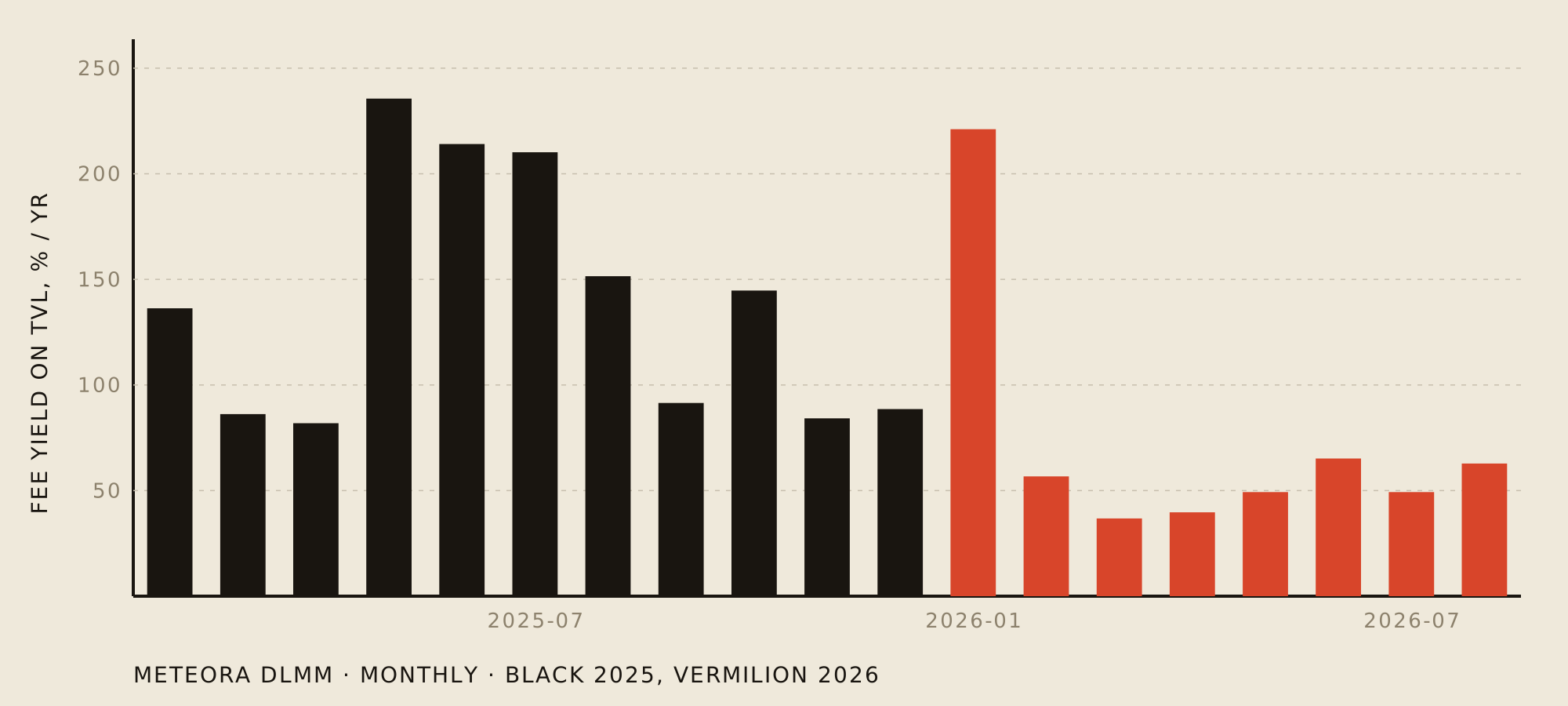
The decay is also measurable close to home, and this magazine now measures it. The desk's own corner of the market is liquidity provision in Solana's DLMM pools, where the edge is fee capture, and the aggregate record of that edge is public. Computed from protocol fee and TVL histories: through 2025 the annualized fee yield on capital parked in those pools swung between the mid eighties and above two hundred percent, paid out by successive memecoin waves; through 2026 to date it has compressed to between the high thirties and the mid sixties, while the capital base roughly halved. The chart below is not an illustration. It is the first measured curve this magazine has printed, and it shows the machine behaving exactly as described: returns that fat recruited their own competition, the competition arrived, and the yield is drifting toward the cost of the work.
Beware, too, of the edge that refuses to decay on schedule. Returns that stay eerily steady while the crowd piles in are often no edge at all but a risk premium in costume, insurance sold against a rare event, collecting small premiums until the event arrives and returns them with interest. Real edges fade politely. Costumed ones detonate.
The discipline this suggests is closer to farming than to conquest. Treat every working strategy as borrowed rather than owned, with the loan callable at the market's convenience. Watch the vital signs of decay honestly: fills getting worse, spreads compressing, imitators visible in the flow, return per unit of risk drifting down quarter after quarter. Retire trades a little before the market retires them for you, and put the research budget into the next disagreement while the current one still pays for it. The saddest figure in markets is the owner of a once-great edge, averaging down on the past. The market does not send a letter when the loan is called. The fills just get a little worse, and then a little worse than that.