Marked to make-believe
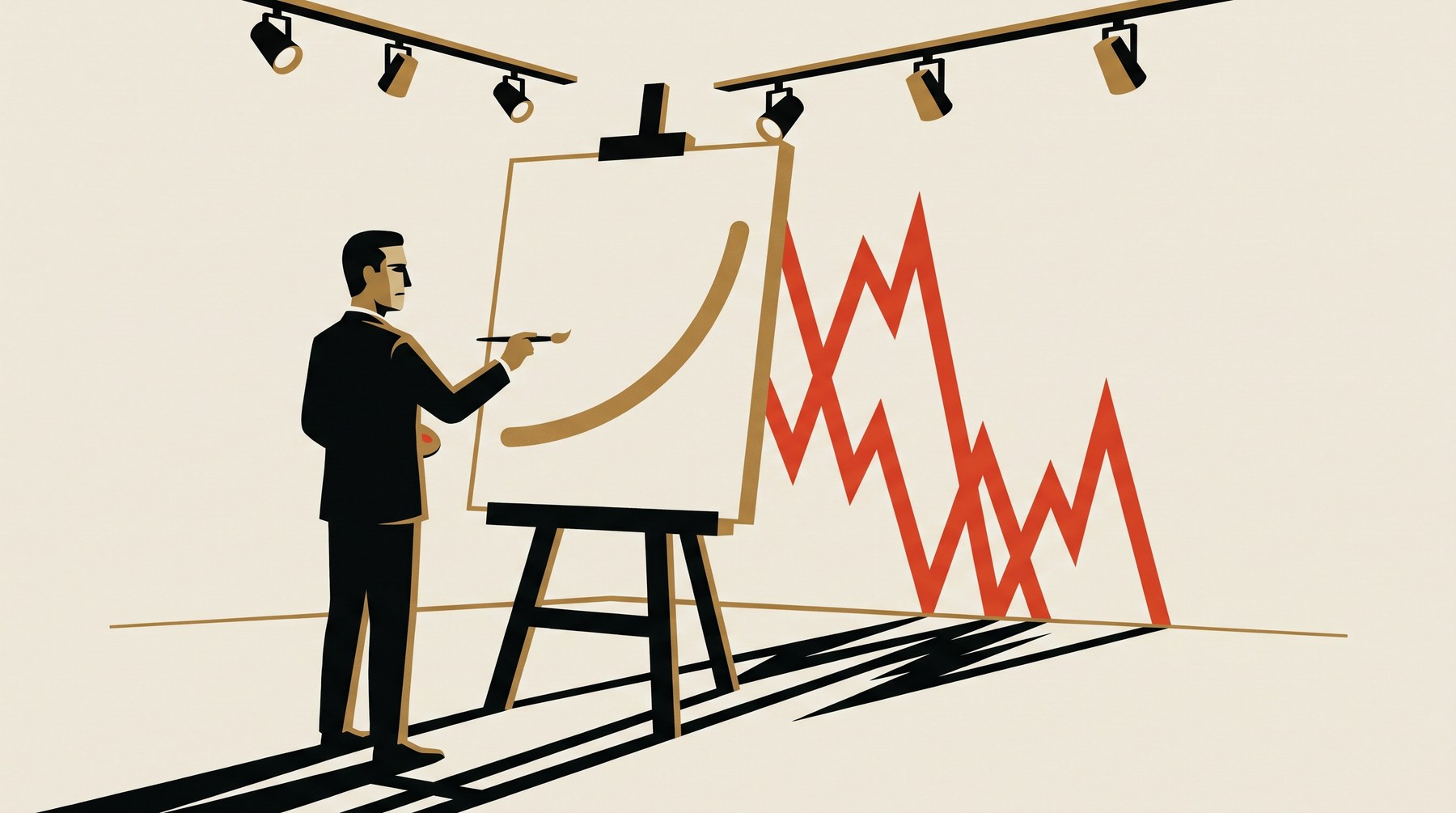
In 2022 the public technology market fell off a cliff. The Nasdaq lost a third of its value, the speculative end lost far more, and anyone whose pension statement arrived that January learned the number over breakfast. Venture portfolios, stuffed with smaller and more fragile versions of the same companies, reported a gentler year. Buyout funds, which own businesses levered to the same economy, gentler still. Either private assets possess a magic that repeals economics, or somebody's numbers were late. The reader is invited to guess.
The polite term for the phenomenon is smoothing. One prominent quant investor prefers volatility laundering, which has the advantage of naming the customer. A private fund's net asset value comes from models and judgment: comparable companies, recent funding rounds, discount rates chosen by the people whose bonuses depend on the answer, reviewed by auditors who see what the fund shows them. None of this requires anyone to lie, and some of it is defensible on its own terms: a business with no traded price genuinely is hard to value, and declining to mark it against a panicked comparable can be prudence as easily as vanity. Still, marks lag because updating them is optional in the short run, and every incentive at the table points toward optional. The general partner reports steadier performance, the pension trustee's board meeting goes smoothly, the consultant's asset-allocation chart shows a miracle: equity returns with bond-like calm. The only party missing from the table is the future, which will eventually insist.
The market that prices things every second had a catastrophe; the market that prices things by committee had a wobble.
The tell is what happens when private stakes meet real buyers. Secondary markets, where investors sell fund positions for cash before the fund winds up, spent 2022 and 2023 clearing at meaningful discounts to reported value. When the exit price and the official price disagree, the exit price is the one you can spend. Meanwhile allocators kept shovelling money toward private markets, and more than one endowment officer has admitted the quiet part: the smoothness itself is the product. An asset that refuses to tell you its bad news in real time is easier to hold, easier to defend in committee, and easier to be wrong about for years.
It should be said in fairness that illiquidity has an honest premium. Companies genuinely benefit from patient capital that cannot flee on a bad Tuesday, and some of private equity's edge is real: operational control, concentration, time. The trouble begins where the premium is earned by the asset and the calm is manufactured by the accounting. An investor who accepts ten years of lockup deserves payment for the lockup. An investor who accepts it because the chart looked placid is paying for the privilege of not being told.
Crypto rebuilt this cathedral in eighteen months, as is its custom. Token projects raised at valuations set by their most enthusiastic investor and reported that number as worth. Treasuries were marked at the last trade of thinly traded coins the treasury itself dominated, an arrangement where the owner of the asset also operates the printing press for its price. Locked tokens, unsaleable for years, were counted at the spot price of the unlocked ones. The collapse of 2022 revealed venture books full of round-trip valuations and balance sheets whose largest line items evaporated on contact with a bid. The mechanism was the private-markets mechanism, sped up for a younger audience.
What arms a reader against all this? A short list of questions, none requiring a spreadsheet. Who sets this price, and what happens to them if it is wrong? When did the mark last move by more than the market's mood, and in which direction? What did the most recent actual transaction, a real buyer paying real cash, say, and how far from the official number did it land? If the answers are, respectively, the seller, nothing, never, and far below: the calm on the statement is a costume, and the reader already knows what wears costumes.
The deeper point survives even where every mark is honest. A price is an opinion until you need cash; then it becomes a verdict. Public markets deliver the verdict continuously, which is painful and vulgar and clarifying. Private ones let the opinion stand unchallenged for years, which feels like stability and is actually suspense. Neither arrangement changes what the underlying businesses earn, which decides everything in the end. But investors do not live in the end. They live quarter to quarter, statement to statement, and the industry has learned that what compounds fastest of all is not capital but comfort. Comfort, unlike capital, is always fully valued.