The dollar ate its rival
In 2014 a small project called Realcoin launched on a bitcoin sidechain with an idea nobody found romantic: a token worth exactly one dollar, always. It soon renamed itself Tether. For a movement that dreamed of stateless money this was almost an embarrassment, a training-wheels product for traders who wanted somewhere to stand between bets. A decade on, that token and its imitators settle more value than most national payment systems, and of everything crypto has built, the stablecoin has the strongest claim to a product that ordinary people outside the casino actually use. The revolution's killer app turned out to be the currency it was rebelling against.
Look at where the usage lives and the picture sharpens. In Buenos Aires, Istanbul and Lagos, people who watch their savings lose a tenth of their value in a bad month do not want a volatile new money; they want the old strong one, and their banks ration it. A phone wallet holding digital dollars asks no permission from the central bank and keeps no banker's hours. The appetite itself is ancient. Most physical hundred-dollar bills have lived outside the United States for decades, stuffed in mattresses from Bogotá to Kyiv. The stablecoin did not create the world's dollar hunger. It built the dollar a better container.
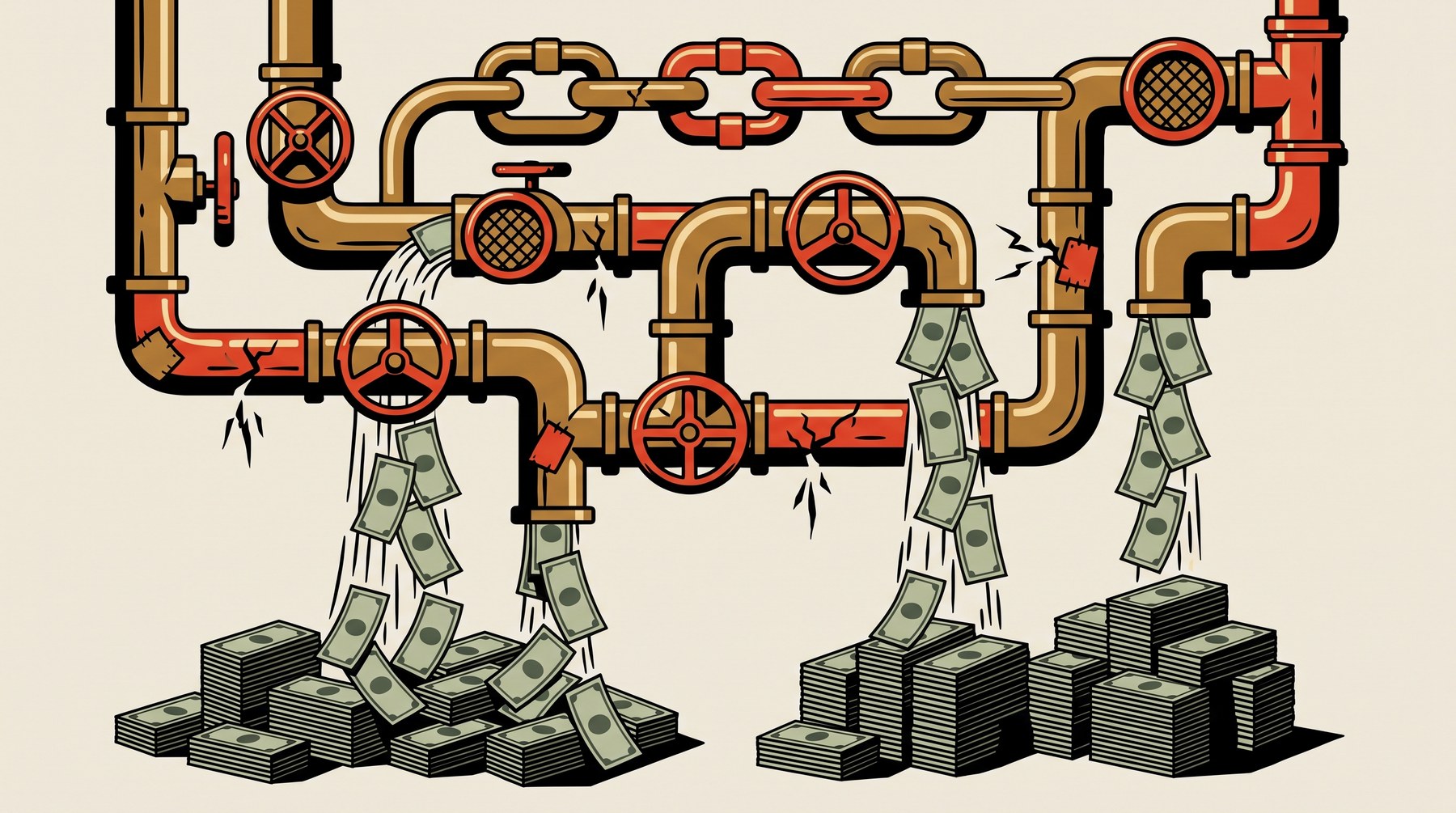
The irony is in the plumbing. These rails were laid by people who wanted out: censorship-resistant, borderless, no correspondent banks, no Washington chokepoints. Dollars turned out to be the perfect passenger. A stablecoin dollar moves on a Saturday night, crosses borders that physical cash cannot, and reaches towns the correspondent banking system quietly abandoned years ago as too small to be worth the compliance cost. The network built to escape American money became the cheapest delivery system American money has ever had.
Every new holder of a dollar stablecoin, wherever on earth they live, becomes, at one remove, a small unpaid lender to the United States.
Washington took a while to see it, then moved with unusual speed, and in the opposite direction from a ban. Stablecoin issuers back their tokens mostly with short-term US government debt, which makes the largest of them a Treasury buyer on the scale of a mid-sized country. The GENIUS Act, the federal stablecoin law passed in 2025, wrote that arrangement into statute: issue all the digital dollars you like, so long as the reserves sit in T-bills and the sanctions lists are honored. The issuers already freeze blacklisted addresses on request. Follow the loop around, three balance sheets long: a saver in Lagos swaps naira for a token, the token is a claim on its issuer, and the issuer parks the proceeds in Treasuries. At the end of the chain, a purchase made to escape a weak state helps finance the strongest one. Seigniorage used to require an empire. Now it ships as an app.
Where does that leave the rivals? The euro and the yuan have yet to field a serious competitor at scale, each held back by its own regulation and capital controls, and the window in which one might have mattered is narrowing. Crypto's own currencies met an older law of money instead: given a stable unit and a swinging one, people save the swinging one and spend the stable one. Bitcoin settled into a role closer to gold with a ticker. For actually buying things, the dollar won the blockchain the way it won the eurodollar market and the mattress: by being the thing everyone already agreed on.
Could anything unseat the arrangement? The candidates each carry their own handicap. A euro stablecoin at scale would require Europe to want one, and its regulators have preferred to perfect the paperwork while the market emigrates. State digital currencies exist in pilots on three continents and have so far found few volunteers; whatever their design virtues, the public has not yet asked for one. Gold-backed tokens revive a nineteenth-century idea with a twenty-first-century custody problem: somebody still guards the vault, and somebody can still visit them. The honest threat is slower and duller: that the same overreach that makes the dollar useful as a weapon makes holders look for exits faster than the network effect can replace them. Weapons depreciate with use. So do currencies used as weapons.
There is a lesson in the loop, and it reaches past crypto, provided it is stated with its dates attached: so far, under the network effects that actually obtain, the open network has not overthrown the reigning standard. It has amplified it. The pipes were laid by people who wanted out of the dollar. The thing flowing through them, from Lagos to Buenos Aires, is the dollar itself, now open on weekends.