The casino at the heart of the market
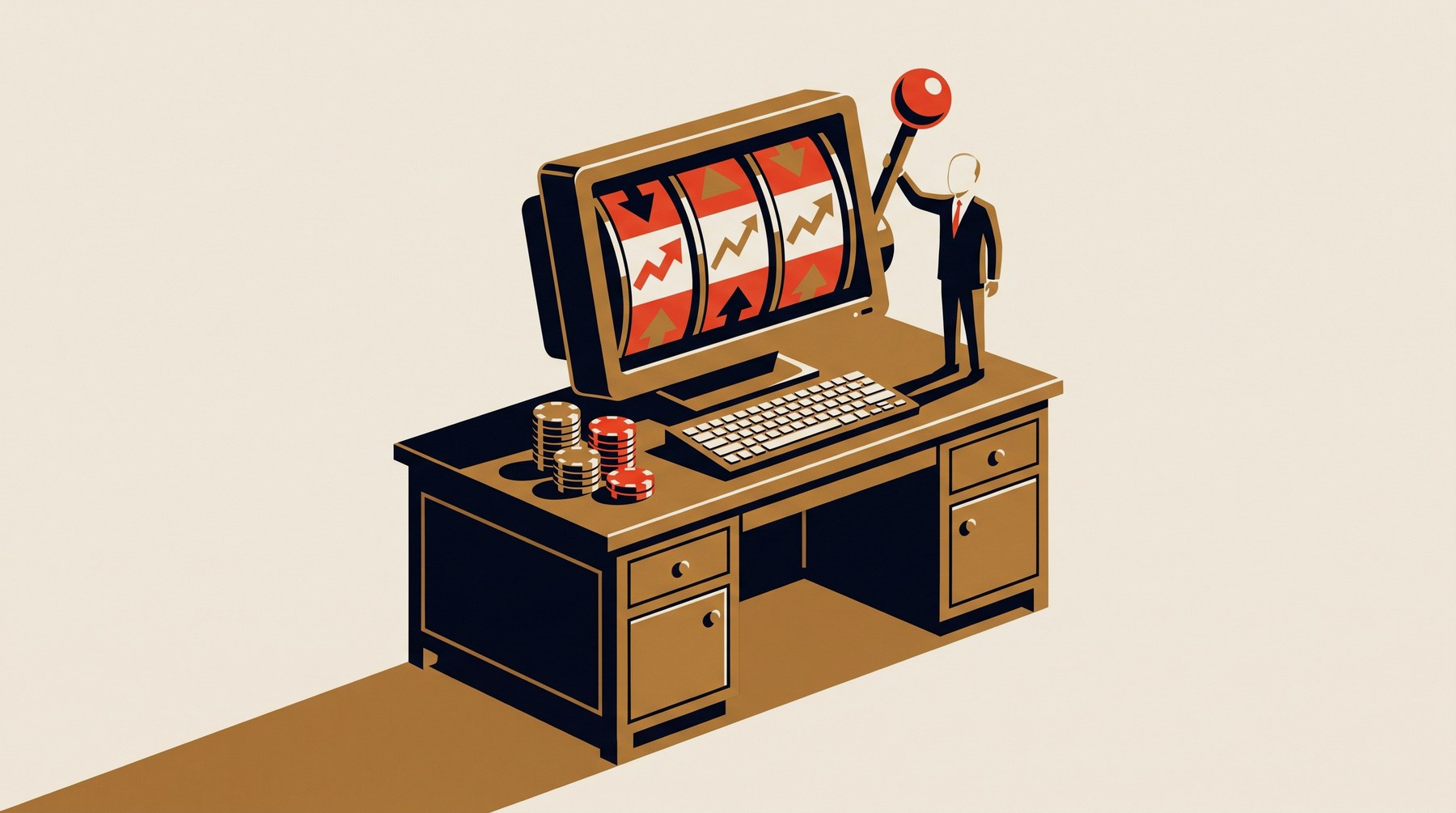
On a January afternoon in 2021 a loss-making video game retailer became, for a few hours, the most traded security on earth. GameStop's rise had the structure of a heist movie: a forum of small traders, a cornered short seller, brokers pulling the buy button at the climax, congressional hearings as the credits rolled. It was covered as a freak event. It was actually a product launch. The market had discovered its future as mass entertainment, and the entertainment industry has been iterating on the format ever since.
Consider what the customer can now buy. Options that expire the same day, so a position is a lottery ticket with a lunchtime drawing; contracts on whether a rapper will win an award or a president will finish a term; coins launched by celebrities that trade like autographs with a price feed; and, through the same phone, parlays on the evening's basketball. The distinction between a brokerage, a sportsbook, and a casino is now largely a question of which regulator processes the paperwork. Zero-day options have grown from a curiosity into a dominant share of index option volume, and the average holding period across every one of these products is measured in hours. The customers are not confused about this. They are at the casino, they know they are at the casino, and they resent the pretense less than their critics do.
The scandal of the casino is not that people gamble. It is that the house keeps insisting it runs a church.
The house, meanwhile, collects the way houses always have. Payment for order flow routes the retail stampede through market makers who pay for the privilege of standing on the other side. Exchanges harvest fees on every expiry-day lottery ticket. Memecoin platforms take their cut at launch, insiders take theirs at the top, and the coin itself, having no cash flows, no claim, and no purpose beyond the trade, redistributes the entry fees from late arrivals to early ones minus friction. This is not an accusation; it is the arithmetic on the label, for anyone who reads labels at a party.
It would be easy, and half the financial press has found it easy, to treat all this as decline. The fuller truth is less flattering to the old regime. The solemn end of the industry spent decades selling products with casino odds in fiduciary costume: structured notes whose complexity existed to hide the margin, funds charging active fees for index performance, IPOs priced to enrich the placing banks' clients before lunch. The gambler buying a same-day option at least knows the game and the odds are printed on it.
Something real is nonetheless being spent, and it is worth naming. Markets can absorb any amount of noise trading, but attention is a society's scarcest capital, and the format wars are over exactly that. The same design tricks that keep a phone game sticky, streaks, confetti, leaderboards, near-misses, now operate on the savings of people whose margin for error is thin. A casino on the strip takes an evening and a defined bankroll. The one in the pocket takes every idle moment and offers leverage. The old vice was bounded by geography. The new one is bounded by battery life.
And yet the gambling instinct, honestly priced, has its defense, and even its economics. Gambling demand is a durable willingness to pay, and modern product design has learned to monetize the entertainment value directly, where older products monetized expected return; that shift, rather than any decline in morals, explains most of what the last five years put on the shelf. Every market that ever discovered a price did so partly on the backs of people who showed up to play rather than to allocate. The liquidity that serious capital enjoys at noon was donated by someone's boredom at midnight. Prediction markets, dismissed as degenerate a decade ago, called recent elections more calmly than most pollsters, because a wallet concentrates the mind in a way a survey never will. Speculation is the market's metabolism. The question was never how to remove it, only who pays for it, at what disclosure, and whether the young trader burning a paycheck on expiry day has anywhere in the building to graduate to.
That is the standard worth defending: not solemnity, honesty. Let the casino be a casino, with the odds on the door and the house edge in figures a teenager can read. Let the church stop selling lottery tickets from behind the altar. And let the customer learn the one statistic both buildings work hard to keep off the signage, which is that the house's returns come from somewhere, the somewhere is the patrons, and the exceptions who beat the house all discovered the same trick. They stopped being patrons. Some of them are reading the order flow of the rest, and they are very grateful for the entertainment.