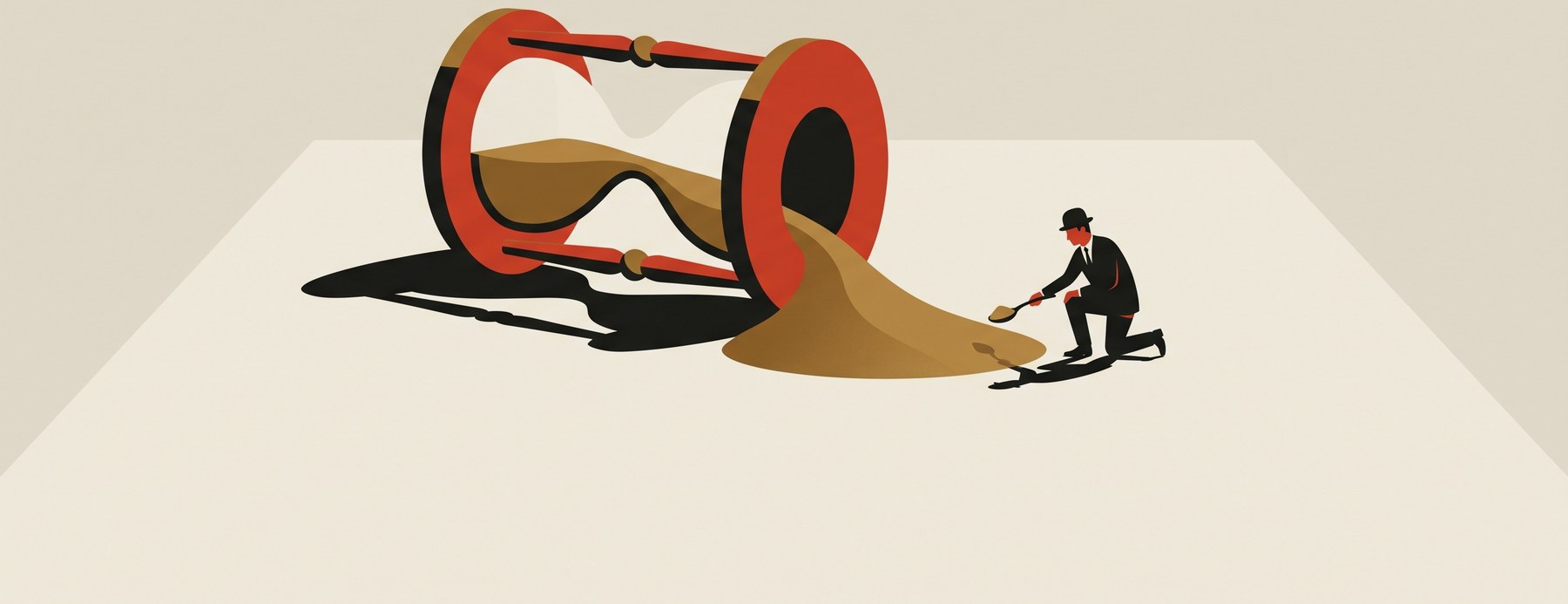
The price of time
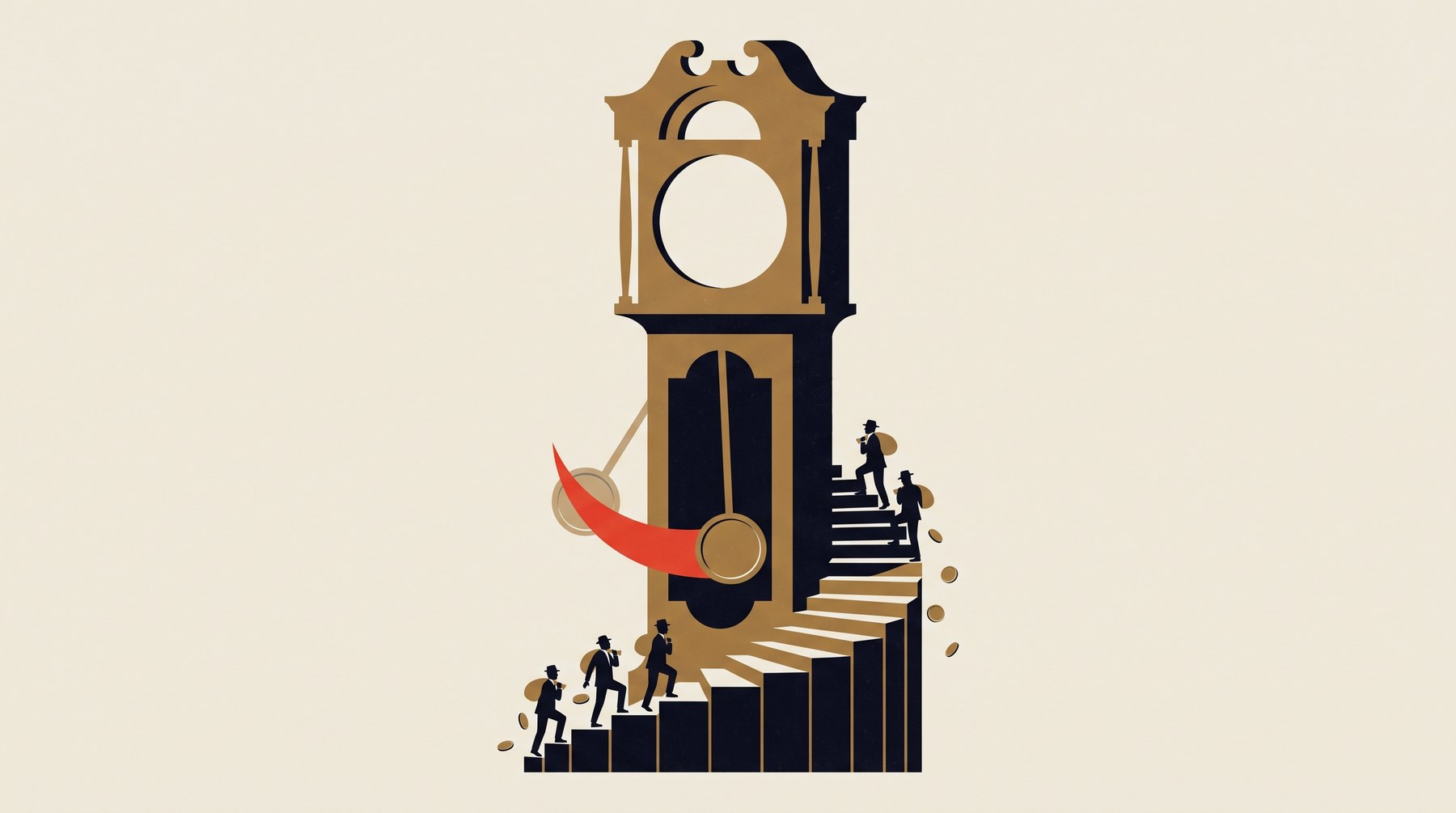
The oldest price in the world is the one attached to time. Clay tablets from Sumer record loans of grain and silver, with the interest set out as carefully as any modern term sheet, four thousand years before anyone drew a yield curve. Civilisations have argued about that price ever since. Priests capped it, philosophers condemned it, three major religions banned it outright at one point or another, and every commercial society ended up charging it anyway, because a bushel of grain today has never been worth the same as a promise of one next year.
Which is why the strangest decade in the history of finance may turn out to be the one just behind us. From roughly 2012 to 2021 the rich world experimented with pricing time at zero, and in places below it. At the peak, in late 2020, close to eighteen trillion dollars of bonds traded at negative yields. Savers in Europe paid governments for the privilege of lending to them. Austria sold a bond maturing in a hundred years and buyers queued for it, then queued again when it reissued. Pension funds, obliged to earn returns the safe assets no longer offered, wandered out the risk curve like polite people edging toward a buffet that keeps moving away.
Free time bought some strange things. It kept companies alive whose business models were, on honest arithmetic, already dead; the walking portfolio of zombie firms grew all decade, rolling debt at rates that asked no questions. It financed a venture economy in which losing money for a decade was a strategy rather than a symptom, because the discount rate that would have punished distant profits had been switched off. And it minted crypto's greatest bull market. When cash yields nothing, a coin that yields nothing is no longer at a disadvantage, and an internet full of stimulus cheques and closed stadiums did the rest. The 2021 mania has many parents, but the zero rate signed most of the cheques.
The rate of interest is the exchange rate between the present and the future, and it gets into every other price on earth.
Then time got expensive again, fast. The inflation of 2021 forced the swiftest rate-hiking cycle in four decades, and 2022 became the worst year for bonds in the modern record books. The Austrian century bond, that monument to the era, lost roughly three quarters of its value from the top. This was not exotic risk punished. It was the safest instrument on earth, government paper, doing exactly what the mathematics of duration promises when the price of time quadruples: the longer the promise, the harder the fall.
The most instructive casualty was a bank. Silicon Valley Bank did not lend to gamblers or buy anything the regulators frowned at. It took in a flood of deposits and parked them in long-dated Treasuries and agency bonds at the top of the market, reaching for a little extra yield in the safest paper available. When rates rose, the bonds sank; when depositors noticed, they left at the speed of a group chat; in March 2023 the bank was gone in about two days. Nobody involved thought they were speculating on interest rates. Everyone holding a long promise is, always.
That is the general lesson hiding under the specific wreckage. A rate of interest is a gravity setting, and every asset is a stream of future money being pulled toward the present at whatever strength the setting dictates. Houses, growth stocks, farmland, venture stakes, hundred-year bonds and internet coins all float higher when gravity weakens, and their owners, being human, attribute the levitation to their own judgment. The decade of free time ran that experiment at planetary scale and got the usual result. Skill is what you call leverage on the way up.
What should a reader do with this, other than nod? Two things. First, when valuing anything, ask what it assumes about the price of time, because that assumption is doing more work than any story about technology or scarcity. An asset priced for zero rates in a five percent world is not cheap because it has fallen; it may simply be finishing the trip back. Second, distrust any era's certainty that its own rate regime is permanent. In 2020 the consensus held that rates could never rise again; within three years that consensus had cost bondholders trillions and sunk banks that ran on it. The price of time has been fluctuating since Sumer. The safest assumption about it is that it will go on fluctuating after us, and the most expensive words in finance remain the four that every cycle teaches again: this time it lasts.