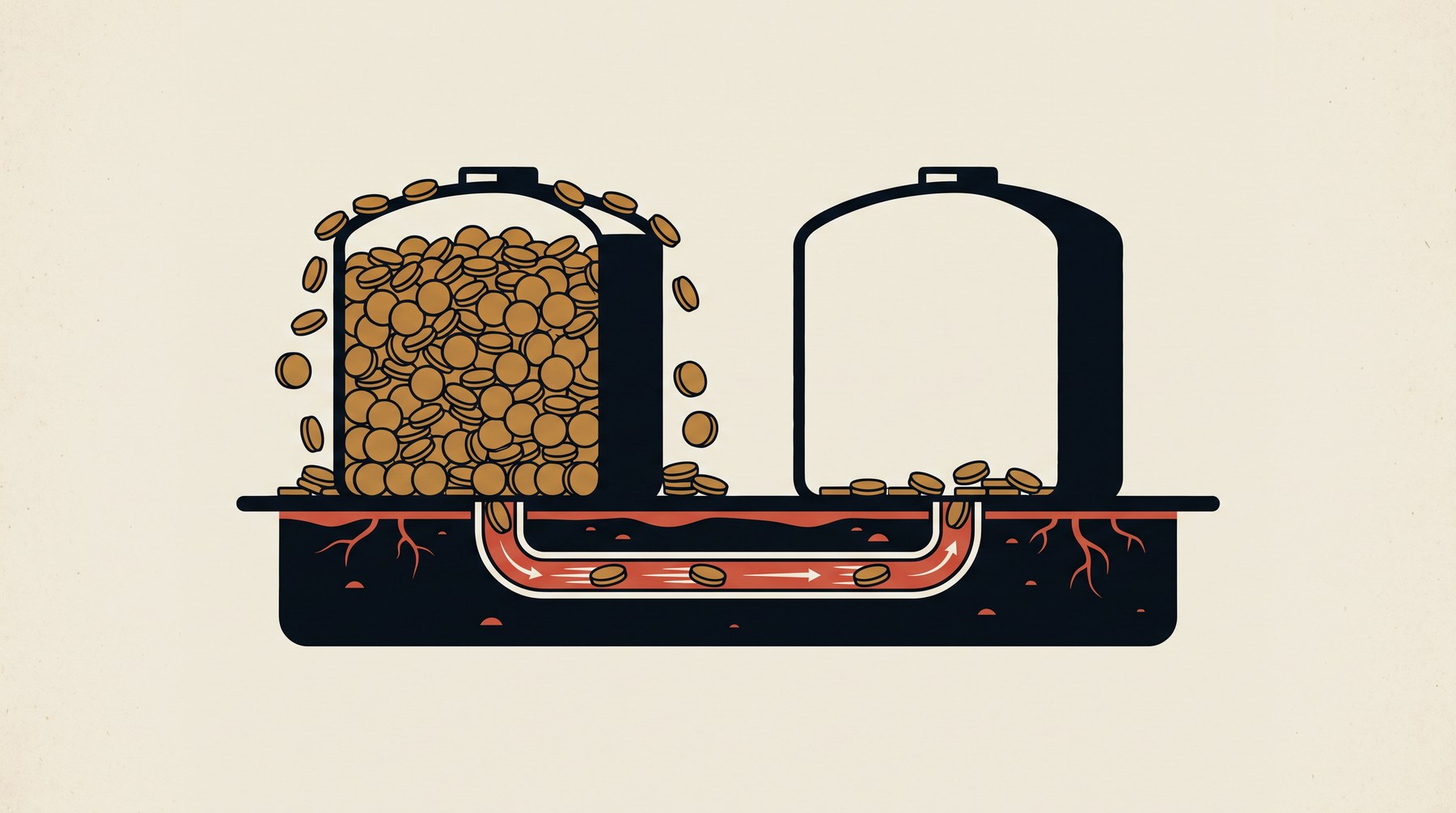
Legal, but not at home
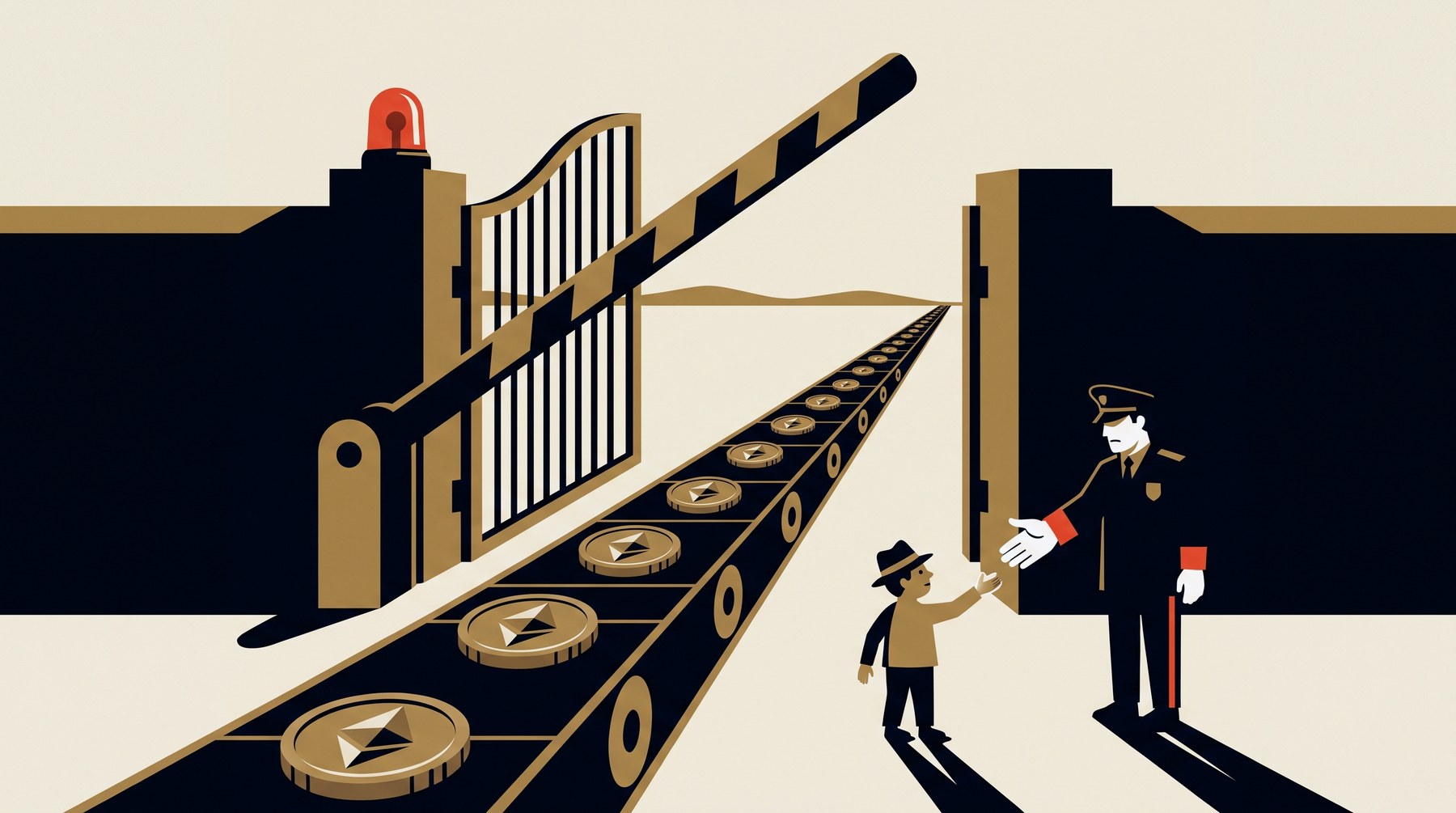
In August 2024 Russia passed two laws in a single month that, read together, form the most candid piece of crypto regulation on earth. The first legalized bitcoin mining: registered miners, reported volumes, taxes due. The second created an experimental regime, supervised by the central bank, allowing crypto to settle cross-border trade. And through all of it, one prohibition stood untouched: using cryptocurrency to buy anything inside the country remains banned, as it has been since 2021, along with advertising the stuff to the public. Most jurisdictions regulate crypto while being coy about what it is for. Moscow wrote the use case into statute. Outward, it is a payment rail. Inward, it is contraband. The border between those two sentences is the border of the state.
It took a war to settle an argument the Russian state had been having with itself for years. The 2020 digital-assets law recognized tokens as property while banning them as payment, a compromise that satisfied nobody. In January 2022 the central bank published a report proposing a near-total ban, Chinese style; the finance ministry pushed back within days, preferring taxation to prohibition. Then February came, the reserves froze, the banks lost their correspondent accounts, and the theological dispute ended the way such disputes end: necessity voted last. By 2024 the same central bank that had wanted crypto abolished was designing the legal regime for settling imports with it.
Russia did not legalize crypto so much as nationalize a smuggling route, and the paperwork says so.
The mechanics, as far as they are public, run through intermediaries. An importer owes a foreign supplier; direct bank transfer is blocked or perilous; a settlement agent accepts rubles on one side and delivers stablecoins, overwhelmingly dollar ones, on the other, taking a spread that would have been scandalous in 2021 and counts as cheap now. Mining feeds the same machine from the supply side, which explains the otherwise odd enthusiasm of a petrostate for server farms: a miner in Siberia converts surplus energy into freshly issued, sanctions-agnostic settlement money that never touches a western bank. The state's main enforcement problem is not ideology but winter: mining follows cheap power into regions whose grids cannot carry it, and from early 2025 seasonal regional bans began switching the industry off wherever the lights flickered.
Enforcement of the other kind has been a lesson in hydra husbandry. Garantex, the exchange at the center of ruble-to-crypto settlement, was sanctioned by Washington back in 2022 and finally taken down in an international action in early 2025, with its stablecoin balances frozen by the issuer itself, a nice illustration of this issue's cover story. Successor venues were reported within weeks, under new names, with familiar order books. A route the real economy depends on does not stay closed; it gets a new sign over the door and a slightly worse spread. The tax code, meanwhile, has quietly done what tax codes do: since late 2024 crypto is property for tax purposes, mining income is declared to the revenue service, and the state collects its percentage of the flows it officially disapproves of.
To feel why the scheme became official policy, look at what it replaced. By 2024 the ordinary plumbing of Russian foreign trade had decayed into farce: banks in nominally friendly jurisdictions, terrified of secondary sanctions, were sitting on Russian payments for months or quietly returning them, with Chinese banks the most skittish of all. What grew in the gap was a food chain of payment agents in Dubai, Hong Kong and Bishkek, each hop adding weeks, paperwork and a commission, until a routine invoice for machine parts could cost double digits in friction and still fail. Against that baseline, a stablecoin transfer that settles in minutes at a low single-digit spread stopped looking like crime and started looking like logistics. States rarely legalize what they approve of. They legalize what they have run out of alternatives to.
The interior half of the design has its own flagship. While crypto was being channeled outward, the central bank has been piloting the digital ruble since 2023, a currency that is programmable, traceable and visible to the issuer by construction, with a mass rollout that keeps slipping the way such projects do. Put the two halves side by side and the architecture states itself with unusual candor: stateless money for the border, surveillance money for the kitchen. No white paper anywhere has said more plainly what money is turning into this decade. It is becoming an instrument of borders, with one variety issued for crossing them and another for staying home.
Notice what the design is trying to hold together. The state needs its border porous to crypto, because that is where the sanctions bite, and its interior sterile, because a population saving and spending in dollar stablecoins is a standing referendum on the ruble that no central bank wants published hourly. The trouble is that money does not respect the distinction. The same channels that settle machine-tool imports leak inward as savings; by the central bank's own periodic estimates, citizens hold crypto in the tens of billions of dollars, held despite the domestic ban rather than because of any right. Proposals now circulate to let the wealthiest investors trade legally inside the experimental regime, which is the sound of a state negotiating with a fact.
Now for the desk's own opinion, which neither Moscow nor Washington would print. The scheme's deepest weakness has nothing to do with enforcement. It is composition: the workaround runs on the adversary's money. The stablecoins settling Russia's sanctioned trade are dollar tokens, issued by companies that answer to American law and freeze addresses on request. Garantex's balances did not vanish through some feat of cryptography; the issuer switched them off, from an office, with a keystroke. A sanctions-evasion machine whose fuel supply is controlled by the country imposing the sanctions has not escaped anything. It has traded a blocked account for a longer leash. The theoretical exits all disappoint on inspection: a yuan token is constrained by China's own capital controls, gold tokens reintroduce the vault and its visitors, and bitcoin, the one rail with no issuer at all, carries a volatility that many importers are unwilling to warehouse through a settlement cycle. So the flows stay in dollar wrappers, and the leash stays attached.
Offered money without a country at last, the sanctioned chose the enemy's currency in a jurisdiction-proof wrapper.
That choice is, to this desk, the most honest verdict on crypto's founding promise that the decade has produced. A state locked out of the dollar system, with every incentive on earth to adopt stateless money, looked at the menu and picked dollar tokens. The reason is unsentimental: money is a network before it is a flag, and the network premium of the dollar survives even inside the machinery built to escape it. Fifteen years of ideology, settled by procurement.
The honest way to read Russia is as a preview of a genre. Any state that finds itself locked out of the dollar system will reach for the same design: crypto as a foreign-trade tool, forbidden as domestic money, taxed wherever visible. Iran sketched it, Russia formalized it, and the next candidate will copy the statutes wholesale. The design's weakness is not legal but monetary, and it compounds. A state that teaches its exporters, its brokers and its miners to live on stablecoins is training, at industrial scale, the exact habits it prohibits at home, and habits of money do not stay at the office. The experiment assumes the two circuits can be kept separate indefinitely. Money has never yet agreed to an arrangement like that, and it has been offered many.