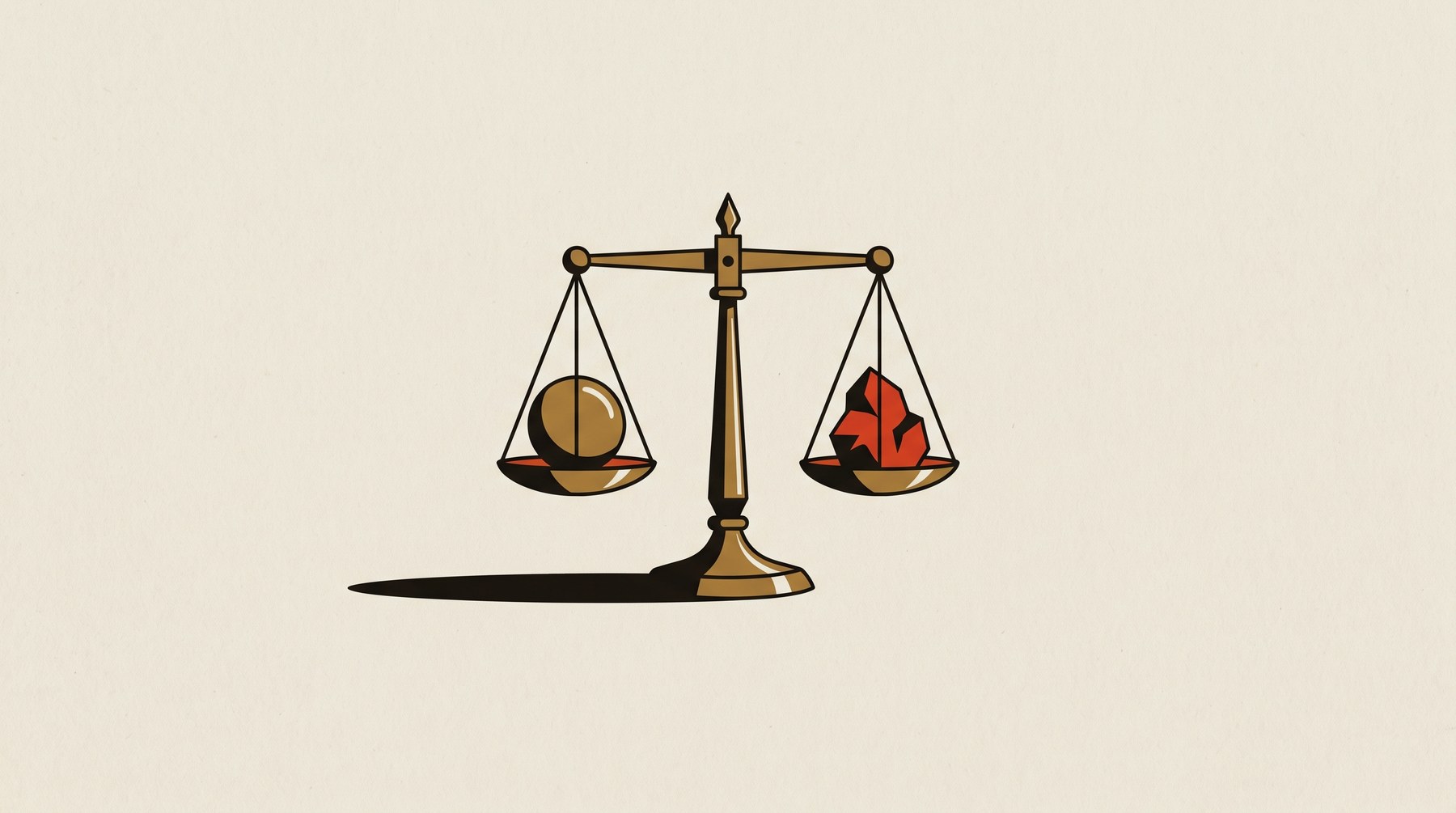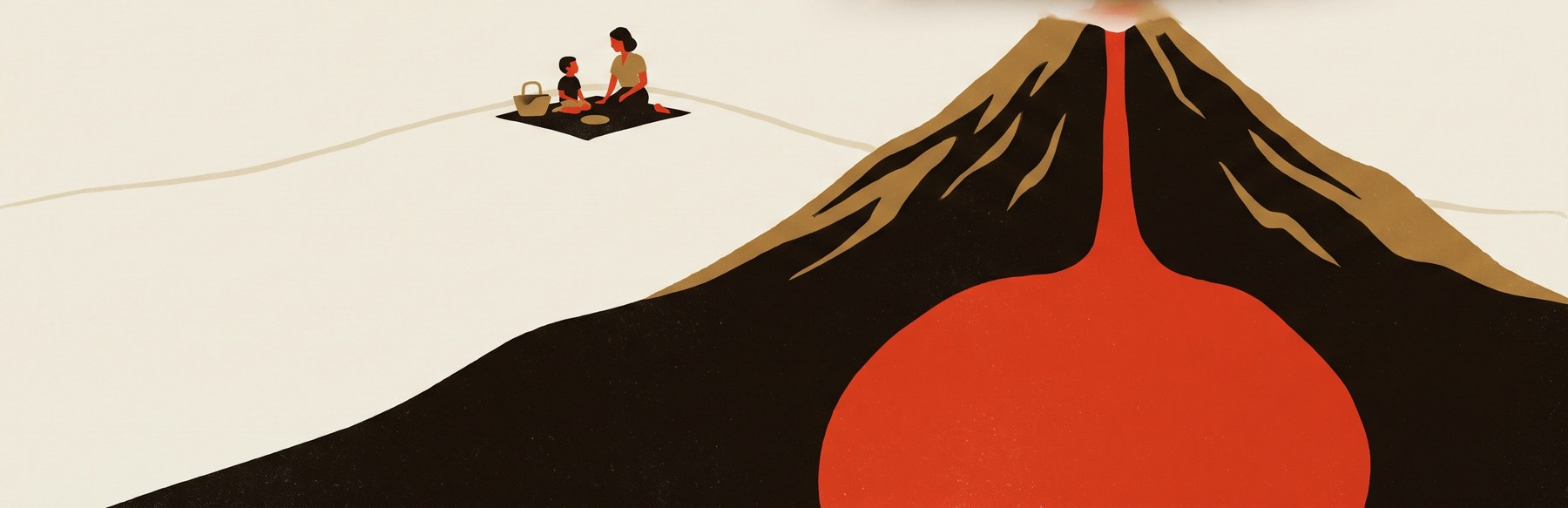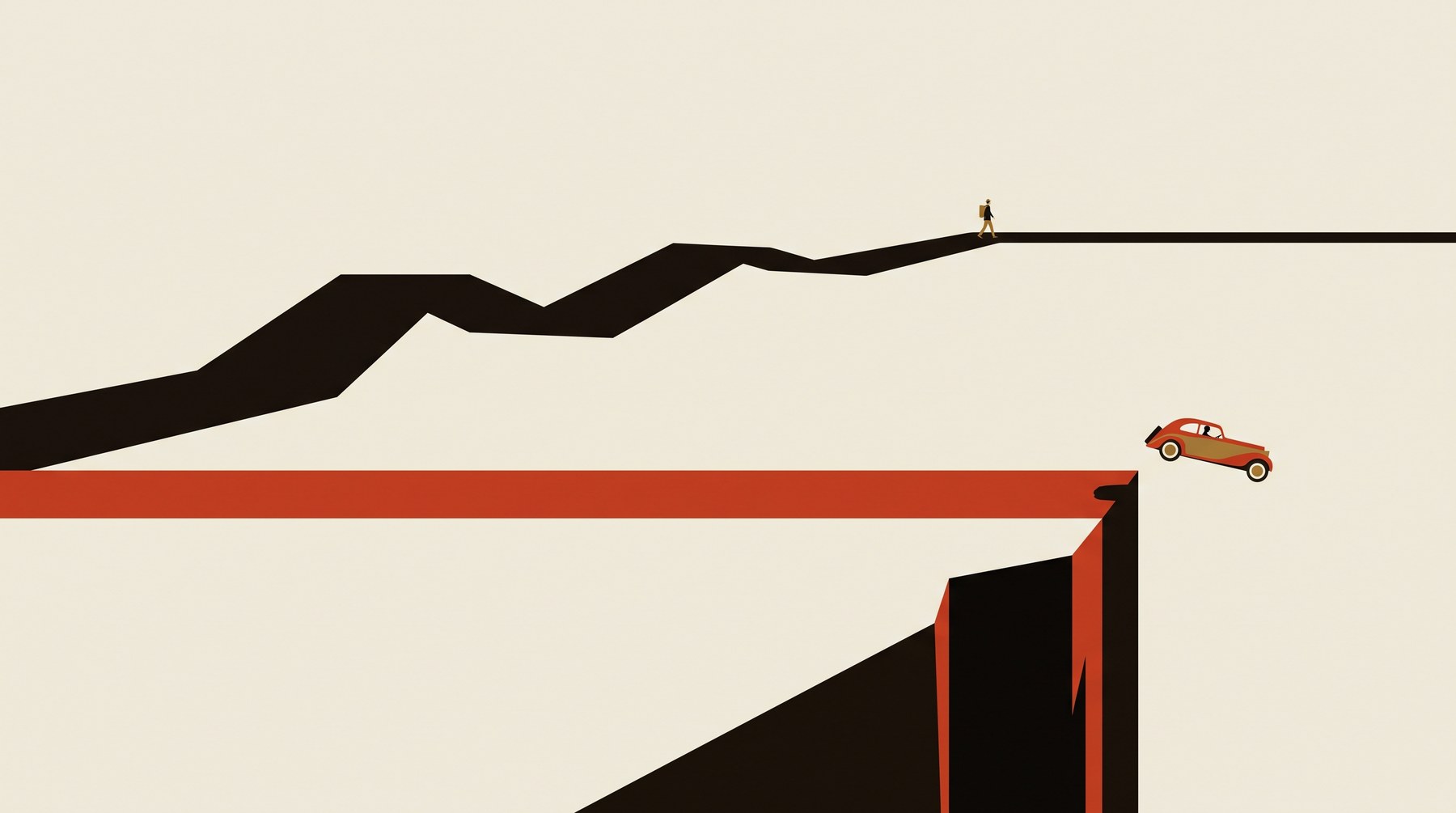
For thirty years the most dangerous line in finance was also the smoothest. Bernard Madoff reported a gain of about one percent a month, month after month, through the dot-com crash and the 2008 panic alike, and on a chart the result looked like a savings account drawn with a ruler. Sophisticated allocators saw that line and read it as safety. The smoothness was the fraud. A genuine strategy earning those returns would have wobbled, and the total absence of wobble was the loudest warning on display. Nearly everyone read it as its opposite.
The confusion begins with vocabulary. Volatility measures how much the ride bounces. Risk wears many uniforms, and volatility is genuinely one of them; the uniform this essay cares about is the chance you never finish the ride. The two overlap often enough for the industry to treat them as synonyms, and the industry has a practical reason to do so: volatility can be computed fresh every morning from prices, while the probability of ruin hides in tails and structures and shows itself rarely, then completely.
Consider the ride that bounced least. Through 2016 and 2017 a popular exchange-traded product called XIV let investors bet on market calm, and calm is what they got: the product climbed steadily with shallow drawdowns while volatility itself sat at record lows. On 5 February 2018 volatility spiked, and XIV lost the bulk of its value in about an hour of after-hours trading. It was terminated within days. By the metric its holders watched, they had owned one of the calmest performers of the decade. The danger had simply been stored where the metric could not see it, waiting in a tail that arrived all at once.
Volatility is not sufficient evidence of risk, and smoothness is not sufficient evidence of safety.
Crypto staged the same play with a bigger cast. A stablecoin is engineered to show no volatility at all, and TerraUSD obliged, holding within a whisker of one dollar for months while paying its holders nearly twenty percent to park in its ecosystem. In May 2022 it went to approximately zero in a week. An asset whose chart was a flat line at $1.00 delivered a near-total loss, wiping out tens of billions, while bitcoin, mocked forever for its swings, has done its worst to the people who borrowed against it, sold it in a panic, or bought the top and needed the money back too soon. The wild chart told you the truth about itself every single day. The flat one saved it all up.
Why does the confusion survive its casualties? Because smooth pays. A manager judged monthly will, given any latitude, move risk out of the visible wobble and into the invisible tail, selling insurance against rare events and booking the premium as skill. The strategy works until the event, the fees are collected annually, and the event, with luck, lands on someone else's watch. Nobody plans this in so many words. The incentive does the planning.
The retail version of the trap is gentler and more common. The cautious saver, frightened by wobble, is the natural customer for whatever product advertises its absence: the structured note with capital protection in the brochure and a bank's credit risk in the footnotes, the stable yield that turns out to be someone else's loan, the fund that never has a down month until the month it never recovers from. Caution, misdirected at volatility, walks straight toward the risks that do the actual killing. The turbulent index fund the saver rejected would have frightened them a hundred times and ruined almost none of them.
The defense takes two questions. First: what has to happen for this to go to zero? If the honest answer is a plausible Tuesday, the daily calm is decoration. Second: who is paying me, and for bearing what? Every smooth above-market return is a payment for something. If you cannot name the something, you are the something.
None of this argues for seeking out wild rides; it argues for reading charts as testimony rather than verdict. You can hold a volatile thing safely and a quiet thing fatally. The chart tells you which one is loud. It has never once told you which one is safe.
The essay above is the house view, and the house should not get the last word. For most holders of money, volatility is risk, and treating the two as separate is a luxury of the unleveraged.
Start with anyone who owes something. Collateral is marked daily, and a lender does not wait for a thesis to play out; the margin call converts a wobble into a forced sale at the low, and the loss it locks in is arithmetic, never psychology. Funds face redemptions, so the path decides what survives to enjoy the destination. A retiree draws a fixed sum each month, which makes the sequence of returns, volatility by another name, the difference between a portfolio that outlives them and one that does not. Banks and insurers must hold capital against the swing itself, by regulation, so turbulence consumes their balance sheets whether ruin ever arrives or not. And the claim that a long-term investor can simply sit through the ride describes a creature with no debts, no deadlines and no feelings. Most money is run by people carrying all three.
The house will reply that these are facts about liabilities rather than about the asset. True, and beside the point. Money does not exist in a vacuum; it exists attached to obligations, and an asset's risk lives in the relationship between its chart and its holder's promises. For the leveraged, the regulated, the redeemable and the mortal, the bouncing line forces action, and forced action is where ruin actually comes from. Smoothness can lie. So can the comforting idea that turbulence is only noise. The reader deserved both warnings on the same page.