The sanctions laboratory
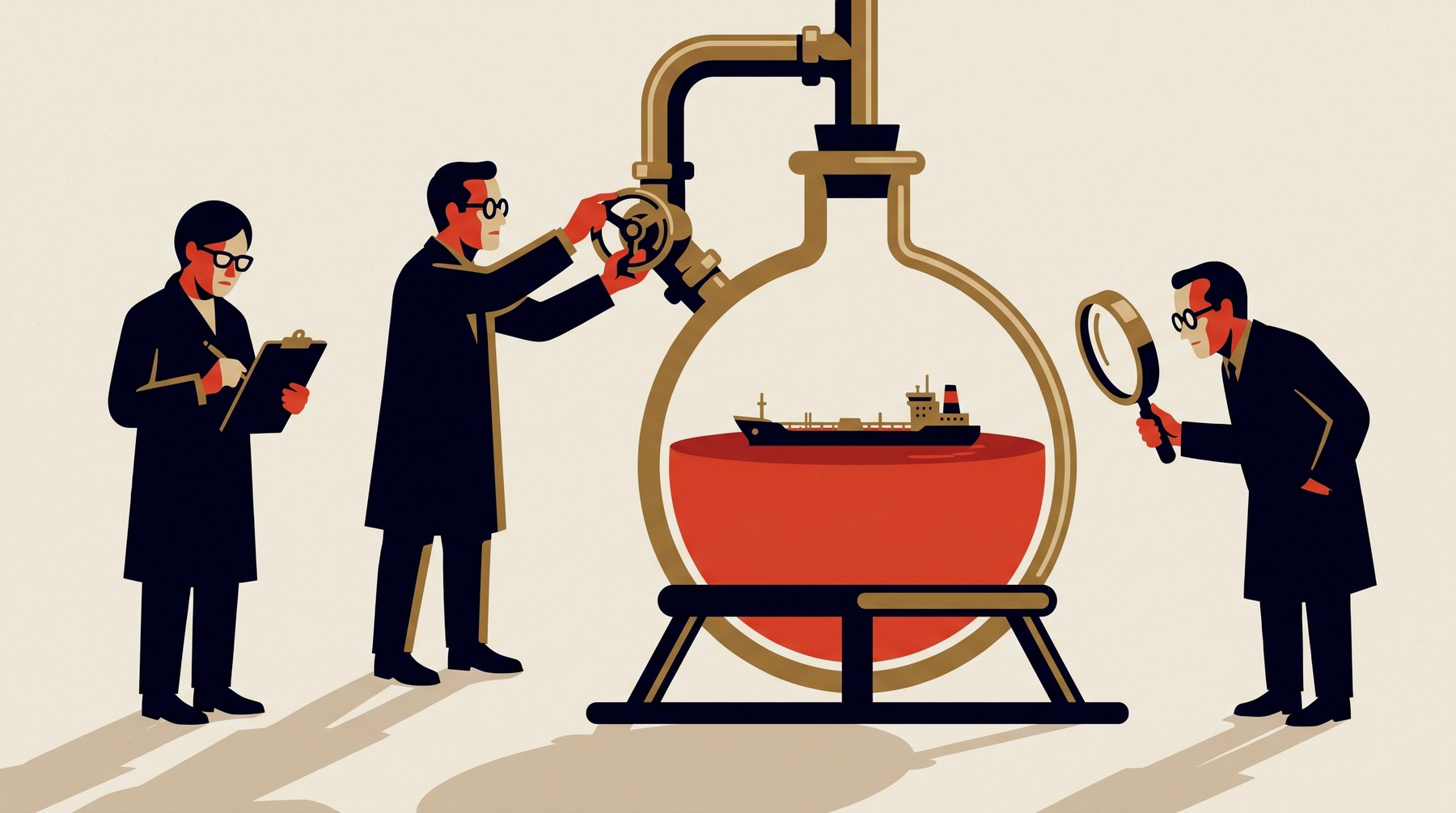
For more than four decades the United States has been running an experiment on Iran that no economics department could get past an ethics committee: cut a mid-sized industrial country out of the world's payment system and observe. The results are in, and they are taught in no textbook, because the textbook assumed the patient would either capitulate or collapse. Iran did neither. It mutated. The rial rotted, the middle class learned to hold its savings in gold, dollars and, lately, stablecoins, and around the blockade grew an entire parallel economy of exchange houses, hawala brokers whose networks predate SWIFT by several centuries, discounted oil moving through middlemen to Asia, and a shadow fleet of elderly tankers with ambiguous paperwork. When the state licensed bitcoin mining, it was monetizing stranded gas: turning energy the sanctions would not let it sell into money the sanctions could not stop. The lesson of the laboratory was plain to anyone reading honestly. An embargo of this kind does not function as a wall. It functions as a price, and prices get paid.
Then, in 2022, the experiment was rerun on Russia, at ten times the scale and a hundred times the speed. The first months obeyed the theory: a crashing currency, a scramble for imports, an exodus of firms. The months after obeyed Iran: the workaround economy assembled itself in quarters rather than decades, hiring in documented cases the very brokers and hulls Tehran had trained. The mechanics of that replay, down to the statutes it produced, are the subject of the essay that follows. What matters here is that the pattern held on a body ten times the size.
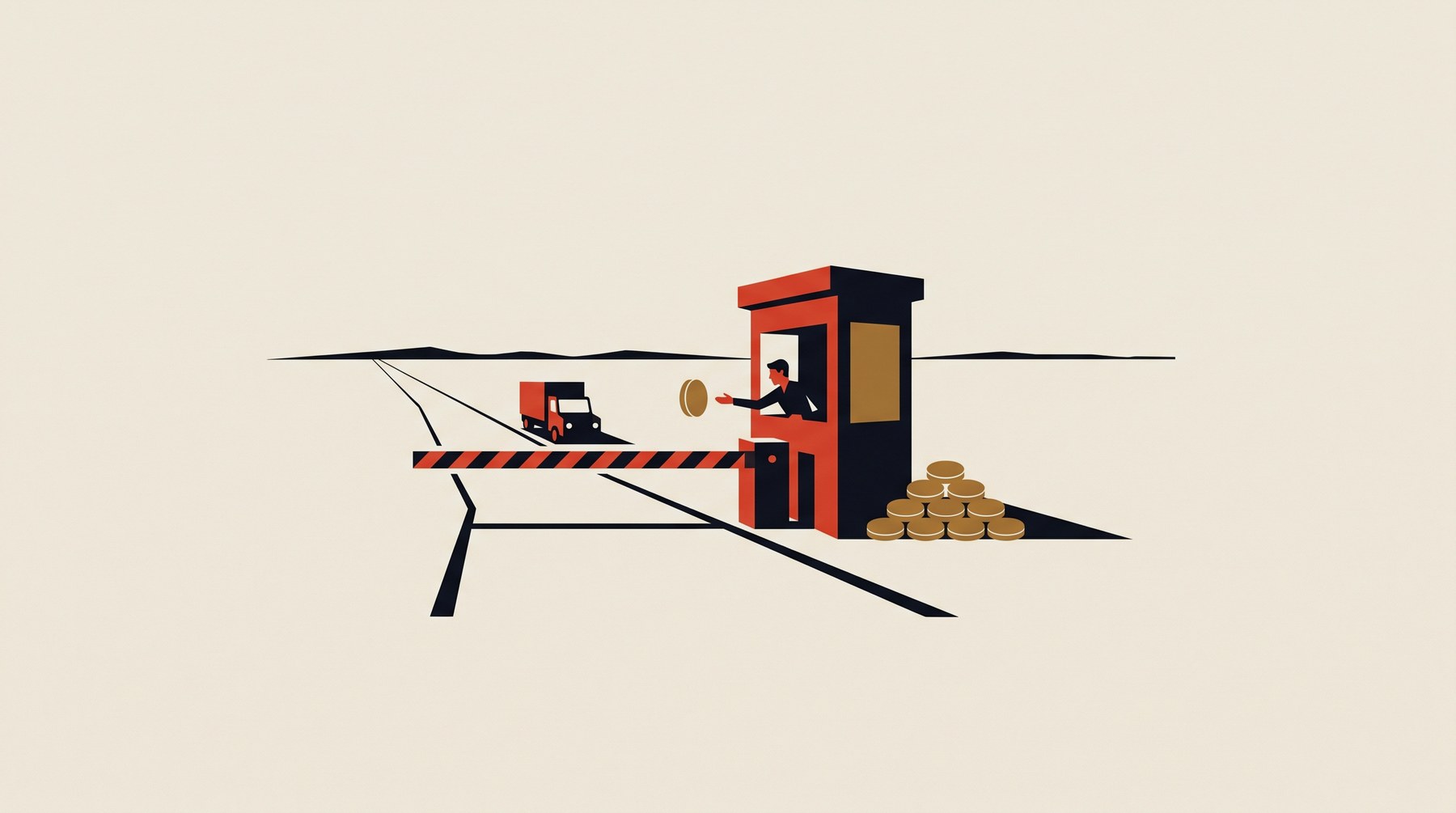
A sanction is best understood as a price. The question is never whether it will be paid, only by whom, and in what currency.
The standard argument about all this runs in two camps. One says sanctions work, pointing to the lost growth, the technology gaps, the budget strain, all of it real. The other says they fail, pointing to the un-collapsed economies and the busy workarounds, also real. Both camps are grading a wall, and the instrument was never a wall. A sanction taxes every transaction of the targeted economy with friction, discounts and middlemen, and the revenue of that tax is collected by the intermediaries: the brokers, the flag-of-convenience registries, the settlement agents, the exchanges in permissive jurisdictions. Grade it as a price and the picture snaps into focus. Prices do not stop determined buyers. They reroute them, and they fund whoever builds the detour.
The detour, once built, does not get torn down. Every escalation since 2018 has worked like a research grant for the parallel system: the yuan settlement rails, the gold in ascending central-bank vaults, the stablecoin corridors through the Gulf and Central Asia, the non-western reinsurance and shipping registries. Each piece is small, expensive and ugly next to the dollar system it shadows. So was the early internet next to the phone network. Infrastructure born under pressure has a habit of surviving the pressure, because the people who paid for it do not forget what it cost to be without it. Détente, if it ever comes, will not repeal the plumbing.
Meanwhile the issuer of the sanctions pays its own bill, on a longer invoice. The dollar's network effect is the most valuable franchise in economic history, and it rests on an assumption so deep it is rarely stated: that the system is neutral plumbing, safe for anyone's money. Every seizure demonstrates sovereignty and erodes the assumption in the same motion. Nothing here predicts the dollar's decline; this issue's essay on stablecoins argues nearly the opposite, and both essays are true at once, which is what makes the moment interesting. The dollar is simultaneously extending its retail reach through crypto rails and teaching official holders to diversify away from its custody. Weapons depreciate with use. Franchises depreciate with fear.
The sanctions decade, then, is best read neither as victory nor failure but as a forced technology transfer, in which the United States is teaching its adversaries, at their expense, how to operate without it, and they are learning at the pace of necessity, which is the fastest pace there is. Iran was the pilot study. Russia is the scaled trial. The control group of non-aligned treasuries is voting quietly in the data: official gold buying has run at roughly double its pre-2022 pace, and a slowly growing share of trade with China settles in yuan; small numbers, moving one way. Some of those hedges may prove sticky even if relations improve, because the infrastructure cost has already been paid. The experiment will end the way experiments do. The laboratory gets dismantled, the funding moves on, and the findings stay published forever.
The essay above concedes the costs of sanctions in a sentence and spends the rest admiring the workarounds. The emphasis deserves reversing. A price does not need to stop behavior to succeed; it needs to change decisions at the margin, and the margin is where wars are financed. Projects unfunded, imports delayed by months, technology running two generations behind, a tanker fleet aging without insurance, talent leaving through every open airport: none of it photographs as well as a clever detour, and all of it compounds annually, like interest.
The parallel system deserves a colder audit than its architects give it. Its totals remain rounding errors beside dollar clearing. Its costs are not one-time infrastructure but a standing tax: every hop through an agent, every discount on a barrel, every spread on a settlement token is paid again on the next transaction, forever. Calling that a technology transfer flatters it. A toll road is not a gift to the people paying the tolls.
And deterrence is priced off the visible bill. The next state weighing an adventure does not read arguments about network effects; it reads what the last adventure costs, per year, with no end date attached. A wall does not have to be airtight to do a wall's job. It has to make the climb expensive, visibly, for a long time. By that standard the laboratory's dullest finding is also its firmest: the price is high, it is being paid, and prices that high change behavior even when nobody says so at a podium.